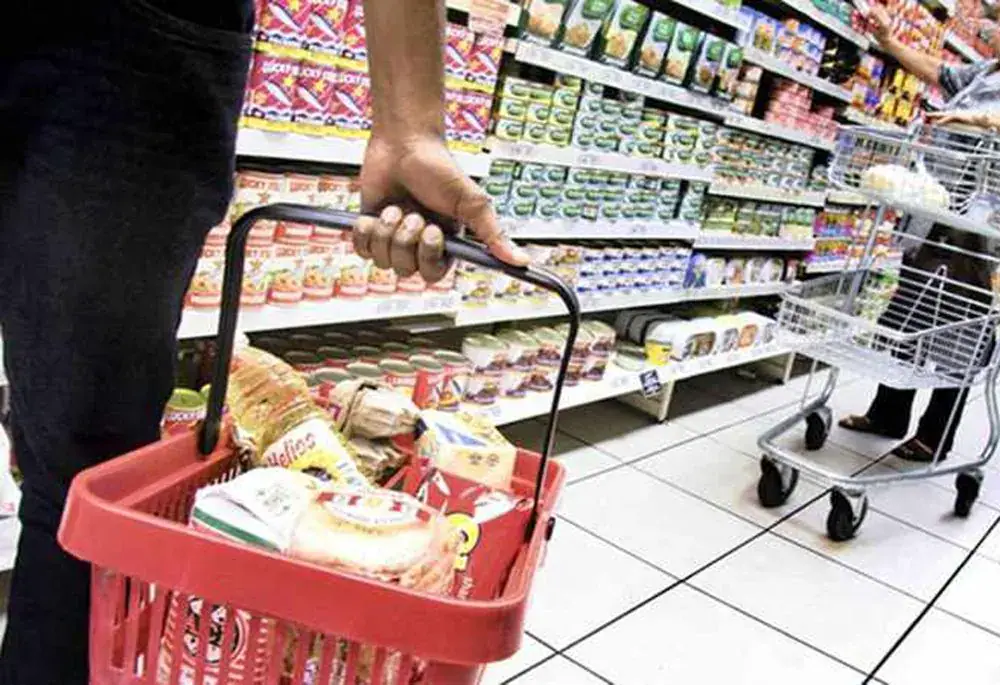
A South African worker earning the national minimum wage of R4,836.80 per month would struggle to cover the average food basket for a household of seven, which costs R5,530.83. This shortfall of R694 highlights the financial pressure facing millions of South Africans as essential food prices continue to rise. The Pietermaritzburg Economic Justice and Dignity Group's November 2026 Household Affordability Index revealed these figures, which do not include transport, electricity, rent, or other essential expenses.
The cost of providing a household of seven with adequate nutrition is even higher, at R6,708.19. Foods in the basket that increased by 5% or more in November included chicken feet and wors, while oranges recorded the largest increase, rising by 26%. On the other hand, foods that decreased by 5% or more included potatoes, onions, carrots, butternut, and cabbage. Butternut recorded the largest decrease for the second consecutive month, falling by 16%.
According to PMBEJD director Mervyn Abrahams, the cost of the basket increased in several cities, including Durban, Cape Town, Springbok, and Mthatha. However, the basket decreased in Johannesburg, Pietermaritzburg, and Mtubatuba. The 2026 national minimum wage is R30.23 an hour and came into effect in March. Abrahams said workers used their wages to support their families, with one wage typically supporting four people.
A wage of R4,836.80 divided among four people amounts to R1,209.20 per person, which is below the 2026 upper-bound poverty line of R2,962 per person per month. Abrahams said the minimum food shortfall for a worker's family in November was 56.9%, or R2,184.65, based on a nutritional food basket costing R3,838. If all the remaining money went to buy food, it would provide R413.34 per person per month, 48% below the National Food Poverty Line of R868 per person per month.
The basic nutritional food basket, calculated using the same household size of seven people as the household food basket, costs R6,708.19 in November. Abrahams said the difference between the household food basket and the basic nutritional food basket is R1,177.36. Siyanda Baduza, a basic-income researcher at the Institute for Economic Justice, expressed concern about the figures, citing high interest rates, food prices, and fuel prices faced by poor households.
Baduza said social grants remained inadequate and should be increased to decent levels, at least to the food poverty line. Otherwise, poverty levels will continue to rise, pushing more people into hardship and suffering. The Statistics South Africa's latest consumer price index for October 2026 showed headline inflation of 0.7% month on month and 5.2% year on year.
The financial pressure facing South Africans is a pressing concern, with many struggling to make ends meet. The national minimum wage is not enough to cover the average food basket, and the situation is exacerbated by rising food prices and high interest rates. As the cost of living continues to escalate, it remains to be seen how the government will respond to address poverty and inequality.
Key points
- The national minimum wage of R4,836.80 per month falls short of the average food basket for a household of seven, which costs R5,530.83.
- The cost of providing adequate nutrition for a household of seven is R6,708.19, highlighting the financial pressure facing poor households.
- Social grants are inadequate and should be increased to at least the food poverty line to address poverty and inequality.