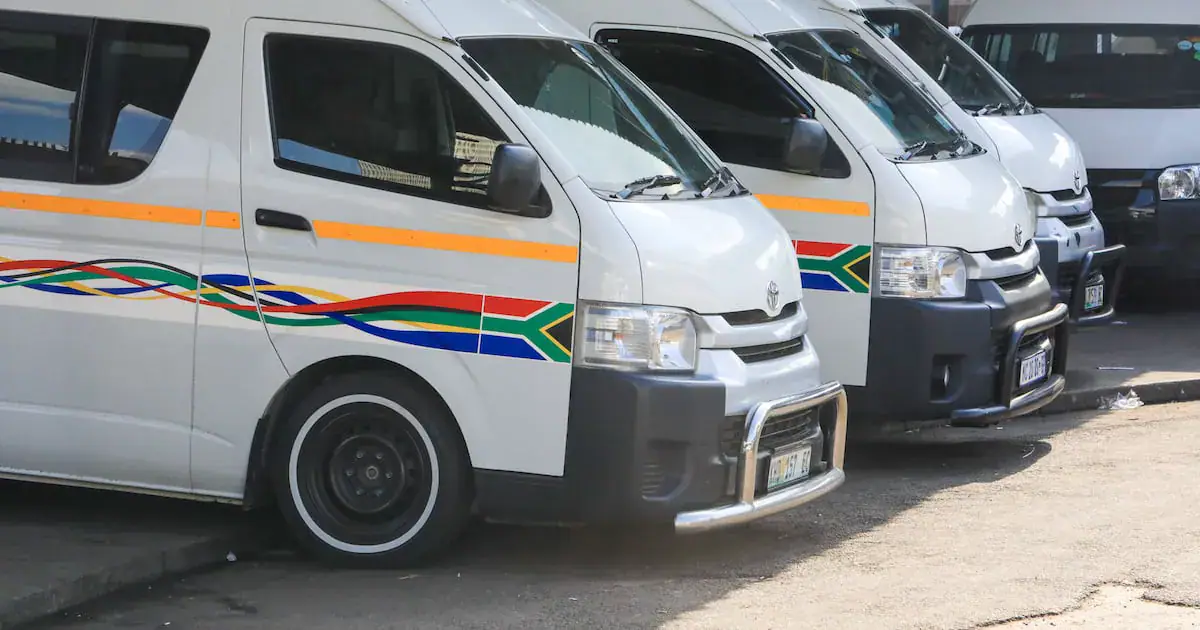
The minibus taxi industry in South Africa, often synonymous with reckless driving and violence, plays a vital role in the country's labour market and economy. It ferries around 15 million people daily to and from work, school, and other economic activities. Despite its indispensability, the industry has struggled to shake off its reputation for informality and conflict. Reform efforts have focused on licensing, enforcement, and formalisation, but a new policy paper by Economic Research Southern Africa (Ersa) suggests that this approach is misguided.
The Ersa paper, penned by Christopher Eaglin, argues that treating the industry primarily as a regulatory problem overlooks the scale of the public good it provides and the institutional and financial pressures that produce its visible deficiencies. To unleash the industry's full potential, Ersa recommends providing an operating subsidy tied to electronically verified passenger journeys and fares. This approach could improve affordability and reliability while reducing some of the financial pressure currently borne by owners and drivers.
The paper stresses that digital verification would increase transparency and provide the government with better information on fares, passenger demand, and the distribution of subsidy benefits. Ersa also warns against disintermediating or replacing the minibus taxi industry, as this would risk eliminating transport capacity and the economic, institutional, and social functions it currently provides. Instead, the state should support and progressively improve the industry in the short and medium term.
Another key proposal made by Ersa is the improvement of basic health coverage for drivers. The paper suggests piloting primary care and occupational health services at or near major taxi ranks, as drivers work unusually long days without paid leave or convenient access to healthcare. Rank-based services could improve access to screening, treatment, and medication while reducing the time drivers must spend away from work.
The cash-based industry is organised through powerful owner-based institutions known as taxi associations, with two leading national associations particularly dominant: the South African National Taxi Council (Santaco) and the National Taxi Alliance (NTA). These associations set fares that reflect various factors, giving them significant influence on the performance of individual taxi businesses.
Ersa also examined the barriers to entry in the industry, with entrance fees to join associations ranging from approximately R50,000 to R1m, depending on the association and the value of the routes it controls. The paper challenges policymakers to tackle the shortcomings still facing the industry, including unsafe behaviour, financial distress, under-maintenance, and conflict.
Despite its challenges, the industry delivers an essential service on an immense scale, connecting townships to commercial centres, linking communities across provinces, and providing reliable mobility to millions of South Africans. The Ersa paper concludes that the industry should not be romanticised, but its reach, persistence, and responsiveness stand out in a national context where many formally organised public services have struggled to provide comparable consistency.
Key points
- Providing the industry with an operating subsidy tied to electronically verified passenger journeys and fares could improve affordability and reliability.
- Improving basic health coverage for drivers through primary care and occupational health services at or near major taxi ranks is essential.
- The industry delivers an essential service on an immense scale, connecting millions of South Africans.
Reporting sources
- # 1 NEWS ANALYSIS | The good and the ugly of SA’s ‘indispensable’ taxi industry · The Rand Daily Mail