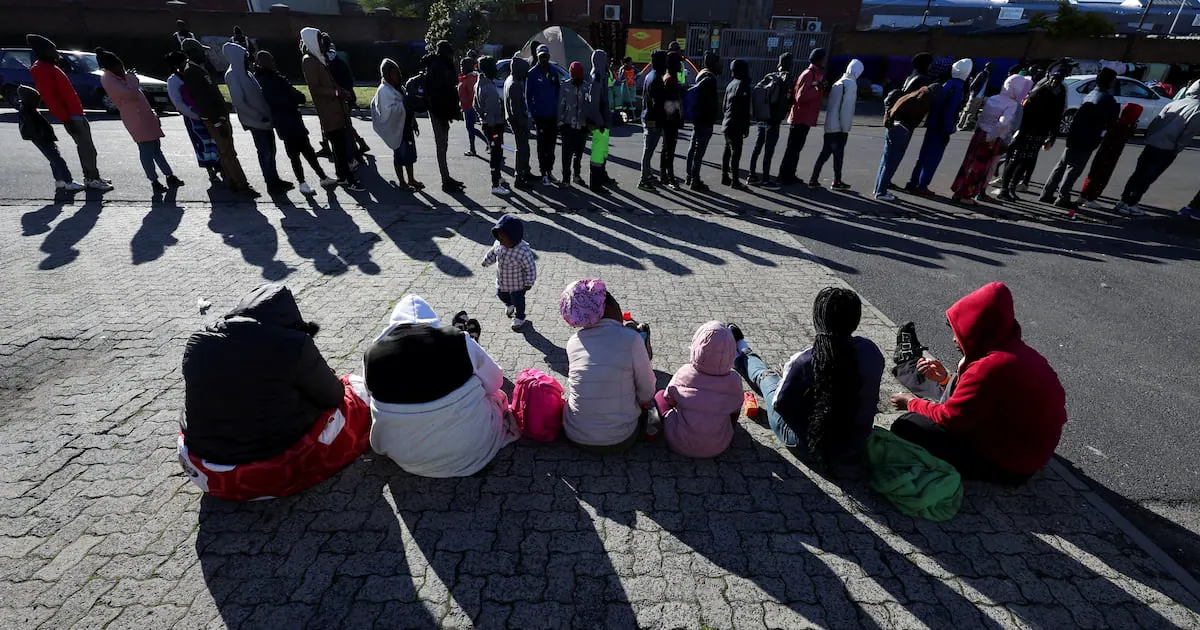
South Africa is once again grappling with the complexities of undocumented migration, a challenge that has sparked intense debate and public frustration. The issue has become increasingly visible, with many citizens calling for stronger border control, stricter immigration enforcement, and greater accountability from the state. However, experts argue that the issue goes beyond mere border control and immigration policy, highlighting a deeper governance challenge that requires a more nuanced approach.
The concept of competing legitimacy has been identified as a key factor in this debate. This phenomenon occurs when different groups within the same society no longer share the same understanding of what is fair, lawful, or legitimate. In the context of migration, this means that different groups have fundamentally different expectations of what government should do to address the issue. For many South Africans, fairness is viewed through the reality of scarce resources, while for many migrants, migration is experienced through an entirely different reality of survival, opportunity, and human dignity.
Scholars have used the concept of superdiversity to describe situations where migration creates increasingly complex societies. This complexity arises not simply from people coming from different countries but also from differences in legal status, language, culture, economic circumstances, and their relationship with public institutions. In South Africa's case, the challenge extends beyond migration itself, as the issue is intertwined with broader socio-economic challenges such as unemployment, constrained public services, economic hardship, and declining institutional trust.
The issue of migration has become a catalyst for expressing broader frustrations, with many citizens interpreting undocumented migration as evidence that the state is either unable or unwilling to enforce its own laws. On the other hand, migrants often view migration as a necessary step for survival, opportunity, and human dignity. Both perspectives contain legitimate human concerns, but they produce fundamentally different expectations of what government should do.
Governments face an extraordinary challenge in balancing competing demands, as they are expected to enforce the law, protect constitutional rights, preserve public confidence, and maintain social cohesion simultaneously. Success in one area cannot come at the expense of another, and if citizens begin to believe that any one of these responsibilities is being neglected, confidence in the legitimacy of institutions begins to erode.
History has shown that societies rarely become unstable because of a single issue; rather, instability emerges when multiple unresolved pressures begin reinforcing one another. In such environments, perception becomes almost as influential as reality, and public policy must operate within objective realities while public legitimacy operates within perceived realities. This is why conversations around migration have become increasingly polarised, with one perspective emphasising stronger border management and enforcement, and another emphasising compassion, regional co-operation, and human rights.
Ultimately, the greatest risk may not be migration itself but allowing competing perceptions of legitimacy to drift so far apart that society loses its shared understanding of fairness, justice, and belonging. The task before South Africa is to demonstrate that humanity and sovereignty can coexist, requiring effective border management, credible immigration systems, capable public institutions, regional co-operation, economic reform, and leadership that consistently earns public trust.
Key points
- South Africa's migration debate highlights a deeper governance challenge that requires a nuanced approach beyond border control and immigration policy.
- The concept of competing legitimacy is a key factor in this debate, with different groups having fundamentally different expectations of what government should do.
- The issue of migration has become intertwined with broader socio-economic challenges, requiring a comprehensive approach to address the root causes of the problem.