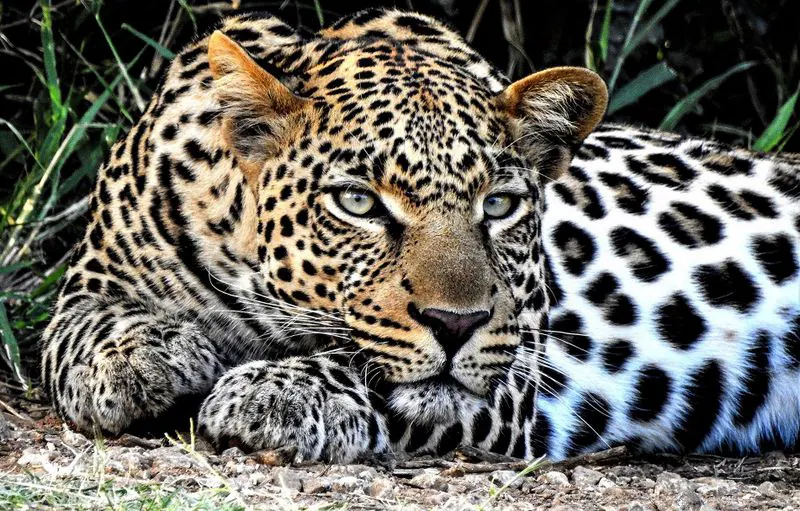
The South African government has released a draft National Leopard Strategy and Action Plan, which aims to conserve the country's leopard population. However, experts are divided on the issue of hunting quotas and population estimates. The plan was published on 4 September and is open for public comment until 4 October. The document admits that the country is at a "critical juncture in leopard conservation" due to substantial range loss across nearly 70% of land south of the Limpopo and Orange rivers.
One of the main challenges in conserving leopards is the uncertainty over their population numbers. Estimates range from 2,185 to 23,400 individuals, a difference of over 21,000 animals. Dr. Michael 't Sas-Rolfes, a research fellow at Stellenbosch University's African Wildlife Economy Institute, says that this uncertainty makes it difficult to make informed decisions about hunting quotas. He notes that private landowners and conservationists have different views on the issue, with some arguing that hunting can help to reduce human-leopard conflict.
The draft plan proposes a national vision in which "leopards thrive in living landscapes, support cultural traditions and local livelihoods through inclusive, community-driven conservation". However, experts disagree on how to achieve this vision. Michele Pickover, the executive director of the EMS Foundation, says that the plan's approach to trophy hunting and lethal control is concerning. She argues that the conservation of leopards should prioritize their well-being and that hunting quotas should be set at zero.
The issue of hunting quotas is a contentious one, with some experts arguing that it can help to reduce human-leopard conflict. Dr. 't Sas-Rolfes notes that leopards can threaten the lives and livelihoods of local rural people, while being revered by urban people and foreign tourists. He argues that the plan should take into account the perspectives of private landowners and local communities.
The draft plan has been welcomed by some conservation organizations, including the Wilderness Foundation. CEO Andrew Muir says that the plan recognizes the importance of conservation beyond protected areas. However, he cautions that the plan is just a strategic framework and that its implementation will be crucial to its success.
Muir notes that the plan envisages camera traps, population modeling, and adaptive management informing hunting decisions. He argues that the conservation of leopards requires a holistic approach that takes into account their ecological role, cultural values, and human-wildlife conflict. The plan's success will depend on its implementation and the involvement of local communities and stakeholders.
The debate over the conservation of leopards in South Africa highlights the challenges of balancing human needs with conservation goals. The country's leopard population is vulnerable, and experts agree that a coordinated approach is needed to conserve them. The public has until 4 October to comment on the draft plan, which will inform the government's conservation efforts.
Key points
- The draft National Leopard Strategy and Action Plan aims to conserve leopards in South Africa, but experts disagree on hunting quotas and population estimates.
- The plan proposes a national vision in which leopards thrive in living landscapes, but its implementation will be crucial to its success.
- The conservation of leopards requires a holistic approach that takes into account their ecological role, cultural values, and human-wildlife conflict.