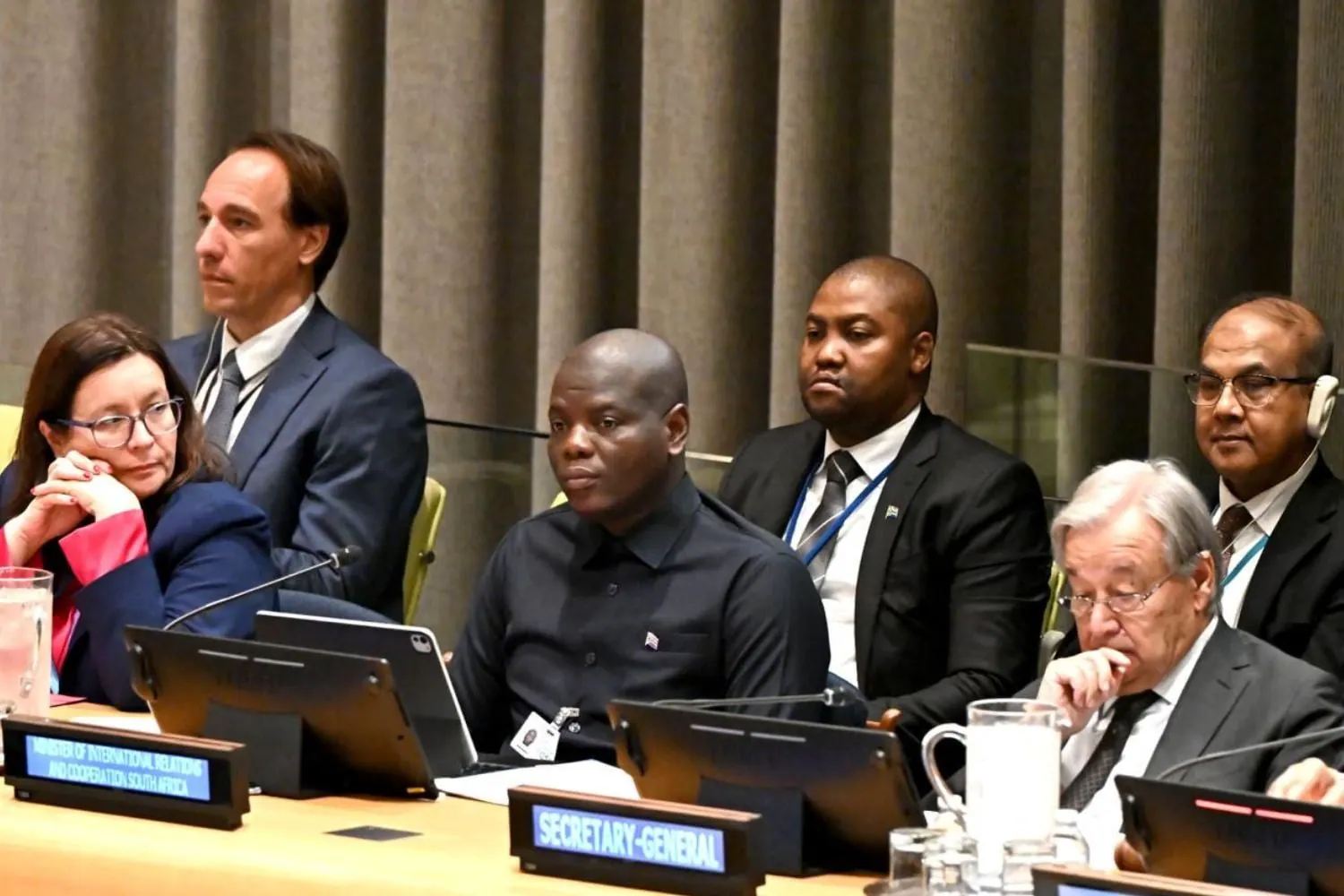
International Relations Minister Ronald Lamola addressed the UN General Assembly's high-level meeting on Tuesday, 28 September 2026, marking the 25th anniversary of the Durban Declaration and Programme of Action (DDPA). He urged the world to renew its fight against racism and intolerance, warning that the legacies of slavery, colonialism, and apartheid remain deeply embedded in global systems. The DDPA, a 153-page framework adopted in 2001, aimed to confront racism, xenophobia, and the oppression of Indigenous peoples.
Lamola recalled former president Thabo Mbeki's description of the 2001 Durban gathering as heralding a "new internationalism" aimed at repairing the damage of the past. He emphasized that the Durban Declaration marked a pivotal moment in the international community's commitment to building a world rooted in equality, dignity, and justice. However, Lamola noted that racism and related intolerance will not be defeated through state action alone, stressing the vital role of civil society, communities, and ordinary people in changing reality.
Lamola warned that racism, xenophobia, and gender inequality are resurging, fueled by online hate speech and backlash against redress measures. He stated that contemporary racism against Africans and people of African descent is still embedded in institutions, systems, and practices that govern human affairs. To combat this, Lamola emphasized the need to strengthen collective efforts.
Lamola linked inequality and insecurity to rising hostility towards migrants, cautioning that scapegoating fuels division. He noted that failure to cooperate leaves the door wide open for actors whose conduct runs counter to the principles of equality, dignity, and human solidarity. This comes as many countries face challenges in addressing the root causes of migration and ensuring the rights of migrants.
Despite the challenges, Lamola pointed to progress in the fight against racism. He cited Ghana's leadership in securing UN recognition of the transatlantic slave trade as a "gravest crime against humanity" and Togo's push to correct distortions in global maps that have long diminished Africa's size. These efforts aim to address historical injustices and promote a more accurate representation of Africa's history and geography.
Lamola urged reparations, truth-telling, formal apologies, and the return of cultural artifacts, stressing that the envisaged UN Declaration on the Human Rights of People of African Descent must give practical effect to redressing past injustices. He emphasized that the task of building a world free of racism, righting the wrongs of the past, and restoring human dignity is as much a current responsibility as it was 25 years ago.
The 2001 Durban Declaration was adopted by consensus, although the United States and Israel withdrew over clauses relating to Israel and Palestine. Lamola's call to action comes as the international community continues to grapple with the complexities of addressing racism and intolerance.
Key points
- International Relations Minister Ronald Lamola urges the world to renew its fight against racism and intolerance 25 years after the Durban Declaration.
- Lamola emphasizes the need for collective efforts to combat racism, including the role of civil society, communities, and ordinary people.
- The Durban Declaration and Programme of Action was adopted in 2001 to confront racism, xenophobia, and the oppression of Indigenous peoples.