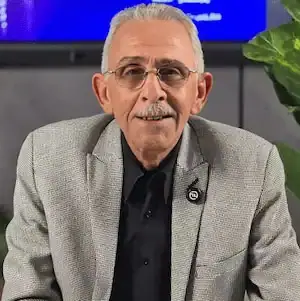
South Africa's Deputy Minister of International Relations and Cooperation, Ronald Lamola, has emphasized that the country cannot shoulder the pressures of irregular migration alone. As a leading destination for migrants on the continent, Lamola highlighted the need for collective action to address this challenge. He made these remarks while reflecting on the book "Worldmaking after Empire" by Adom Getachew, which explores how generations of anticolonial thinkers and leaders sought to liberate their countries and remake the international order.
Lamola drew inspiration from Getachew's work to deliver his address, titled "The Task Is Ours." He noted that the world inherited by African people was neither natural nor permanent, but rather a product of the political and economic choices of those who dominated them for centuries. Therefore, it can be remade through African agency. The Deputy Minister highlighted the historical imperatives that have shaped the relationship between the West and Global Africa, including the labour, territorial, and extractive imperatives.
The three historical imperatives identified by the late African scholar Ali Mazrui have had a profound impact on Africa. The labour imperative involved the uprooting and trafficking of millions of Africans for enslavement and exploitation across the Atlantic. The territorial imperative concerned the partitioning of the continent, dispossession of lands, and imposition of colonial rule. The extractive imperative involved the exploitation of Africa's mineral wealth to propel industrial development and prosperity in other parts of the world.
Lamola also touched on the current state of Pan-Africanism, noting that while the concept is still relevant, the reality is that Africa is not yet a united continent. The African Union, established in 2002, brings together 55 member states with a population exceeding 1.5 billion people and some of the world's fastest-growing economies. However, the Deputy Minister acknowledged that the continent still faces significant challenges, including the yoke of debt that weighs heavily on generations of Africans.
The debt burden on African countries reflects unequal and neo-colonial power structures, according to Lamola. He noted that 65 per cent of Africa's population lives in countries that spend more on interest payments than on health or education. This means that countries are servicing debt while defaulting on development. The Deputy Minister also highlighted the "prejudice premium" that African countries face, with borrowing costs significantly higher than those in other parts of the world.
Lamola emphasized that the consequences of these unequal power relations are also evident in the conflicts that continue to devastate parts of the continent. Today, 40 per cent of global conflicts are in Africa. He stressed that the demand for Africa's minerals presents an opportunity to turbocharge development, industrialization, and technological advancement, but also comes with the risk of reproducing familiar patterns of extraction.
The Deputy Minister concluded by emphasizing the need for collective action to address these challenges. He noted that Africa's cause must and will triumph, but it requires a concerted effort to change how power is organized on a global scale. Lamola's remarks highlight the need for Africa to work together to address the pressures of irregular migration, debt, and unequal power relations.
Key points
- South Africa's Deputy Minister of International Relations and Cooperation, Ronald Lamola, emphasizes the need for collective action to address irregular migration and other challenges facing the continent.
- Lamola highlights the historical imperatives that have shaped the relationship between the West and Global Africa, including the labour, territorial, and extractive imperatives.
- The Deputy Minister notes that Africa's debt burden reflects unequal and neo-colonial power structures, with 65 per cent of the population living in countries that spend more on interest payments than on health or education.