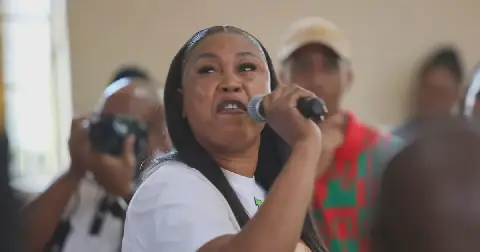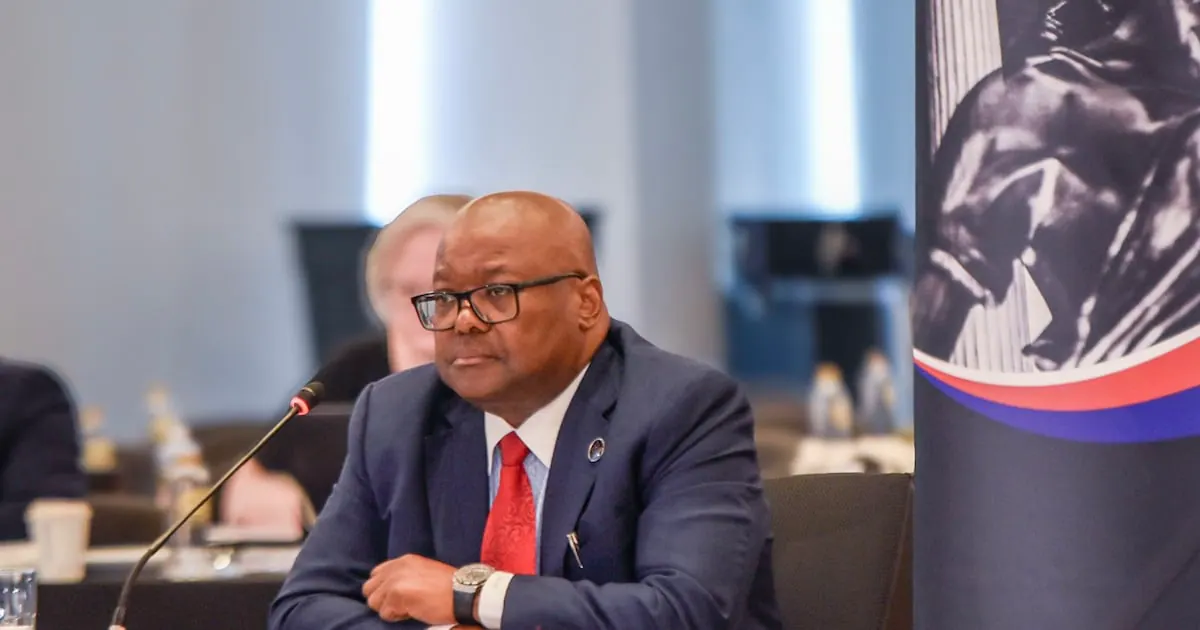
The Judicial Service Commission (JSC) has decided not to appoint either Judge Graham Moshoana or Judge Betty Mahalelo as the deputy president of the Labour Court and Labour Appeal Court. The decision was made after a rigorous interview process, during which both candidates faced intense questioning from the JSC, chaired by Chief Justice Mandisa Maya. Moshoana, a renowned expert in labour law, had submitted impressive academic qualifications and published several books on the subject.
Moshoana's chances of securing the position were compromised when he failed to circulate a full bench court judgment to a colleague before delivering it. This issue was raised by Judge President Mogomotsi Molahlehi, who seemed offended by Moshoana's vision and mission presentation, which suggested that the Labour Court was in disarray. Moshoana explained that the case was peculiar and that he had acted to prevent litigants from suffering due to a judge's failure to deliver a ruling.
The JSC interview panel expressed concerns about Moshoana's actions, with Commissioner Maboku Mangena stating that circulating a judgment to the relevant colleague was essential. Despite this, Moshoana maintained that all judges had agreed before he delivered the judgment. Meanwhile, Mahalelo, the other contender for the post, faced questions about her exposure to labour law, which raised concerns about her suitability for the senior position.
The rejection of both candidates has created an extraordinary situation, with the Labour Court and Labour Appeal Court set to be led by both an acting deputy and acting judge president. Judge President Molahlehi is scheduled to retire in a few weeks, leaving a significant leadership gap. This development has been criticized by legal researcher Mbekezeli Benjamin, who argues that the JSC should have taken a more proactive approach to talent management in the judiciary.
Benjamin noted that the JSC's approach was reactive, with interviews only scheduled after incumbents had left their positions. He emphasized that this approach was a dereliction of duty, particularly given the critical role of the Labour Court in resolving disputes timeously and its impact on the economic interests of workers and employers.
The Labour Court's leadership crisis is further complicated by the impending retirement of several senior judges in the next 12 months. This has raised concerns about the court's ability to function effectively and make timely decisions. The JSC will have to restart the process of finding a suitable candidate for the deputy judge president position.
The rejection of Moshoana and Mahalelo has significant implications for the Labour Court, which relies on effective leadership to deliver justice to workers and employers. The court's decisions have far-reaching consequences for the economy, and the leadership vacuum created by the JSC's decision may have a lasting impact on the court's operations.
Key points
- The JSC's decision has created a leadership crisis in the Labour Court, with the court set to be led by acting officials.
- The rejection of Moshoana and Mahalelo was due to concerns about their judgment and exposure to labour law.
- The Labour Court's leadership crisis is further complicated by the impending retirement of several senior judges.