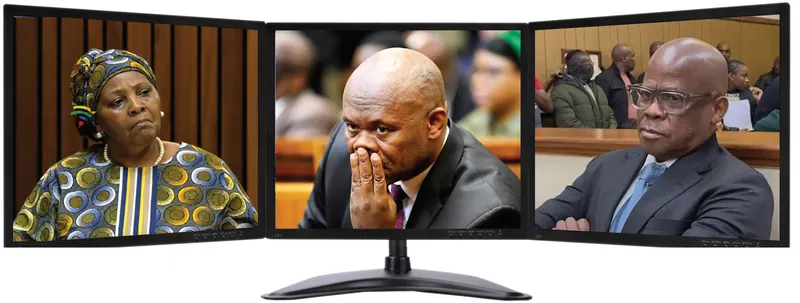
In a notable display of accountability, several high-profile figures in South Africa have recently faced consequences for alleged corruption and wrongdoing. Former National Assembly speaker and defence minister Nosiviwe Mapisa-Nqakula appeared in the High Court in Pretoria under cross-examination in her corruption and money-laundering trial. Meanwhile, suspended South African Police Service deputy national police commissioner Lieutenant General Shadrack Sibiya appeared in court seeking bail, and taxi boss Madoda Johannes “Joe Ferrari” Sibanyoni faced the Madlanga Commission over alleged extortion and cartel connections.
The South African justice system has been utilizing a range of legal instruments to hold individuals accountable, including J50 warrants of arrest, J15 charge sheets, and J51 search-and-seizure warrants. The use of these instruments has resulted in consequences for individuals such as Mapisa-Nqakula, who received a J50 warrant of arrest and a J15 charge sheet with 12 corruption counts and one money-laundering count. The paperwork matters, as it is suddenly moving, with one institution handing the baton to another: police, prosecutors, courts, commissions, and employers.
The cases have highlighted the efficiency of South Africa's justice system, with consequences becoming a schedule for those implicated. Former Ekurhuleni metro police deputy chief Julius Mkhwanazi has collected five J50s in five criminal matters, and a sixth J50 arrest warrant was issued after he was not brought from prison to the Boksburg magistrates’ court in his fraud matter. The court stayed it after discovering the State had bungled his transport. Imogen Mashazi, former Ekurhuleni city manager, also has her own J-entry in the republic’s growing ledger: J50 arrest and J15 charge sheet for fraud, corruption, and defeating the ends of justice.
The Public Protector, Kholeka Gcaleka, has also found that Mashazi acted improperly in appointing Ndumiso Gcwabe as deputy chief of the metro police despite his not meeting the requirements for the post. Brown Mogotsi, a political fixer, had a J50 executed over a curious case: the alleged staged assassination attempt. The courts have been unconvinced by the addresses offered for where he supposedly lives, and he is still looking for an address that will satisfy the courts.
The suspended Lieutenant General Shadrack Sibiya’s route was shorter: J50 arrest and J15 with six counts, resulting in him appearing in court arguing for bail instead of commanding detectives. Madoda Sibanyoni, a taxi boss, had already been acquainted with the republic’s J50 before the Madlanga Commission added a little spice: a rule 10.6 notice that compelled him to appear and account. Senzo Mchunu, the minister of police on special leave, has had two encounters with the republic’s J-language: J51 search, seize, repeat.
The J-country spirit is at work, with paperwork at the gate and cellphone out the door. Feroz Khan, fired SAPS Crime Intelligence deputy chief, was arrested in the illicit-precious-metals case with a J50 and subpoenaed to appear before Madlanga. However, he missed the rescheduled appearance, and Justice Mbuyiseli Madlanga called it a “flagrant disregard” of the subpoena. Dismissed after failing to appear in his expedited disciplinary hearing, Khan's actions demonstrate the consequences of not adhering to the law.
The accumulation of consequences for high-profile figures in South Africa demonstrates a shift towards accountability. With warrants arriving while another bail application is argued, search teams knocking while a commission notice waits, and dismissal letters landing while criminal referrals are drafted, these are not headlines standing alone; they are consequences overlapping. As a result, those answering are no longer confined to the lower floors of power but include ministers, generals, senior police officers, taxi bosses, and political fixers.
Key points
- The use of J50 warrants, J15 charge sheets, and other legal instruments has resulted in consequences for high-profile figures in South Africa.
- The South African justice system has demonstrated efficiency in holding individuals accountable for alleged corruption and wrongdoing.
- The accumulation of consequences for high-profile figures demonstrates a shift towards accountability in South Africa.