The South African Reserve Bank's Monetary Policy Committee has raised the repo rate by 25 basis points, resulting in a 0.25% increase in the prime lending rate to 10.75%. This decision was announced by SARB Governor Lesetja Kganyago, who stated that headline inflation is projected to hit 5% before slowing to 3% at the end of 2027. The increase is attributed to rising fuel prices and external inflation risks.
According to Stats SA, South Africa's inflation rate edged higher to 4.4% in August, from 4.3% in July. The increase is largely due to fuel price hikes in September and October, which are expected to impact the inflation outlook. FNB Chief Economist Mamello Matikinca-Ngwenya stated that the MPC's decision reflects the need to reinforce policy credibility at a time when external inflation risks have intensified and inflation expectations remain above the SARB's 3% objective.
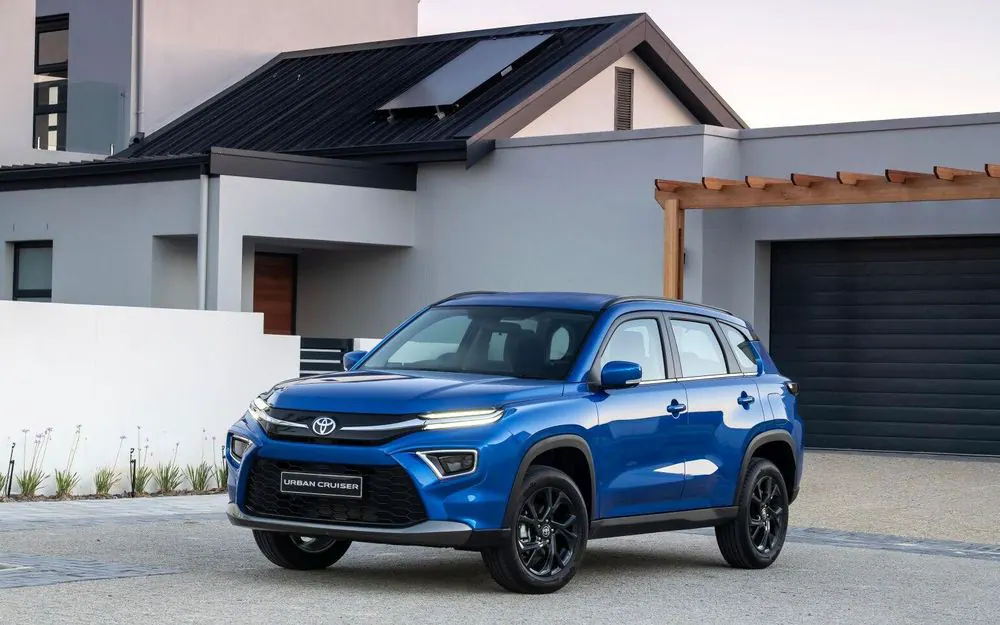
The interest rate hike will affect car loan repayments, with a R250,000 vehicle loan resulting in an increased payment of R32 per month. For a R500,000 loan, the increase will be R64, and R127 for a R1 million loan. These projections are based on a six-year, deposit-free term calculated at prime. The 25bp hike will add R2,292 to the interest bill over six years on a R250,000 car and R4,583 on a R500,000 vehicle.
Home loan repayments will also be impacted, with an R800,000 home loan at prime over 20 years resulting in an increased monthly instalment of around R135. Those with R1.5 million home loans will pay around R253 more, while those with a R3 million loan will need to find an extra R505. The extra interest cost over the loan duration will be in the region of R32,350 for an R800,000 loan, rising to R60,657 for an R1.5 million debt and R101,094 for the R2.5 million example.
Samuel Seeff, chairman of the Seeff Property Group, feels that the interest rate hike will inflict real financial pain on households and businesses. He stated that the move will unnecessarily punish already overburdened consumers and will dampen economic and property market activity. Seeff added that household budgets are already stretched following the May rate hike and other cost increases.
However, FNB CEO Lytania Johnson stated that the latest rate hike does not necessarily signal the start of a prolonged tightening cycle. She noted that economic growth remains subdued, unemployment remains elevated, and consumers continue to feel the impact of higher living costs. Johnson added that managing inflation risks remains critical for protecting purchasing power and supporting long-term economic confidence.
Dr Andrew Golding, chief executive of the Pam Golding Property Group, noted that banks are continuing to support housing-market activity through competitive lending and products designed to reduce the upfront financial barriers to homeownership. He stated that zero-deposit and cost-inclusive home loans remain an important part of this picture, with the proportion of first-time buyer applications for cost-inclusive loans increasing more than fivefold from 2021 to early 2026.
Key points
- The interest rate hike will impact car and home loan repayments, with increased monthly instalments expected.
- The repo rate has been raised by 25 basis points, resulting in a 0.25% increase in the prime lending rate to 10.75%.
- The interest rate hike is attributed to rising fuel prices and external inflation risks, with inflation projected to hit 5% before slowing to 3% at the end of 2027.