More than 160 years after the first Indian indentured labourers arrived in Natal, their descendants continue to seek recognition of their ancestors' sacrifices. The community is celebrating Diwali with growing recognition from the Zulu monarchy and the country's political leadership. However, a long-standing historical injustice remains unresolved. Despite repeated promises, a prominent monument honouring the men, women and children whose sacrifices helped build modern KwaZulu-Natal has yet to be erected in Durban.
The first Indian indentured labourers arrived in Natal on November 16, 1860, aboard the SS Truro. Over 150,000 Indians arrived under indenture between 1860 and 1911, enduring exploitation, discrimination and hardship. Their contributions helped transform the province's agricultural, commercial and industrial landscape. The descendants of these labourers have established themselves in various fields, including business, politics, education, medicine, law, sport and culture, and also contributed to the struggle against apartheid.
The proposed monument, reportedly allocated R10 million, with R5m spent, has been characterised by delays, unfulfilled commitments and postponed unveilings. KwaZulu-Natal premiers and eThekwini mayors have pledged to erect a monument on Durban's historic foreshore, where the first indentured labourers arrived. However, the project has yet to materialise. The community's history is inseparable from that of KwaZulu-Natal's Zulu majority, with whom they have lived alongside for over 160 years, shaping the province's social and economic identity.
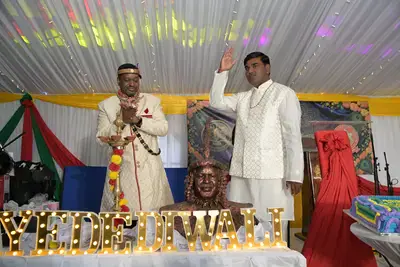
This shared history has found expression in the celebration of Diwali, the Hindu Festival of Lights. This year's celebrations received rare royal and presidential recognition, reflecting the festival's growing significance beyond its religious origins. King Misuzulu kaZwelithini hosted his first Bayede Diwali Festival at the eMashobeni Royal Palace in Pongola, bringing together members of the Zulu and Indian communities in a celebration of cultural cooperation and national unity.
Prince Ishwar Ramlutchman Mabheka Zulu, the adopted son of King Goodwill Zwelithini and half-brother of King Misuzulu, has played a key role in strengthening ties between the monarchy and the Indian community. Through his leadership of the Sivananda World Peace Foundation, he has helped forge closer ties between the two communities, using religious and cultural celebrations as platforms for reconciliation and cooperation.
The absence of a monument honouring the indentured labourers raises an uncomfortable question about the recognition of the community whose history is embedded in KwaZulu-Natal. The proposed monument represents recognition of the suffering, resilience and achievements of a community whose labour and determination helped shape South Africa's economic and political development. For descendants of the indentured labourers, the absence of such a landmark leaves an important chapter of the country's history inadequately acknowledged.
The growing embrace of Diwali by the Zulu monarchy and the South African state offers an opportunity to renew calls for recognition of the indentured labourers' sacrifices. President Cyril Ramaphosa extended Diwali and Hindu New Year greetings to the Hindu community, describing the festival as an affirmation of faith, culture and diversity. Indian Prime Minister Narendra Modi also extended Diwali greetings to India's citizens and the global Indian diaspora.
Key points
- The Indian community in South Africa is seeking recognition for the sacrifices of indentured labourers who arrived in Natal over 160 years ago.
- A monument honouring the indentured labourers has been promised but not delivered, despite repeated commitments from provincial and municipal administrations.
- The celebration of Diwali has received growing recognition from the Zulu monarchy and the South African state, but the community's history remains inadequately acknowledged without a prominent landmark.