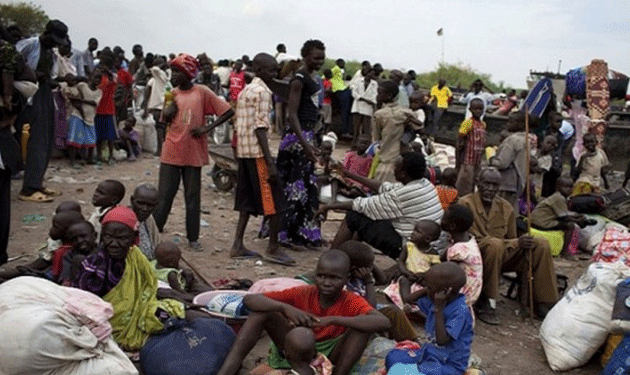
South Africa is facing a severe hunger crisis, with the country's food insecurity index reaching its highest level since 2010. According to a report by a research team from the University of Stellenbosch, 12% of households in South Africa experienced hunger in 2025, compared to 11.9% in the previous year. This has led to a decline in the country's overall food security rating from 56.5 to 52.6 points.
The report attributes the deterioration in food security to the rapid inflation of food prices, which has outpaced general inflation rates. This has weakened the ability of households to afford food, despite relatively stable access to and diversity of food systems. Although food inflation slowed down to 1% in June, the increasing financial pressures of housing and public services continue to strain household budgets and erode purchasing power.
The hunger crisis has had a disproportionate impact on rural households, particularly those headed by women. The percentage of such households living below the food poverty line has risen to 41.7%. The report also highlights significant regional disparities, with some areas experiencing greater food insecurity than others.
The research team found that households are being forced to purchase smaller packets and cheaper food, which has negatively impacted the nutritional value and biodiversity of their diets. This has serious implications for the health and well-being of vulnerable populations, particularly children and the elderly.
The South African government has been urged to address the root causes of food insecurity, including poverty, inequality, and unemployment. The report's authors emphasize the need for a comprehensive and multi-faceted approach to addressing the country's hunger crisis, including support for small-scale farmers and the development of sustainable food systems.
According to the report, 14.7% of the population, or approximately 7.4 million people, are affected by hunger in South Africa. This has significant implications for the country's social and economic development, as well as its human rights obligations.
The University of Stellenbosch research team is calling for urgent action to address the hunger crisis in South Africa. The team emphasizes that a coordinated effort is needed to address the complex and interconnected factors driving food insecurity in the country.
Key points
- South Africa's hunger crisis has reached its highest level since 2010, with 12% of households experiencing hunger in 2025.
- The crisis has had a disproportionate impact on rural households, particularly those headed by women, with 41.7% living below the food poverty line.
- The report's authors are calling for a comprehensive and multi-faceted approach to addressing the country's hunger crisis, including support for small-scale farmers and the development of sustainable food systems.