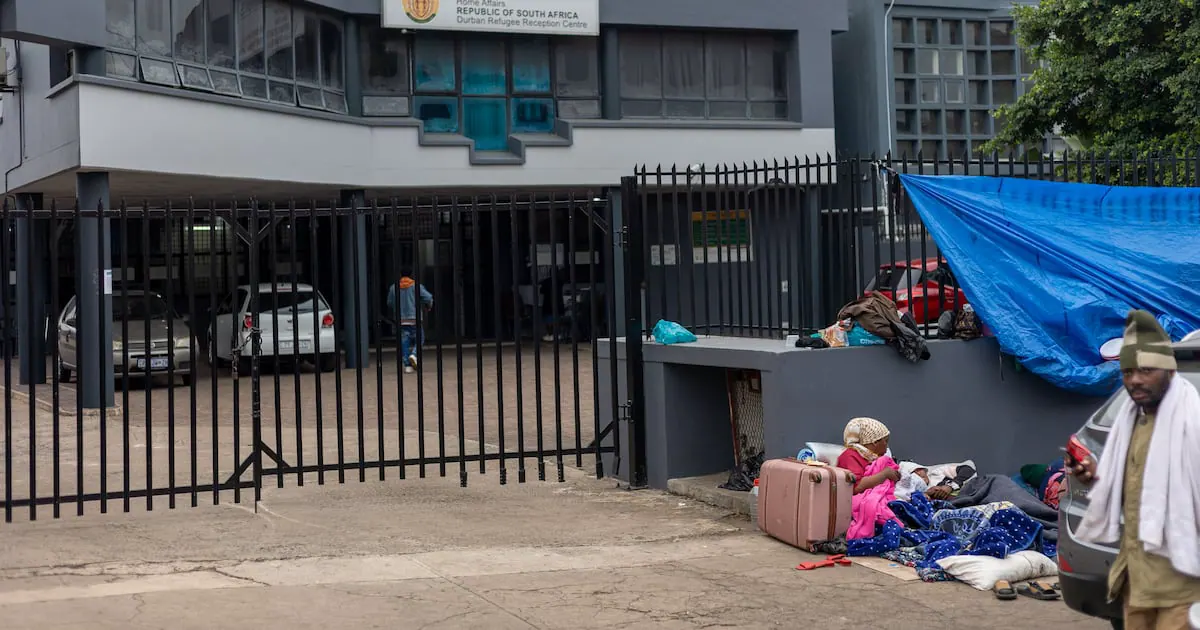
The South African Department of Home Affairs has issued a directive instructing all refugee reception offices to accept asylum applications from anyone seeking protection, including those who entered the country illegally. The directive, signed by acting director-general Thulani Mavuso on September 28, aims to implement a July 2026 Constitutional Court ruling that declared key sections of the Refugees Act invalid. This ruling has significant implications for the country's asylum process.
The directive explicitly states that every refugee reception office must receive and assist individuals who report in person and indicate an intention to apply for asylum. This includes those who entered the country unlawfully or at a place other than through a port of entry, did not declare an intention to apply for asylum at a port of entry, holds no visa, or did not report to a refugee reception office within five days of entry into the country. Officials are prohibited from requiring applicants to give reasons for unlawful entry or produce an asylum transit visa.
According to the department, no office may enforce quotas or policies that restrict access to the application process. The directive has sparked heated public debate regarding border enforcement and refugee legislation. Mavuso confirmed the directive's validity but raised concerns over severe administrative backlogs. He warned that the department may be overwhelmed by the numbers of applicants, which could cause delays for genuine asylum seekers who urgently require protection.
Mavuso reported a surge in applicant numbers at the Durban office last week. However, he emphasized that staff cannot turn people away and must instead find operational solutions, such as extending office hours and hiring additional staff. The department is required to include applicants in the processing system before determining whether they qualify for exclusion. Factors such as coming from a politically stable nation will be taken into consideration during evaluation.
Economic hardship alone does not qualify someone for asylum status. Mavuso clarified that individuals granted asylum status are not allowed to visit their home countries and come back. If they do, it proves their claims of persecution were unfounded and that they abused the asylum process. The department's primary duty is to uphold the constitutional protection of life once a person is within South Africa's borders.
Addressing concerns over system abuse, Mavuso emphasized that human rights principles come first. The department will consider an applicant's background, including any existing criminal records, during the evaluation process. However, the state cannot deny protection based solely on an individual's criminal history. The directive aims to balance the need for border control with the obligation to protect human rights.
The implementation of the directive will be closely monitored, with the department seeking to strike a balance between processing asylum claims efficiently and ensuring that those who genuinely require protection are able to access it. The Constitutional Court ruling and subsequent directive have significant implications for South Africa's asylum process and its obligations under international law. The department's ability to manage the increased workload will be crucial in determining the success of the directive.
Key points
- The directive instructs refugee reception offices to accept asylum applications from all individuals seeking protection, including those who entered the country illegally.
- The department is required to include applicants in the processing system before determining whether they qualify for exclusion.
- Economic hardship alone does not qualify someone for asylum status in South Africa.