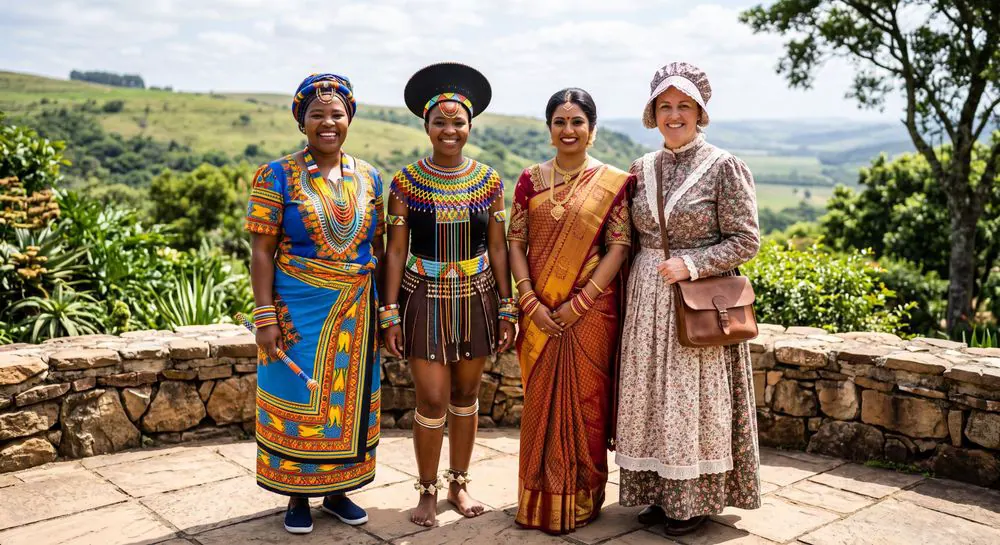
South Africa takes pride in its cultural heritage, showcasing its diverse traditions and customs through various celebrations and events. However, despite this outward display of cultural appreciation, the country's indigenous languages continue to face significant challenges in education, science, technology, and public life. The marginalization of these languages has resulted in a disconnect between cultural heritage and everyday life.
A recent event highlighting the challenges faced by indigenous languages involved a student who chose to translate articles from English into Afrikaans instead of her mother tongue. The reason behind this choice was that she had not been properly taught her home language in school. This incident underscores the issue of language preservation and the need for more than just ceremonial recognition of cultural heritage.
The dominance of English in various aspects of South African life, including universities, corporate life, media, and government, has contributed to the marginalization of indigenous languages. While the country recognizes eleven official languages, the hierarchy of language remains skewed in favor of English. This has resulted in African languages being treated as languages of identity rather than languages of advanced knowledge.
The Department of Basic Education has initiated a program to promote Mother Tongue-based Bilingual Education, which aims to extend African-language teaching beyond the foundation phase. This program includes teaching mathematics and natural sciences in African languages, addressing the historical disadvantage faced by African-language learners. However, the deeper challenge lies in continuously expanding these languages to carry the intellectual life of a modern society.
The digital age presents both opportunities and challenges for language development. The creation of digital corpora, translation of concepts, and production of literature in African languages are crucial for their technical sophistication. The digital divide is no longer just about internet access but also about which languages the internet knows. Languages with thin digital archives will inevitably be at a disadvantage in the next generation of AI tools.
To address these challenges, South Africa needs to commission more serious non-fiction in African languages and reward intellectual production in these languages. Public broadcasters should also promote indigenous languages in complex economic and political analysis, rather than confining them to entertainment and cultural programming. This will help to promote a more inclusive and equitable society.
The issue of language development also has a class dimension, with English proficiency increasingly functioning as cultural capital. This signals education, employability, and membership of professional life, highlighting the need for a more nuanced approach to language development and promotion.
Key points
- Indigenous languages in South Africa face significant challenges in education and public life despite the country's cultural heritage celebrations.
- The dominance of English in various aspects of South African life contributes to the marginalization of indigenous languages.
- Promoting African languages requires continuous expansion and development to carry the intellectual life of a modern society.