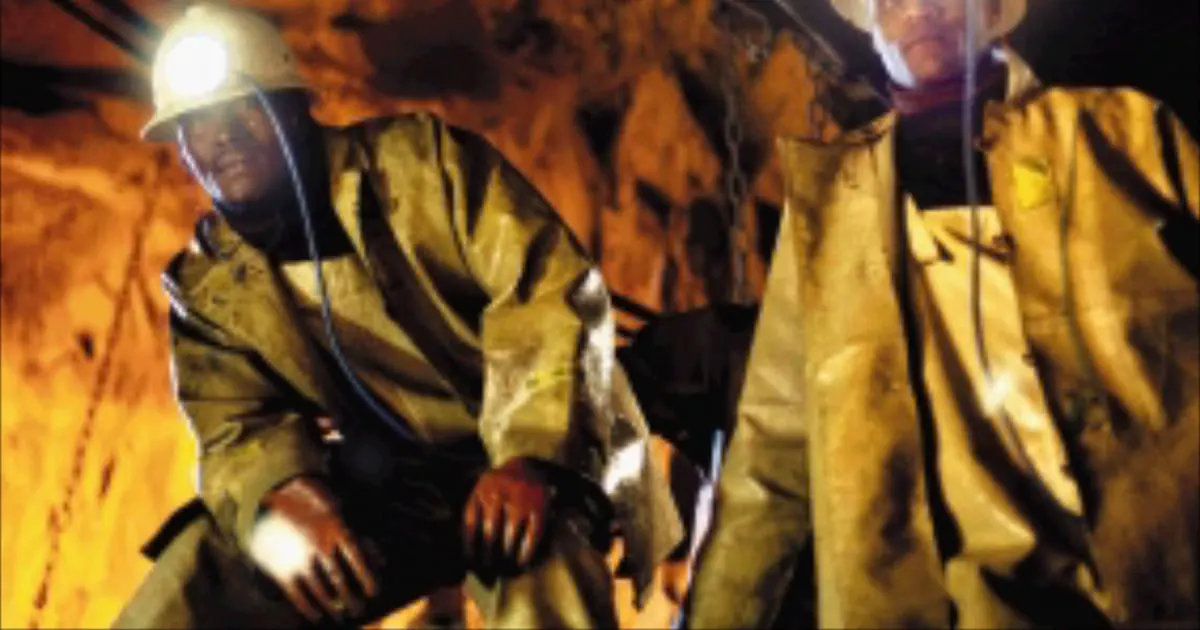
South Africa's junior mining exploration fund has been making non-repayable grants to early-stage explorers, with the state initially investing R400m and a producer adding R600m in February 2026, taking the fund to R1bn. The grants convert to equity or a profit share if the work finds an ore body, and the state financier keeps a right of first refusal over follow-on funding. This funding model is designed to support explorers in the early stages of their projects.
In contrast, the Council for Geoscience's government grant is R613.6m in 2024/25 and R640.6m this year, focused on funding geological information rather than drilling. This funding supports an earlier stage of the exploration process, where the money buys information rather than a claim on a discovery. The council's funding is used for mapping and other geological information programmes, which help explorers decide which ground is worth testing.
The South African government funds two stages of the same exploration process, with one having a defined return mechanism and the other supporting an earlier stage. The fund pays for the work that tests a target and reduces uncertainty at that place, while public geological data pays for the screening that comes first and helps decide which ground is worth testing. This two-stage approach aims to reduce the time and cost of exploration.
The junior mining exploration fund has reported activity, with its first window placing R160m with eight of 117 applicants, and two have since reached drilling. Thirteen projects have been funded, but these are output measures, not necessarily a realised return. The fund's return mechanism was built in before the first rand went out, and conversions lie years out. The state can back its own successes through the right of first refusal.
The Council for Geoscience's mapping programme aims to reduce the time and cost of exploration, with full coverage at 1:50,000 scale requiring 1,916 map sheets. By March 2024, the count stood at 307, and another 39 followed in 2024/25, taking coverage to 18%. The department has since reported 20% coverage for 2025/26, but at the 2024/25 rate, the sheets still outstanding take about 40 years to complete.
Despite the progress in mapping, exploration spending in South Africa fell 5.3% to R738m in 2025, measured in 2015 prices, a seventh consecutive annual decline. The country's exploration budget is under 1% of the global total, against a stated 5% target. China's natural resources ministry has written intensified basic geological surveys and a new round of strategic mineral exploration into the 15th Five-Year Plan to 2030.
The effectiveness of the funding model and the council's mapping programme in boosting exploration activity remains uncertain. While the quality of the maps is not in question, it is unclear whether they change exploration decisions. The agency's plan sets targets for sheets published, but there is no data on whether a sheet changes an exploration decision. The rights registry, which determines who may test the ground, is cited alongside policy uncertainty as a reason for the decline in exploration spending.
Key points
- The South African government funds two stages of the exploration process, with different return mechanisms.
- The Council for Geoscience's mapping programme aims to reduce the time and cost of exploration.
- Despite progress in mapping, exploration spending in South Africa has declined for seven consecutive years.