South Africa is grappling with a severe gender-based violence (GBV) crisis, which has been described as a test of national leadership. According to the first national GBV survey, one in three women aged 18 or older have experienced physical violence in their lifetime. The crisis has resulted in alarming statistics, with over 11,800 rapes recorded in the final three months of 2024, approximately 128 cases per day.
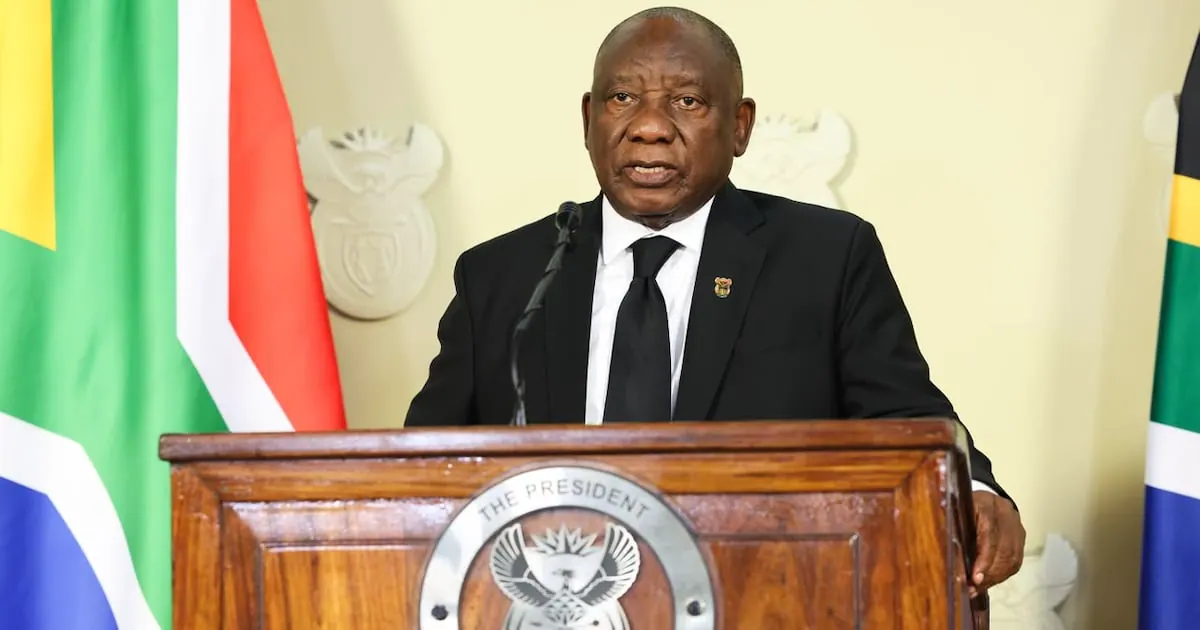
The GBV crisis has led to the discovery of numerous women's bodies in various provinces, including 13 in Gauteng and 19 in KwaZulu-Natal. The persistence of the crisis has been attributed to ignored warnings, institutional failures to coordinate, and a lack of accountability. President Cyril Ramaphosa's address on September 29 was criticized for not providing concrete solutions or holding office-bearers responsible for past failures.
The President's address was seen as a repetition of empty promises, with no credible enforcement mechanism or consequences for ignoring new directives. The address shifted attention from state accountability to individual moral conduct, appealing to "good men" to take action. Critics argue that this approach displaces the responsibility of the state and institutions, instead emphasizing private morality.
Effective leadership in addressing GBV requires a focus on responsibility and accountability that can be measured. The state's failure to intervene in cases of GBV is often preceded by warnings, with victims alerting relatives, friends, or the police. However, these warnings often do not trigger protection, investigation, and consequences, highlighting the need for a more effective and coordinated response.
The institutions responsible for addressing GBV, including the police, prosecutors, courts, and health services, must form an unbroken chain of responsibility. A victim-centered police service is crucial in responding promptly, recognizing escalating abuse, protecting survivors, and investigating thoroughly. The crisis is also linked to a broader societal issue of civic disintegration and the normalization of violence against women.
The GBV crisis is intertwined with a political economy that leaves many young people outside the workforce, property, and meaningful recognition. This exclusion creates fertile ground for wounded masculinity and the desire to recover power through domination. The upcoming local elections will test whether parties and coalitions can govern effectively and provide credible plans to make communities safer for women.
Ultimately, addressing GBV requires more than awareness campaigns or pacifying youth; it demands the organization of people into work, service, learning, and local reconstruction, while challenging patriarchal norms that turn frustration into violence against women. A republic serious about GBV must prioritize rebuilding institutions, opportunity, and ethical citizenship.
Key points
- The GBV crisis in South Africa is a test of national leadership, with 11,800 rapes recorded in the last quarter of 2024.
- The crisis persists due to ignored warnings, institutional failures, and lack of accountability.
- Effective leadership requires a focus on responsibility and accountability, with a victim-centered police service and an unbroken chain of responsibility among institutions.