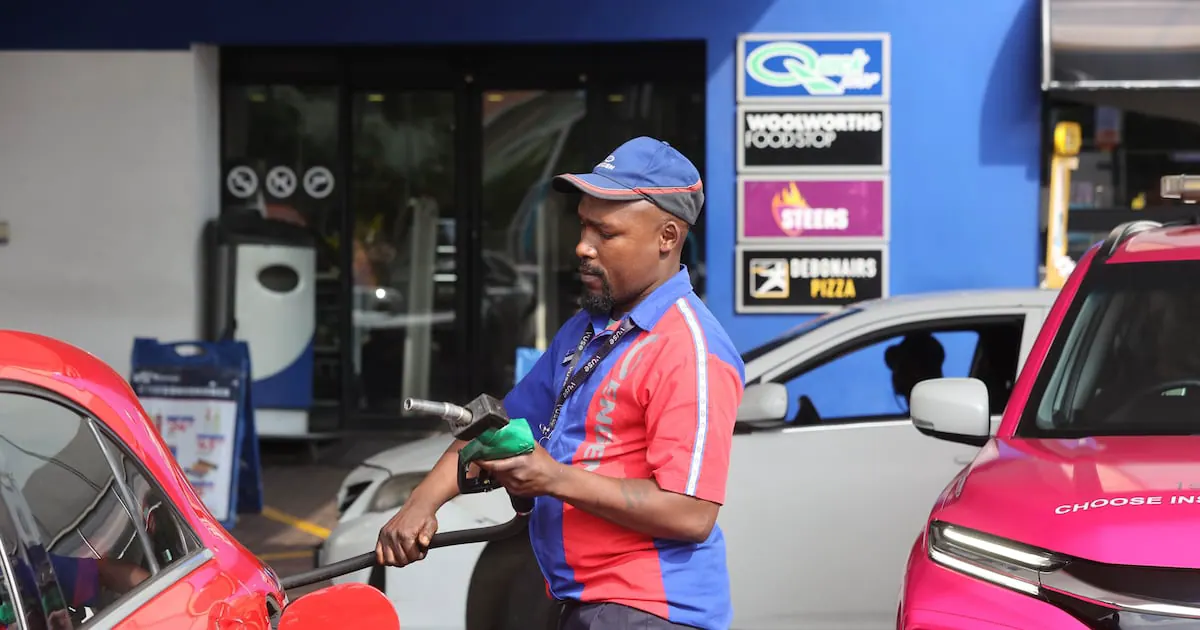
The South African government has announced a significant increase in fuel prices, effective from Wednesday, which is expected to exacerbate the country's cost-of-living crisis. The department of mineral and petroleum resources revealed that 95-grade unleaded petrol will now cost nearly 50% more than it did in March, before prices started spiking due to a constrained global oil supply triggered by the US-Iran war.
The wholesale price of diesel has leapt 72% over the same period, adding to the financial burden on households and businesses. From midnight on Wednesday, motorists will pay R3.12 more for 93-grade petrol at the pump than they did last month, while the price of 95-grade will soar by R3.33 to R30.25 in the economic hub of Gauteng and other inland areas and to R29.38 in coastal areas.
The increase in fuel prices is likely to fuel consumer inflation, keeping the door open for another interest rate hike by the South African Reserve Bank (SARB) in coming months. The SARB had already implemented rate hikes in May and September, and Reserve Bank governor Lesetja Kganyago warned that large and sustained shocks were more likely to trigger second-round effects, in which individual price changes evolved into widespread increases.
The South African Petroleum Retailers Association (Sapra) attributed the increase to global instability, stating that the country imports a large share of its refined product rather than refining it locally, thereby importing volatility along with the fuel. Sapra's national chair, Henry van der Merwe, noted that nothing a retailer or motorist does in South Africa changes the calculation.
The labour federation Cosatu described the latest round of huge fuel increases as yet another blow that workers and the economy simply cannot afford. Cosatu stated that workers spend up to 30% of their wages on transport, and a R3 per litre hike wipes out wage increases, pushes taxi and bus fares up, and threatens to make food even more expensive for working-class families.
Tertia Jacobs, treasury economist and fixed income specialist at Investec, noted that the oil market remains highly unsettled, with oil prices staying at more elevated levels than previously anticipated. Jacobs added that there's a shortage of refined products, which has cracked spreads to record highs, resulting in the steep increase in fuel and diesel prices.
The increase in fuel prices is likely to increase calls for the government to bring back relief measures, such as a fuel levy reprieve, which was suspended after providing an estimated R17.2bn in revenue. Cosatu criticised the Treasury and the department of mineral and petroleum resources for failing to act to provide some cushion for commuters and the economy to manage the shock.
Key points
- The price of 95-grade unleaded petrol has breached R30 per litre for the first time.
- The wholesale price of diesel has increased by 72% since March.
- The fuel price increase is expected to fuel consumer inflation and may lead to another interest rate hike by the South African Reserve Bank.