A pioneering scientific initiative, the South African Pollen Monitoring Network, has developed South Africa's first five-year pollen calendars for several different natural regions. The network, set up seven years ago, sourced equipment and built research teams in different cities to collect and analyze pollen data. The calendars show which plants release pollen in each region, when they release it, and how pollen levels change during the year. This information will help doctors diagnose and manage allergies and support warnings about periods of high pollen exposure.
The South African Pollen Monitoring Network covered inland grassland sites in Johannesburg and Bloemfontein, and savanna sites in Pretoria and Kimberley. Its coastal sites represented fynbos in Cape Town, the Indian Ocean coastal belt in Durban, and Albany thicket in Gqeberha. Researchers identified 103 types of pollen across seven South African cities, with grass producing the most pollen and being the main cause of pollen allergies. Inland cities had much higher pollen levels than coastal cities, and their grass pollen seasons lasted for more than 200 days a year.
Bloemfontein, located in the grassland biome, recorded the highest total amount of pollen over a year, mainly due to its high levels of grass and tree pollen. Grass released pollen for an average of 246 days each year, about eight months. Kimberley, in the savanna biome, had the highest average concentration of grass pollen, with an open, grassy landscape and a grass season lasting, on average, 247 days a year. Johannesburg, also in the grassland biome, had the highest average tree pollen, likely due to its large "urban forest" of planted exotic trees.
In contrast to inland cities, coastal cities recorded lower overall pollen loads and shorter grass seasons, often under 100 days a year. Cape Town, in the fynbos biome, had the longest tree pollen season in the country, lasting 297 days a year, starting early in July. The pollen profile was dominated by exotic trees, with Cupressaceae (cypress) accounting for 30% of the five-year average, followed by Myrtaceae (eucalyptus) at 11%, and Pinus (pine) at 9%. Durban, in the Indian Ocean coastal belt, had a low overall pollen catch, with the shortest grass season in the study, lasting just 71 days and starting late in summer.
Researchers found that between 2019-2021 and 2022-2024, pollen levels fell across most regions. Grass pollen nearly halved, while tree pollen doubled in inland cities. Climate change may play a part in changing pollen levels and seasons, and also increase the risk of "thunderstorm asthma." During some storms, moisture bursts grass pollen into tiny pieces that winds push towards the ground, causing sudden and dangerous asthma attacks.
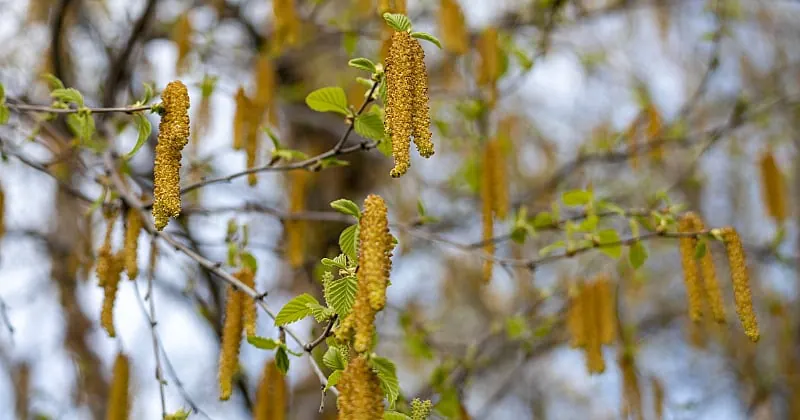
For people suffering from hay fever or asthma, the new calendars can act as an early warning system. Knowing exactly when pollen season starts lets patients begin preventive treatments, such as antihistamines or nasal sprays, before their symptoms start. The new data revealed surprising allergy triggers, including birch tree pollen, a major cause of hay fever in the northern hemisphere, which was detected across South Africa where it is an ornamental, non-indigenous tree planted in gardens.
The development of the pollen calendars is a significant step forward in managing allergies in South Africa. Researchers hope to extend monitoring into rural areas and include pollen warnings in the national health system. They also plan to use DNA testing to identify allergy-causing plants that look identical under a microscope. For now, the calendars help South Africans see which pollen is in the air, when levels are highest, and when they may need to take precautions.
Key points
- The South African Pollen Monitoring Network has developed the country's first five-year pollen calendars, providing crucial information for allergy sufferers to prepare for pollen season.
- Inland cities had much higher pollen levels than coastal cities, with grass pollen being the main cause of allergies.
- The calendars can act as an early warning system for people with hay fever or asthma, allowing them to begin preventive treatments before symptoms start.