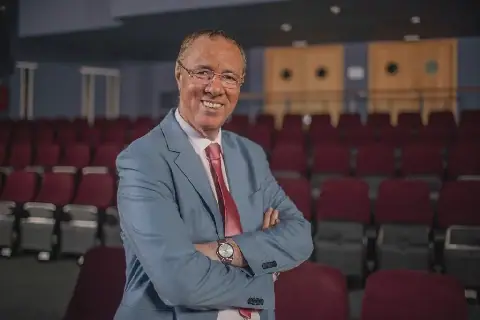
Phumzile Mlambo-Ngcuka passed away on November 20, 2026, at the age of 71. Acting President Paul Mashatile announced her death in a statement, expressing shock and sadness on behalf of President Cyril Ramaphosa, the government, and the nation. The cause of death and funeral arrangements have not been disclosed, as the family has requested privacy. Mlambo-Ngcuka was a trailblazer for women in South African politics, achieving numerous firsts throughout her career.
Born on November 3, 1955, in Clermont, outside Durban, Mlambo-Ngcuka began her career as an educator, earning a Bachelor of Arts in Education from the National University of Lesotho in 1980. She taught at Ohlange High School in Inanda, KwaZulu-Natal, a school founded by John Langalibalele Dube, the first president of the African National Congress. Mlambo-Ngcuka's early life and career were marked by her commitment to education and community.
Mlambo-Ngcuka's entry into politics began in the 1980s, when she became the first president of the Natal Organisation of Women, an affiliate of the United Democratic Front. She later worked abroad as the youth director of the World YWCA in Geneva, demonstrating her international reach and influence. Upon her return to South Africa, she entered Parliament for the ANC and chaired the Public Service and Administration portfolio committee.
Mlambo-Ngcuka's rise to prominence continued as she served as Deputy Minister of Trade and Industry from 1996 to 1999 and Minister of Minerals and Energy from 1999. Her tenure in the latter role was marked by significant reforms, including the overhaul of mineral rights law and the empowerment framework for the mining industry. In 2005, President Thabo Mbeki appointed her Deputy President, making her the first woman to hold the country's second-highest office.
As Deputy President, Mlambo-Ngcuka championed initiatives aimed at addressing structural unemployment and skills shortages, including the Accelerated and Shared Growth Initiative for South Africa and the Joint Initiative on Priority Skills Acquisition. Her time in office ended with Mbeki's in 2008, but she continued to make an impact through her work with the Umlambo Foundation, which focused on strengthening school leadership in poor communities.
Mlambo-Ngcuka's influence extended globally, as she served as Under-Secretary-General and Executive Director of UN Women from 2013 to 2021. During her tenure, she led the HeForShe campaign and the Generation Equality Forum, mobilizing billions in commitments for women's rights. Her legacy as a champion for women's rights and education has left a lasting impact on South Africa and the world.
In her later years, Mlambo-Ngcuka returned to South Africa, becoming Chancellor of the University of Johannesburg in 2022 and receiving an honorary doctorate from the University of the Free State in 2024. Her passing has sparked reflection on her legacy and the impact she had on South African politics and society. Her career serves as a testament to the power of conviction and the importance of creating opportunities for women in leadership.
Key points
- Phumzile Mlambo-Ngcuka was the first woman to serve as South Africa's Deputy President, serving from 2005 to 2008.
- She was a key figure in the development of South Africa's mineral rights law and empowerment framework for the mining industry.
- Mlambo-Ngcuka continued to make an impact globally, serving as Under-Secretary-General and Executive Director of UN Women from 2013 to 2021.
Reporting sources
- SA’s first female Deputy President Phumzile Mlambo-Ngcuka dies at 71 · The African Mirror