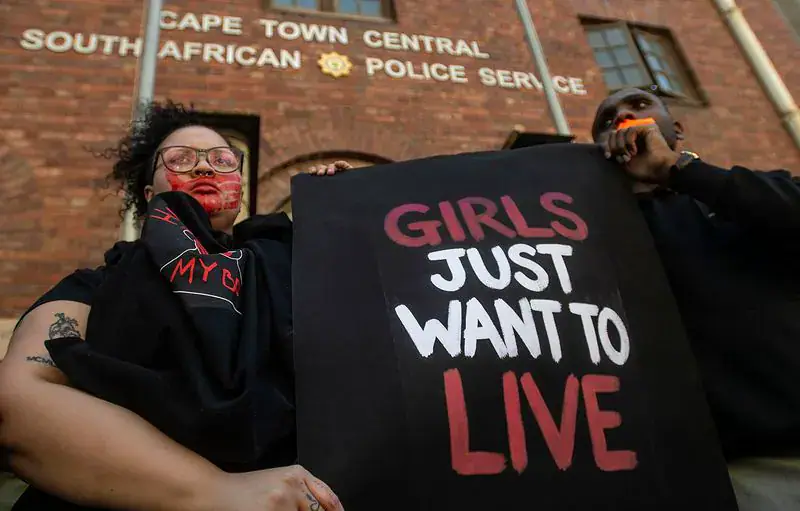
A recent study by the South African Medical Research Council found that gunshots accounted for more than a third of femicides in 2020/21, the highest share in two decades. In roughly three-quarters of partner femicides involving a firearm, the killer was a licensed owner using a legal weapon. This is a major concern in South Africa, where the rate of intimate partner femicide is almost five times the global average.
The South African government has implemented measures to address gender-based violence and femicide, including a four-point plan announced by President Ramaphosa in September. However, the plan does not mention guns, despite research showing that they are a major driver of femicide. The President noted that more than 60% of women murdered in 2021 and 2022 were killed by an intimate partner.
Research shows that men who work in security, including private security officers and police and defence force members, are over-represented among those who kill their partners and then themselves. These individuals often have access to firearms, and employers have weak or poorly enforced systems for removing guns from those who pose a risk.
There have been calls for restricting access to firearms as part of efforts to prevent gender-based violence, including from Sonke Gender Justice and the Minister responsible for women's rights. However, these calls have not been translated into specific interventions, and firearm regulation has disappeared from national plans and strategies.
A study into protection orders found that they can be effective in reducing violence, but there is a major gap for women whose abusive partner has a weapon. Only 11% of women applied for and had the firearm confiscated, and 63% were never told they could ask for it to be removed.
The global community has also failed to address the role of firearms in violence against women. A review of World Health Assembly resolutions and World Health Organization publications found that attention to firearm violence has declined steadily over 15 years. The UN Women's 2023 guidance on national action plans to prevent violence against women makes no mention of firearms.
Despite the challenges, there is hope that reducing the availability of guns can save women's lives. After South Africa's Firearms Control Act came into force in 2000, stricter licensing and competency testing led to a decline in femicides involving guns. However, the gains have since reversed, and guns have become easier to obtain, with licence applications reaching a record high in 2024/25.
Key points
- Stricter firearm regulation and better enforcement of protection orders are key to reducing femicide in South Africa.
- Guns are now the most common weapon used to kill women in South Africa, with most being legally acquired.
- The South African government has been criticised for ignoring the role of guns in its efforts to address gender-based violence and femicide.