The South African economy is facing significant challenges due to global instability, with the SA Reserve Bank (SARB) recently raising the repo rate by 25 basis points to 7.25%. This move is aimed at mitigating inflation risks, which have been fueled by higher fuel prices and global instability. The SARB has warned that these factors are having a ripple effect on the economy, with headline inflation rising to 4.4% in August.
The impact of global instability on South Africa's economy is being felt across various sectors. The economy contracted by 0.2% in the second quarter, and the SARB expects growth of only 1.2% this year. Fuel prices are a major concern, with petrol showing an average under-recovery of R2.83 a litre and international oil prices remaining volatile. This has significant implications for households and businesses, as diesel is a critical component of the economy, powering trucks, buses, farms, mines, and generators.
The diesel shortage is particularly worrying, as it has a direct impact on the cost of transport, food, and production. When diesel prices rise sharply, the effects are felt throughout the economy, making it more challenging for households to make ends meet. This is especially concerning given that unemployment remains at 33.6%, leaving many families with little room in their budgets to absorb additional costs.
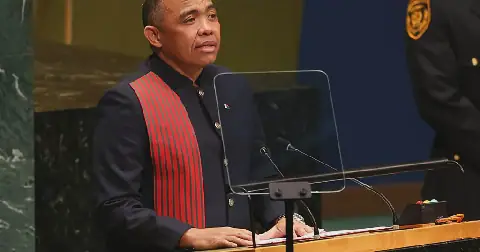
The global economic landscape is also a significant concern for South Africa. World leaders are gathered at the United Nations General Assembly in New York, discussing pressing issues such as conflicts in the Middle East and Ukraine. These conflicts are disrupting energy and shipping routes, contributing to oil price volatility. In fact, oil prices rose nearly 4% on Wednesday due to tensions involving Iran.
The meeting between US President Donald Trump and Chinese President Xi Jinping is also crucial, as the world's two largest economies play a significant role in global trade, investment, and confidence. A more stable relationship between the US and China would have a positive impact on the global economy, including South Africa. However, the country cannot control global events, but it can strengthen its own defenses through economic reform, reliable infrastructure, and lower logistics costs.
For ordinary South Africans, the impact of global instability is not an abstract concept; it is felt in everyday life, from bond payments to taxi fares and supermarket prices. The pressure on households demonstrates why global stability matters to South Africa. The need for diplomacy, restraint, and an end to conflict is a humanitarian, political, and economic necessity.
In conclusion, South Africa's economy is facing significant challenges due to global instability. The SARB's decision to raise the repo rate is a response to these challenges, aimed at mitigating inflation risks. However, the country needs to focus on strengthening its own economy through reform and investment in infrastructure to build resilience against global shocks.
Key points
- The SA Reserve Bank has raised the repo rate to 7.25% to mitigate inflation risks fueled by higher fuel prices and global instability.
- The South African economy contracted by 0.2% in the second quarter and is expected to grow by only 1.2% this year.
- Global instability is having a direct impact on households, with rising fuel prices and inflation risks affecting bond payments, taxi fares, and supermarket prices.