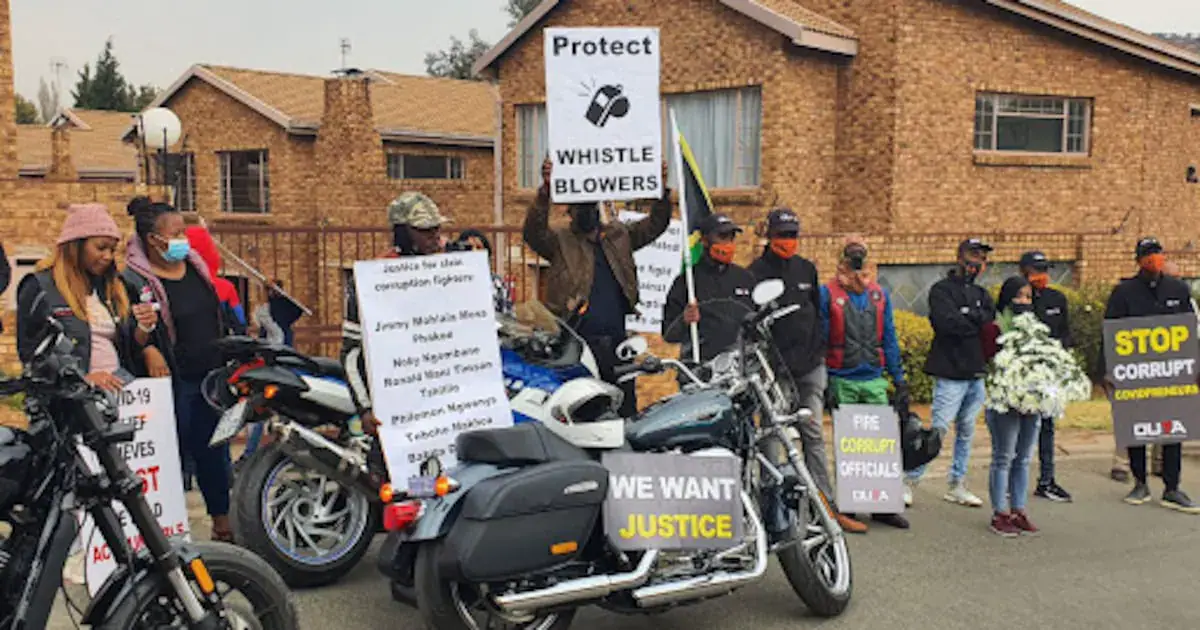
South Africa's crisis has evolved from one of corruption to a broader crisis of institutional credibility, moral leadership, and the normalization of impunity. The country has become adept at exposing wrongdoing and convening commissions of inquiry, but often fails to ensure accountability. This has led to a steady erosion of public confidence in institutions, with ethical leadership becoming the exception rather than the rule. Those who courageously expose wrongdoing often find themselves more vulnerable than those whose conduct they expose.
The consequences of this crisis are profound, with public confidence in institutions steadily eroding. The 2026 Whistleblowers Awards, themed "Honouring Courage, Inspiring Integrity," highlighted the uncomfortable distance between the values enshrined in the Constitution and the conduct of institutions. Prof Mandla Makhanya, commissioner of the Public Service Commission, delivered a keynote address that emphasized the need for institutional responsibility and consequences for wrongdoing. He stressed that integrity cannot survive on declarations alone and that courage, institutional responsibility, and consequences for wrongdoing are essential.
Makhanya proposed a framework for accountability, which he termed the "chain of integrity." This framework requires that disclosure triggers investigation, investigation produces findings, findings lead to corrective action, and corrective action is accompanied by consequence management. Institutions must also learn from their failures. If any link in this chain is broken, accountability becomes little more than institutional theater. This formulation deserves serious consideration from government, parliament, Chapter 9 institutions, law enforcement agencies, and civil society.
The murders of Jimmy Mohlala, Babita Deokaran, Mpho Mafole, and Martha Rantsofu serve as a stark reminder of the high price of integrity in South Africa. Whistleblowers often face severe consequences, including loss of livelihoods, reputations, and personal security, and sometimes even their lives. Meanwhile, those implicated in wrongdoing frequently continue their careers with little apparent consequence. The Protected Disclosures Act and proposed legislative reforms are important, but legislation without effective implementation offers little comfort to those facing intimidation, dismissal, or assassination.
Whistleblower protection must become a practical, enforceable institutional responsibility rather than an aspirational policy commitment. Makhanya located this responsibility within section 195 of the Constitution, which demands professional ethics, accountability, transparency, and fairness in public administration. These are not optional virtues but constitutional obligations. However, there is another uncomfortable conversation that South Africa must confront: the integrity and accountability of civil society itself.
Civil society organizations often demand transparency, ethical leadership, and accountability from government, state-owned enterprises, and private corporations. However, their moral authority is diminished when they fail to apply the same standards to their own governance and conduct. Organizations that champion accountability cannot tolerate opaque financial practices, conflicts of interest, poor governance, bullying, or the suppression of legitimate internal dissent. Whistleblowers within civil society deserve the same protection and respect as those exposing wrongdoing in government or business.
The credibility of civil society must rest not only on the righteousness of its causes but also on the integrity of its methods, leadership, and institutional practices. This requires transparent governance arrangements, responsible stewardship of donor funding, independent oversight, effective internal reporting mechanisms, and a willingness to subject organizational leaders to meaningful scrutiny. The Whistleblowers Awards aim to build a national culture in which courage is supported by institutions, integrity is rewarded rather than punished, and accountability becomes a shared civic responsibility.
Key points
- Whistleblower protection must become a practical, enforceable institutional responsibility rather than an aspirational policy commitment.
- The integrity and accountability of civil society itself must be confronted with equal seriousness.
- A national culture in which courage is supported by institutions, integrity is rewarded rather than punished, and accountability becomes a shared civic responsibility must be built.