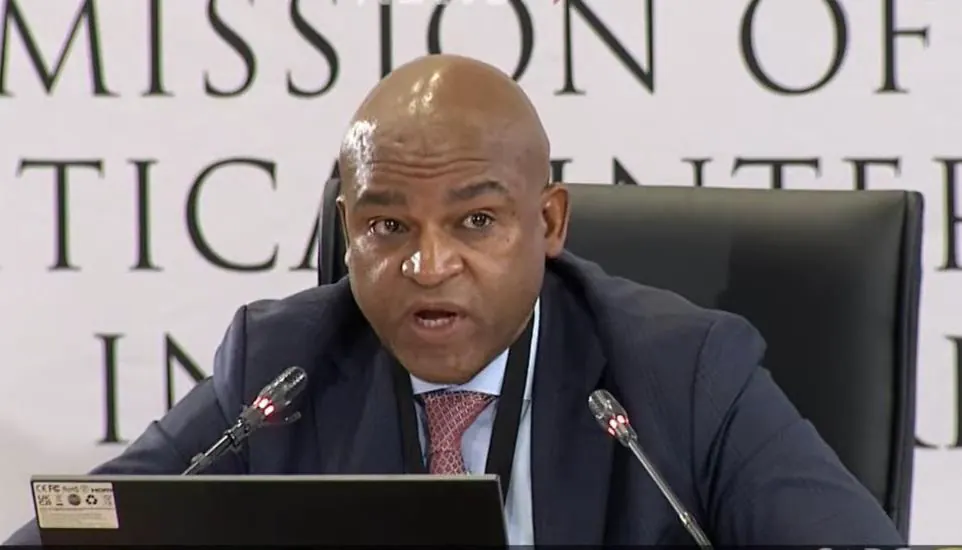
The Department of Correctional Services in South Africa has acknowledged a weakness in its lifestyle audit process and is seeking assistance from the Special Investigating Unit (SIU) to strengthen vetting. National Commissioner of Correctional Services Makgothi Thobakgale told the Madlanga Commission that lifestyle audits are not conducted routinely, but rather triggered by information from financial disclosures, vetting, or other concerns.
Thobakgale stated that ideally, lifestyle audits should be carried out regardless of available information, but the process requires capacity and resources. The department plans to sign a memorandum of understanding with the SIU to address this weakness. Currently, security vetting is generally valid for five years and repeated at the end of that period, unless a new position requires a higher level of security clearance.
Financial-interest disclosures are made annually by specified categories of employees, and the forms and supporting documents are sent to the Public Service Commission for verification. The commission heard that suspended KwaZulu-Natal Regional Commissioner Mnikelwa Nxele was the only senior manager who had not submitted the required annual financial-interest disclosure. Thobakgale ordered a lifestyle audit and stated that the non-disclosure would form part of disciplinary charges.
Nxele is separately facing fraud and money-laundering charges arising from Bosasa-related allegations. Investigators allege that he received monthly payments while serving as chairperson of a special departmental bid adjudication committee. The case remains before the court. Thobakgale expressed concern about the limited reach of the requirements in Correctional Services, where officials could be exposed to undue influence, conflicts of interest, corruption, and improper financial relationships.
Thobakgale advocated for disclosures or vetting to happen at the lowest level that gets exposed to inmates in a correctional setting. Lower-level officials may undergo suitability checks when information is received about alleged activities or when they are promoted. These checks can include criminal records, pending disciplinary matters, and possible associations with criminals or syndicates.
Public Service Commission Chairperson Somadoda Fikeni told the commission that frontline personnel across the criminal justice system should also be subjected to vetting. Fikeni linked the vulnerability of lower-ranking officials to South Africa's inequality and the risk of financial inducements. He stated that their conditions of service should also form part of the response.
Thobakgale acknowledged that limited resources meant Correctional Services tended to concentrate on immediate security problems rather than prevention. The Madlanga Commission's investigation into the department's vetting and lifestyle audit processes continues.
Key points
- The Department of Correctional Services is seeking help from the SIU to strengthen lifestyle audits.
- The current lifestyle audit process is a weakness, with audits generally triggered by information from financial disclosures or vetting.
- The department plans to sign a memorandum of understanding with the SIU to address this weakness.