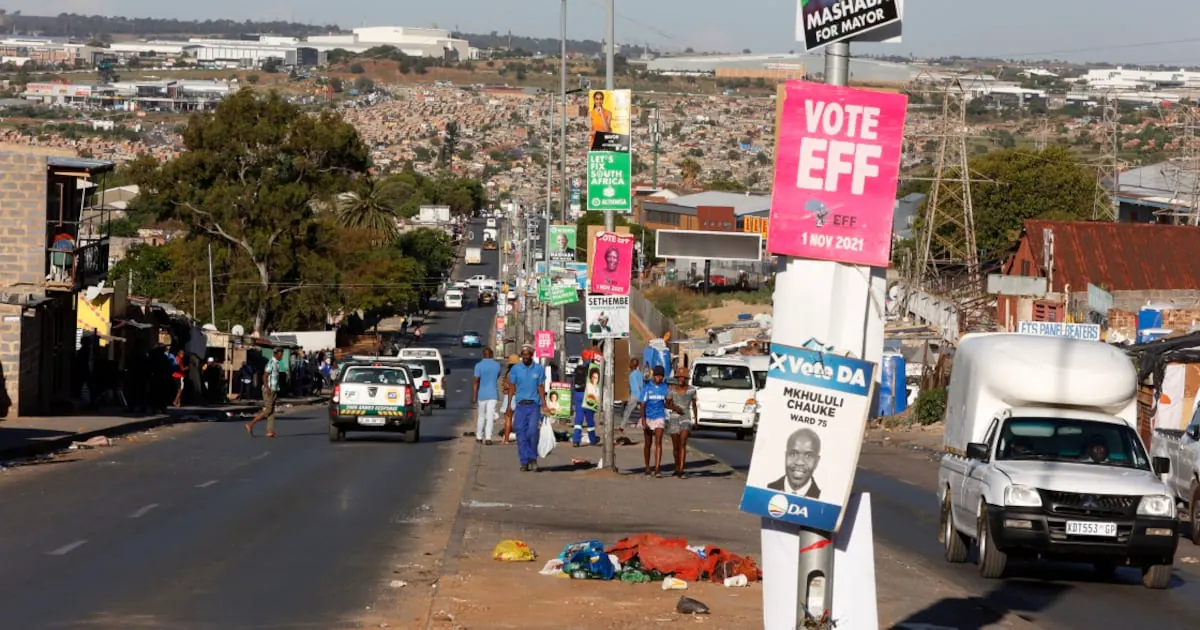
A recent report by the Mapungubwe Institute for Strategic Reflection (Mistra) has challenged the notion that coalition governments in South Africa are inherently chaotic. The Coalitions Barometer 2026 reveals that many local administrations have proven durable, despite fragmentation being a structural feature of the political landscape since the 2021 local government elections. The ANC remains the largest party in 117 of the 175 administrations that have run the 80 hung councils.
The Mistra report emphasizes the crucial role of cities in addressing the central problems of the coming decades. With over half of the world's population now urbanized, cities can become either engines of growth and opportunity or cesspools of misery and poverty. In South Africa, 71% of the population, or over 45 million people, live in urban areas, with metropolitan municipalities accounting for about 55% of national GDP and more than half of all jobs.
International experience has shown that city governments can significantly impact economic growth. The "mayor economy" approach adopted by the Chinese municipality of Hefei is a notable example, where local governments have strong incentives to help promising firms overcome barriers in their locality. This approach has contributed to Hefei's GDP more than quadrupling between 2010 and 2022, while China's GDP doubled during the same period.
The South African experience, as captured in Mistra's barometer, indicates that larger, more diverse, and more fragmented metros are more likely to produce councils in which small parties can hold the balance of power. This has resulted in municipalities with the largest budgets, most complex infrastructure, and greatest economic weight being the most politically unstable. The PA has won nine mayoralties without being the largest member of its coalition, and Johannesburg's rapid turnover of mayors since 2021 illustrates the practical implications of this.
The instability in city governance has significant consequences, including resetting political priorities, disrupting senior management, and eroding the confidence of residents and investors. To address this, a reform agenda is needed that treats the stability and capability of city government as a matter of national strategy. This could involve building coalitions around programs of agreed priorities, rather than exclusions of particular parties.
Proposals to improve city governance include implementing confidence-and-supply agreements, covering budgets and motions of no confidence for a defined period. Additionally, fixed-term, merit-based appointment of municipal managers and senior officials could protect the technical core of city government from political churn. Metros also need predictable fiscal transfers, clearer powers over transport, housing, and economic development.
Treating the governance of cities as a national strategic priority may be the most consequential choice South Africa's political leadership makes this decade. The legacy of this year's local government elections may be the enduring impact of prioritizing city governance, ensuring economic growth and democracy in the country.
Key points
- South Africa's city governance should be treated as a national priority to ensure economic growth and democracy.
- Coalition governments in South Africa are not inherently chaotic, but fragmentation is a structural feature of the political landscape.
- Cities can become engines of growth and opportunity or cesspools of misery and poverty, emphasizing the need for effective governance.