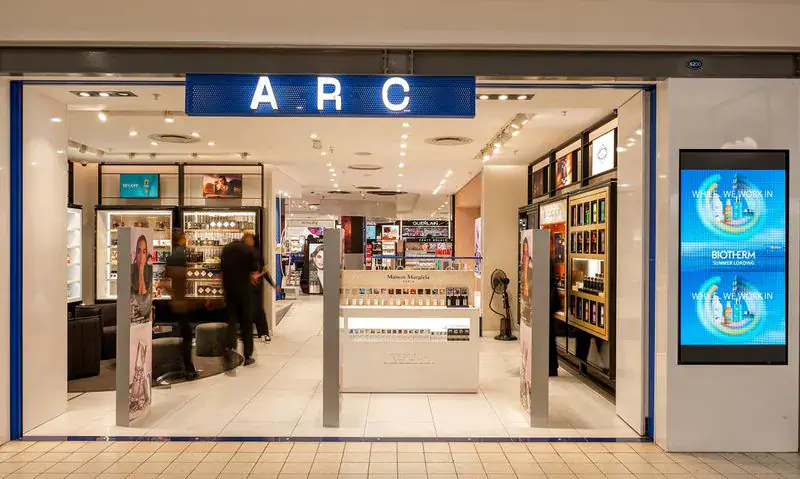
A new category of beauty retailer has emerged in South Africa's malls, capitalizing on the appetite for alternatives created by online beauty trends. This novel retailer offers a distinct market that didn't need to be cultivated, instead profiting from the existing demand for premium goods. Social media has played a significant role in shaping this market, with consumers seeking specialized experiences and products that match the tone of short-form influencer-led content.
ARC Store, a sleek cosmetics peddler, has recently caught the attention of investors, with Clicks announcing an increased stake in the business to 61% last month. ARC Store can be described as "South Africa's answer to Sephora," offering a dedicated and centralized platform for beauty shopping and trend discovery. The store's product range and upscale experience have resonated with consumers, particularly young working professionals seeking active ingredients and practical products.
The emergence of premium beauty retailers in South Africa is driven by a gap in the market between pharmacy brands and high-end options. Local direct-to-consumer beauty brand founder Rabia Ghoor identified this gap and created her own business, Swiitch, to cater to the demand for makeup and skincare products that are popular online. Ghoor's experience highlights the challenges faced by local consumers in accessing international brands and the growing importance of local sellers competing on a global level.
BeautyOnTApp, another local beauty retailer, has also capitalized on the trend, evolving from a platform linking customers to beauty service providers to a marketplace offering in-house brands like Pastry body care. The company's founder and CEO, Mathebe Ngwenya, emphasized the importance of responding to consumer requests and offering a more boutique, specialized experience. This approach has enabled BeautyOnTApp to open seven physical stores across South Africa, including in quieter corners of Durban and East London.
The growth of premium beauty retailers in South Africa is not an isolated phenomenon, with McKinsey & Co noting that the beauty competitive landscape is in flux globally. According to Paul Egan from the UCT Liberty Institute of Strategic Marketing, social media has significantly influenced beauty marketing, with Gen Z and Gen Alpha getting most of their advertising online. However, Egan also noted that Gen X are strong social media users, highlighting the need for retailers to adapt to changing consumer behaviors.
The trend towards premium beauty retailers has implications for traditional retailers, with Woolies highlighting beauty sales growth despite increased competition. Edgars, a private company owned by Retailability, has also seen perfume and makeup sales via Red Square keep its stores alive. Clicks' CEO Bertina Engelbrecht explained that ARC provides exposure to a faster-growing, more resilient segment of the market, specifically targeting millennial and Gen Z customers for differentiated premium beauty brands.
The growth of South Africa's cosmetics and personal care product market is projected to continue, with a Mordor Intelligence report forecasting growth from $4.2 billion to $5.97 billion by 2032. The emergence of upscale beauty retailers in South Africa reflects changing consumer values and the need for retailers to service diverse needs. As the market continues to evolve, it will be interesting to see how traditional retailers adapt to the shifting landscape and how local brands continue to compete on a global level.
Key points
- The emergence of premium beauty retailers in South Africa is driven by a gap in the market between pharmacy brands and high-end options.
- Social media has played a significant role in shaping the market for premium beauty products in South Africa.
- The growth of South Africa's cosmetics and personal care product market is projected to continue, with a Mordor Intelligence report forecasting growth from $4.2 billion to $5.97 billion by 2032.