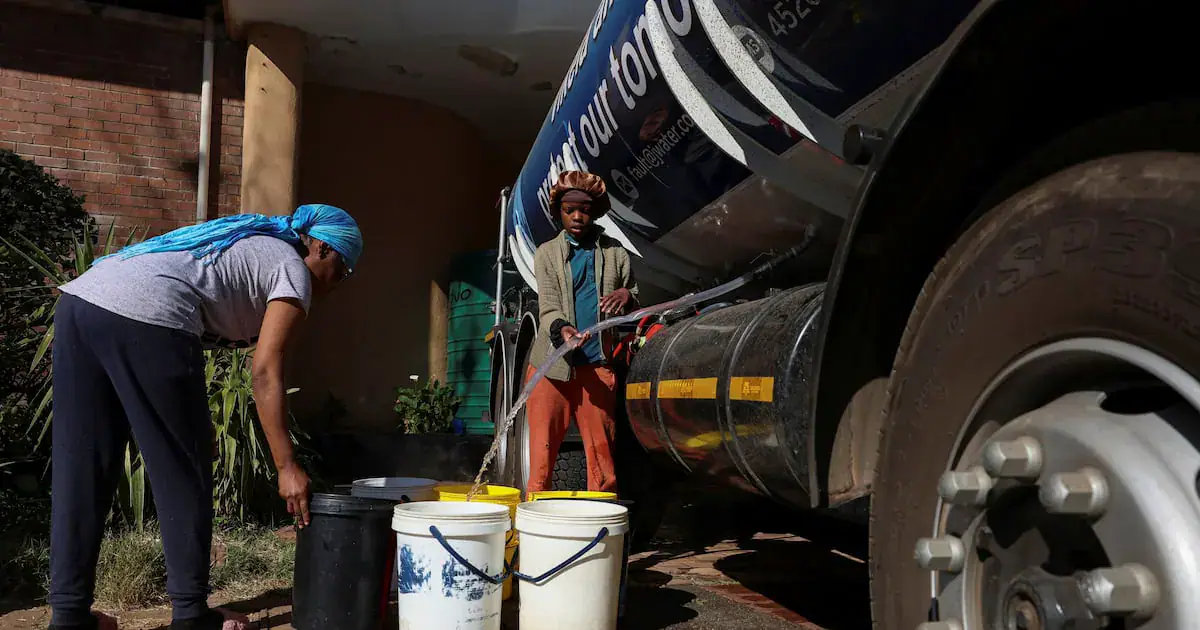
South Africa is making progress with its structural reforms, but the continued dysfunction at municipalities such as Johannesburg poses a significant risk to the country's economy. According to Business Leadership SA (BLSA), the failure of numerous municipalities to deliver basic services like water, electricity, and road repairs has become a focal point of campaigning ahead of the local government elections on November 4.
BLSA's reform tracker, which monitors reform deliverables across economic, criminal justice, and governance categories, showed that momentum turned positive in the third quarter of 2026, moving from minus 0.4% to 1.7%. This is the strongest reading since September-December 2025. BLSA CEO Busisiwe Mavuso attributed the progress to efforts in water, energy, and transport, describing these as crucial network sectors that must function efficiently to build a strong and growing economy.
Despite the progress, Mavuso emphasized that municipal reform must become an area of much greater urgency. She noted that multinational companies consider operational reliability, infrastructure, logistics, and productivity when assessing investment opportunities. Municipal dysfunction can deter businesses from operating, even if national electricity generation is stabilized.
The failure of municipalities to maintain distribution networks and provide reliable services can negate the benefits of national infrastructure investments. Mavuso stressed that a successful national economic reform program cannot be built on failing municipal infrastructure. With local government elections approaching, she called for capable municipal administrations that can deliver basic services and manage public finances.
The BLSA reform tracker scored 179 reform areas in the third quarter, with 40 changing scores, 33 advancing, and seven declining. Electricity reform rose from 67.8 points to 69.4, while freight logistics ticked up from 69.6 to 72.5. The score for financial sector reforms increased from 88.1 to 89.5, and the criminal justice category edged up from 84.2 to 84.5. However, governance declined for the first time, from 55 to 54.6.
Shortcomings in investigating organized crime and prosecuting and recovering criminal assets could lead to South Africa being greylisted again by the Financial Action Task Force (FATF). The FATF commenced a mutual evaluation earlier this year, which will conclude in October 2027. Deputy finance minister David Masondo acknowledged that South Africa still needs to resolve remaining weaknesses in its system to avert another greylisting.
The outcomes of the ongoing inquiry by the Madlanga commission into criminality, political interference, and corruption in the criminal justice system will be key to addressing FATF's concerns. The commission's findings have unveiled significant problems in the leadership of the police and intelligence services. BLSA and consultancy firm Krutham will be monitoring the implementation of the Madlanga commission's recommendations as part of the reform tracker.
Key points
- Municipal dysfunction poses a significant risk to South Africa's economy and could deter investment.
- South Africa risks being greylisted again by the Financial Action Task Force due to shortcomings in investigating organized crime.
- The implementation of the Madlanga commission's recommendations will be crucial in addressing FATF's concerns.