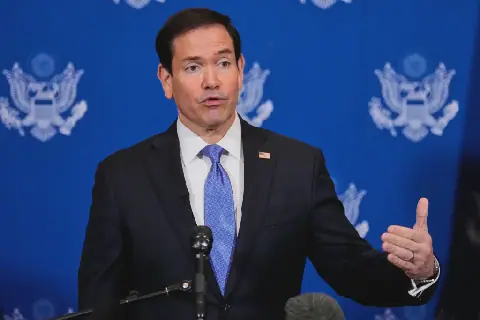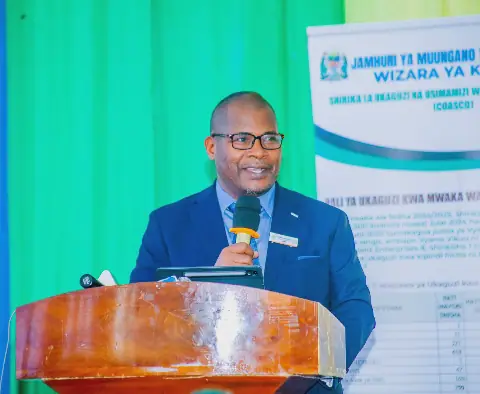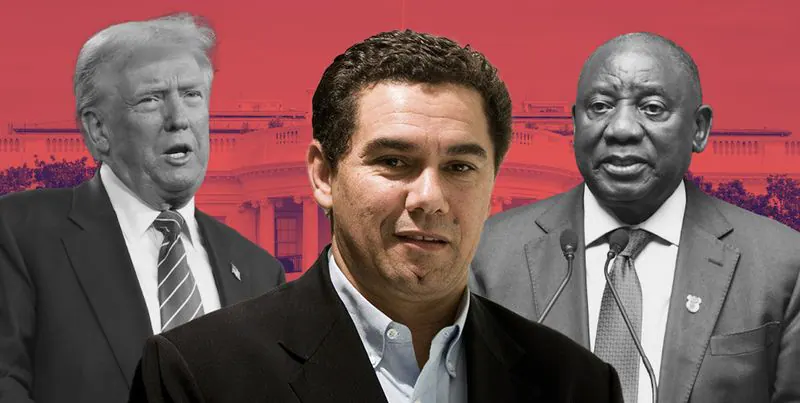
The South African government has expressed confusion over the US announcement of punitive targeted travel sanctions on unnamed South Africans. According to President Cyril Ramaphosa's special adviser, Alistair Ruiters, South Africa has addressed two of Washington's five key domestic demands. Ruiters stated that the US ambassador to South Africa, Brent Bozell, had publicly acknowledged the progress made by Pretoria. The travel ban, announced by US Secretary of State Marco Rubio on September 15, has raised concerns in South Africa.
Ruiters mentioned that Bozell had acknowledged in an interview with Business Day that South Africa had addressed the demand not to interfere in President Donald Trump's program of offering refugee status to Afrikaners. Additionally, Bozell recognized that South Africa had addressed the US demand to rescind expropriation without compensation. The expropriation issue is currently in the Constitutional Court, and Ruiters noted that Bozell believed it was likely that the Expropriation Act would be declared unconstitutional.
The US had raised five concerns with South Africa, which were conveyed by Bozell in a meeting with Ramaphosa on August 27. South Africa responded to these concerns in a letter to Trump on September 12. However, Rubio stated that South Africa had not adequately addressed these concerns, leading to the imposition of targeted visa restrictions. The five demands include issues related to black economic empowerment, the chanting of the "Kill the Boer" struggle song, and crimes against white farmers.
Ruiters emphasized that South Africa is actively engaged with the US in trying to resolve the remaining three US demands. He mentioned that the government has files and documents on all these issues and is committed to finding solutions. On black economic empowerment, Ruiters noted that Ramaphosa had announced a review of the policy in his State of the Nation address, focusing on refining and realigning it.
The South African government has taken steps to address the US concerns, including signing the Prevention and Combating of Hate Crimes and Hate Speech Act into law in 2023. Ruiters stated that Ramaphosa would reinforce the message of opposition to hate crime and hate speech in future speeches as part of a national campaign against crime. Additionally, the government has implemented a national rural safety strategy at 893 of 900 identified rural police stations.
Ruiters expressed frustration that despite the progress made, the US had imposed punitive action. He asked, "What more must we do?" and emphasized that South Africa is committed to dealing with the issues raised by the US. The government has been engaging with local interest groups, including AfriForum and Solidarity, to discuss rural safety and has met with US officials to address the concerns.
The US travel ban has raised the stakes in the escalating dispute between the two countries. Several hundred Afrikaners have already moved to the US under the refugee program. Ruiters concluded that South Africa is willing to engage with the US to find solutions and address the concerns raised. The government hopes to resolve the issues and avoid further escalation.
Key points
- South Africa has addressed two of the five US demands, according to US Ambassador Brent Bozell.
- The US has imposed targeted visa restrictions on unnamed South Africans involved in "race-based discrimination and incitement of imminent violence."
- South Africa is actively engaged with the US to resolve the remaining three demands.