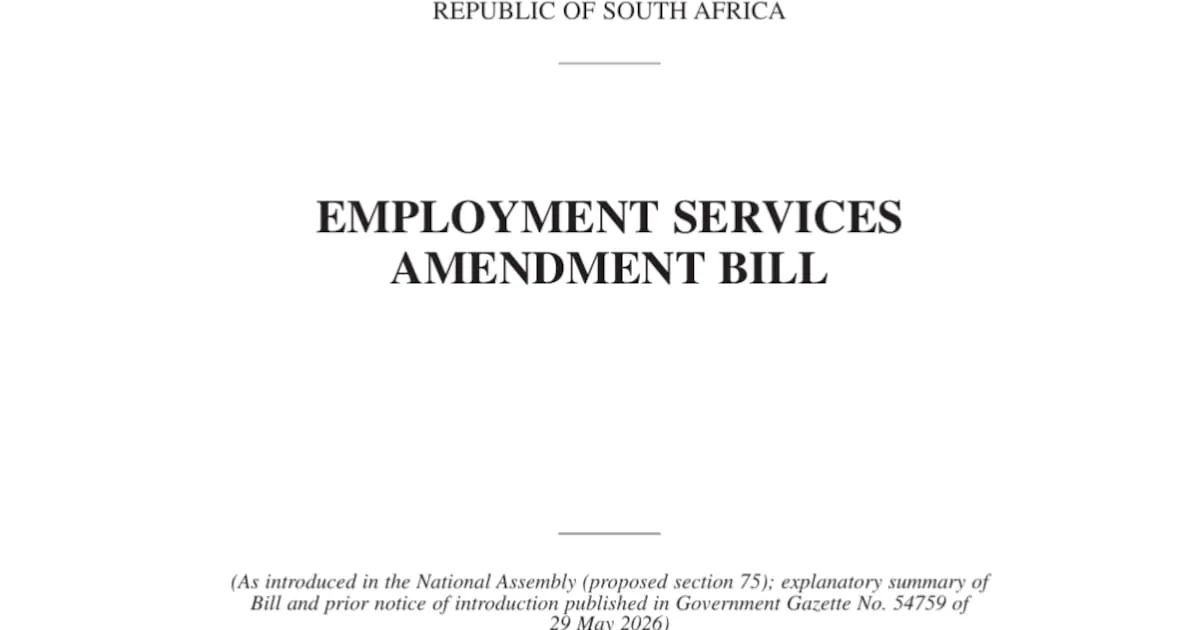
The South African government is proposing significant changes to the way employers hire foreign nationals, with a focus on strengthening regulation and protection of local skills. The proposed amendments to the Employment Services Act would create a more detailed framework for the employment of foreigners, placing greater responsibility on employers to ensure compliance with the law. Employers would be required to verify documentation and keep records of work authorisation for foreign workers.
The bill would allow the employment and labour minister to set quotas for the employment of foreigners, which could apply to specific sectors, occupations, or regions. However, these quotas would have to be published in the Government Gazette for public comment and would be informed by advice from the Employment Services Board. Small employers would be excluded from the quota system, and employers could apply for exemptions.
The proposed changes aim to strengthen the protection of local skills while ensuring labour migration is better regulated. The bill would give the minister and Employment Services Board additional responsibilities regarding the recruitment of foreigners, labour-migration data, and the welfare of migrant workers. It would also provide for the recruitment and reintegration of South Africans living abroad and protection for South Africans temporarily working in other countries.
According to Employment and Labour Minister Makhosazana Meth, the bill seeks to legally regulate the employment of foreigners against changing economic and demographic conditions. The proposed framework would ensure that employers consider whether suitable South African candidates are available and prepare skills-transfer plans. This would promote the development of local skills and reduce reliance on foreign labour.
The bill proposes stronger enforcement powers and higher penalties for employers who break the rules. Labour inspectors would have express powers to monitor and enforce compliance with the act, and certain contraventions could attract fines of up to R100,000. Repeated breaches involving the employment of foreigners could result in a penalty of the greater of R1m or 10% of an employer’s annual turnover.
The proposed amendments also introduce or clarify definitions for terms including “worker”, “employer”, “asylum seeker”, “refugee”, “critical skills”, and “permanent resident”. Refugees and asylum seekers would be treated differently from other foreigners for employment purposes. The bill provides that a foreigner could still enforce rights arising from labour laws, collective agreements, or their employment contract.
The public has been invited to comment on the proposed bill before formal parliamentary deliberations begin. Citizens, civil society, business organisations, and organised labour can submit written comments to Zolani Sakasa at [email protected] by 4pm on November 6. The submissions will form part of the consultation process as parliament considers the proposed changes.
Key points
- The proposed bill aims to strengthen regulation and protection of local skills while ensuring labour migration is better regulated.
- Employers would be required to verify documentation and keep records of work authorisation for foreign workers.
- The bill proposes stronger enforcement powers and higher penalties for employers who break the rules.