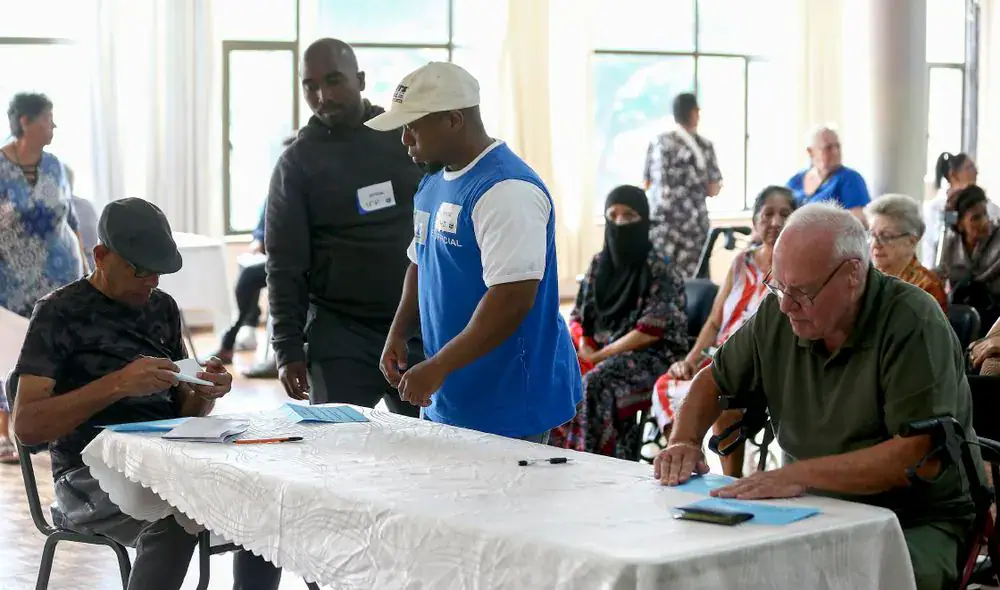
South Africa is gearing up for its 2026 Local Government Elections, scheduled to take place on November 4. The elections will see voters casting their ballots for municipal leadership, service delivery, and council performance. The outcome will have far-reaching implications, extending beyond municipal boundaries. The elections come on the back of the ANC's loss of its national parliamentary majority in 2024 and the formation of the Government of National Unity.
The 2024 National and Provincial Elections saw a significant level of electoral disengagement, with only 16.29 million out of 27.78 million registered voters casting their ballots. Nearly 23.5 million eligible voters stayed away, with registration among young people aged 20 to 29 standing at 48.6%, and a mere 27.1% among 18- and 19-year-olds. Not every non-voter is consciously rejecting the political system, with some facing practical barriers, others disengaged, or believing participation will make little difference.
A recent Ipsos survey found that 53% of eligible voters believe no political party represents their views. Among registered voters, 68% said politicians could not be trusted, compared with 15% who disagreed. The ANC and DA face different credibility tests, with the ANC being judged against its three decades of democratic government, transformation promises, and responsibility for the country's institutional and economic challenges.
The DA, on the other hand, must show that its market-oriented approach can deliver inclusive growth beyond its established support base. Both parties must explain why young people should trust their promises when jobs, economic security, and opportunity remain elusive. At the heart of the contest is a longstanding disagreement over the role of the state and private sector, with the liberation movement tradition emphasising redistribution, public ownership, and working-class representation.
The 2026 Local Government Elections will test which political and economic propositions can restore public confidence and offer a credible future to citizens who feel excluded from the democratic promise. The Government of National Unity, formed after the 2024 elections, marked a significant adjustment, with the ANC entering an arrangement with the DA and other parties with different political and economic traditions.
Despite positive developments, including consecutive quarters of economic growth, the country still faces significant challenges, with official unemployment rising to 33.6% in the second quarter of 2026. Youth unemployment among people aged 15 to 34 reached 47.4%, with about five million young people unemployed. The DA must show that its economic approach can generate broad-based opportunity, while the ANC must explain why decades of transformation promises have not produced a more inclusive economy.
The outcome of the 2026 Local Government Elections will have significant implications for the country's future, with parties needing to restore the confidence of those who stay away, not simply compete for participating voters. The elections will be a test of the liberation project's ability to translate its history into employment, dignity, and opportunity for all citizens.
Key points
- The ANC and DA face credibility tests in the 2026 Local Government Elections.
- Electoral disengagement was evident in the 2024 National and Provincial Elections.
- The elections will test which political and economic propositions can restore public confidence.