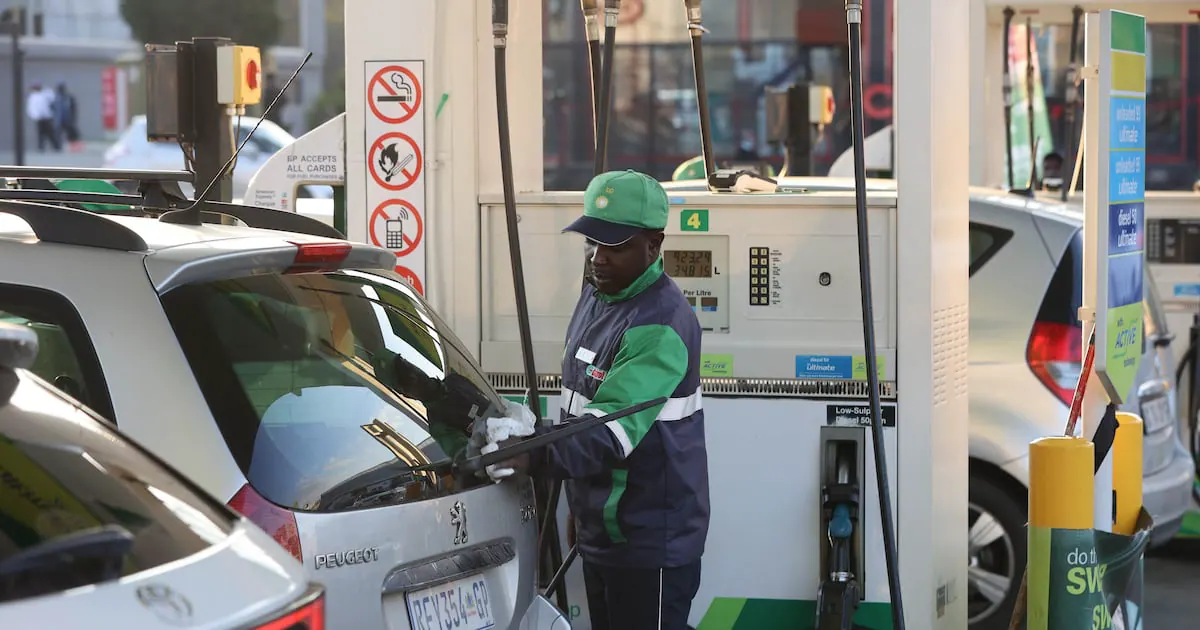
The department of mineral and petroleum resources announced on Monday that petrol pump prices will jump significantly from Wednesday. Motorists will pay R3.12 more for 93-grade petrol and R3.33 more for 95-grade petrol. This means 95-grade petrol will cost R30.25 in Gauteng and other inland areas and R29.38 in coastal areas. These price hikes are attributed to the ongoing tensions between the US and Iran, which have disrupted global oil supply.
The wholesale cost of diesel will also increase, with prices rising by R2.84 and R3.24 for 0.05% sulphur grade and 0.005% sulphur grade, respectively. This will result in wholesale prices of R31.95 in Gauteng and R31.08 at the coast. Additionally, the wholesale price of illuminating paraffin will rise by R3.58 a litre, and the maximum retail price of LP gas will increase by R0.48 per kilogramme in the Western Cape and by R0.42 elsewhere in the country.
The price increases are a result of the US-Israel war on Iran, which started in late February and has disrupted the flow of cargo through the strategic Strait of Hormuz. As a net importer of crude oil and finished petroleum products, South Africa has endured steep fuel price increases since April. Domestic fuel prices lag international movements by about a month, based on the cost of importing products over the preceding 30 days.
The state Central Energy Fund, which manages energy assets, strategic fuel reserves, and related investments, calculates the country's energy supply. According to the department of mineral and petroleum resources, the average Brent Crude oil price increased from $87.89 to $101 during the period under review. This increase is due to the continued US/Iran tensions, uncertainty regarding the flow of oil through the Strait of Hormuz, higher shipping costs, and decreasing inventories.
The price hikes will have a significant impact on South African motorists and households. Many low-income households still use illuminating paraffin for cooking and lighting, and the increase in prices will add to their financial burden. The rising fuel costs will also affect businesses, potentially leading to increased prices for goods and services.
The US-Iran tensions have had a significant impact on global oil supply, leading to increased prices worldwide. The situation in the Strait of Hormuz remains uncertain, and any further disruptions to oil supply could lead to even higher fuel prices in the future. South Africans will need to brace themselves for the possibility of continued price hikes in the coming months.
Key points
- The petrol price increase is attributed to the US-Iran war's impact on global oil supply.
- The wholesale cost of diesel will rise by R2.84 and R3.24 for 0.05% sulphur grade and 0.005% sulphur grade, respectively.
- The price hikes will have a significant impact on South African motorists and households, particularly low-income households that rely on illuminating paraffin for cooking and lighting.