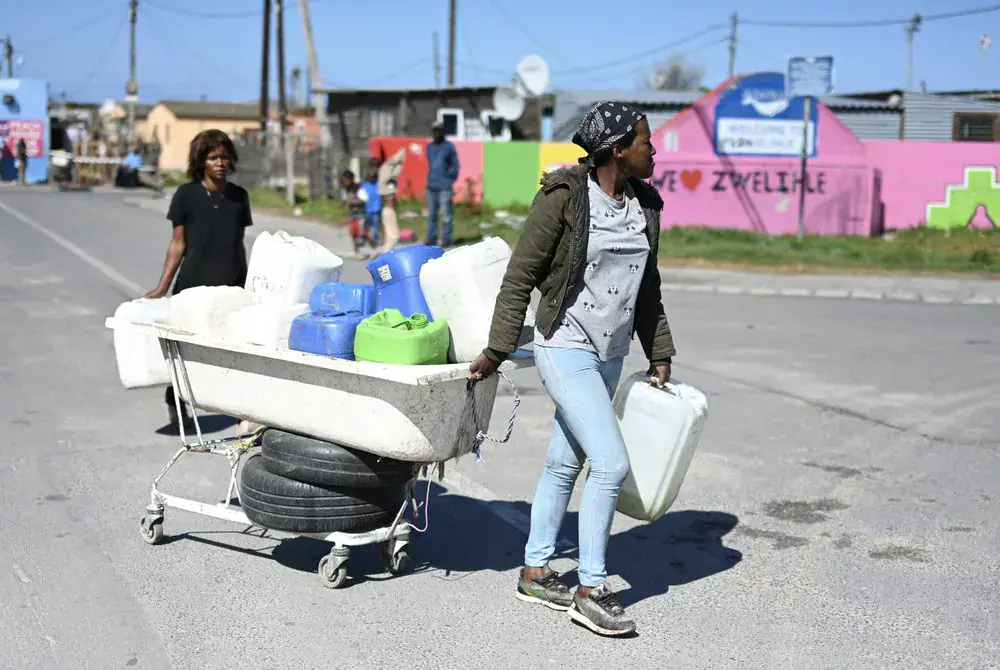
South Africa is grappling with a crisis of governance, with the ruling African National Congress (ANC) failing to deliver on its promises. Despite being in power for 30 years, the ANC has been unable to provide reliable basic services such as electricity, water, and roads. The party's approach has been to manage its decline rather than address the problems facing the country. This has led to widespread frustration among citizens, who are increasingly looking for ways to work around the state.
The ANC's failure to manage the economy has had severe consequences, with South Africa experiencing stagnant growth over the past 15 years. Youth unemployment is above 60%, and the party's approach to economic empowerment has been criticized for benefiting a small, politically connected elite rather than creating broad-based black industrialists. The public sector wage bill and social grants have become tools to keep a constituency dependent, while the private economy that must fund them shrinks.
The ANC's lack of accountability has also contributed to the country's decline. The party has learned to absorb scandals rather than being changed by them. The Zondo Commission's findings on state capture have not led to significant consequences for senior ANC leaders, with few facing jail time. Instead, the party speaks of "renewal" and "unity" without taking concrete action to address corruption and incompetence.
The collapse of local government is a visible manifestation of the ANC's failure. In townships, rubbish is not collected, by-laws are not enforced, and illegal connections are rampant. The ANC council's inability to enforce rules has led to chaos, with informality filling the vacuum left by the state. This has resulted in a situation where residents are blamed for the dysfunction rather than the party taking responsibility.
The ANC's response to its decline has been to form a Government of National Unity (GNU), which has been criticized for outsourcing economic credibility to other parties rather than addressing the party's own shortcomings. The GNU has been seen as an attempt to keep power while avoiding meaningful reform. South Africans have intuitively felt the impact of the ANC's decline, with many no longer expecting the state to work and instead looking for ways to work around it.
The consequences of the ANC's failure are far-reaching, with citizens bearing the brunt of the party's incompetence. Many have been forced to invest in private alternatives such as JoJo tanks, generators, and private security. The party's approach has also led to a brain drain, with talented individuals leaving the country in search of better opportunities. The tragedy is that South Africa has the talent, money, and ideas to succeed, but lacks a governing party willing to put the country's future ahead of its own survival.
Ultimately, the ANC's decline is a self-inflicted wound, resulting from its own tolerance of corruption, cadre deployment, and centralized control. Until the party accepts that it is part of the problem, it will continue to manage its own slow fade, taking the country with it. The challenge for South Africa is to find a way to move forward, beyond the ANC's politics of decline, and build a brighter future for all its citizens.
Key points
- ANC's 30 years in power marred by failure to deliver basic services
- Party's approach has been to manage decline rather than address problems
- South Africans no longer expect state to work, look for ways to work around it