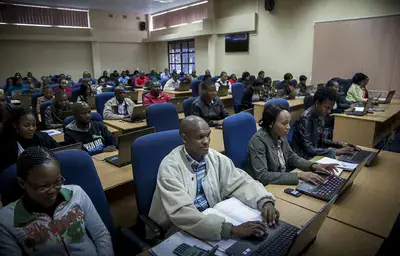
South Africa is in need of an integrated post-school education and training system that connects learning to opportunity, responds to labour-market demand, supports economic growth and expands pathways into employment, entrepreneurship and lifelong learning. The current system has a historical preference for university education, which has led to the misconception that university education is inherently superior to vocational and technical training. However, the country needs researchers, engineers, artisans, technicians, educators, entrepreneurs and professionals, and these capabilities are complementary and equally important to national development.
The neglect of technical and vocational education has imposed a heavy cost on South Africa, fuelling the perception that practical and technical occupations are inferior to professional occupations. This has encouraged many young people to pursue academic qualifications that may not align with their interests, talents or labour market opportunities. The country cannot afford to continue undervaluing either universities or TVET colleges. Instead, it needs to challenge the misconception that university education is the only meaningful pathway to success and recognise the importance of technical and vocational training.
TVET colleges are central to South Africa's skills revolution, as they produce occupationally directed skills that are essential to economic growth and social progress. These colleges are uniquely positioned to respond to one of South Africa's most pressing challenges: youth unemployment. By integrating classroom learning with practical training, workplace exposure and industry-relevant competencies, TVET colleges help bridge the divide between theoretical knowledge and workplace experience.
The rise of advanced manufacturing, automation, artificial intelligence, green energy and digital technologies is transforming and elevating technical skills, rather than diminishing their importance. The technician of the future will require sophisticated knowledge, digital literacy and continuous learning. Modern vocational education is not about low-skilled work; it is about preparing individuals for highly specialised occupations within increasingly complex economic systems.
Universities also play a critical role in the country's development, generating research, innovation and advanced knowledge. They produce scientists who develop new technologies, engineers who design complex systems, healthcare professionals who improve public health outcomes, economists who shape policy and educators who nurture future generations. Their contribution extends beyond labour market preparation, as they are institutions of discovery, critical inquiry and intellectual advancement.
The relationship between universities and TVET colleges is complementary, with TVET colleges translating knowledge into practical capability and providing the technical expertise required to implement, maintain, operate and expand the systems upon which society depends. Their graduates convert ideas into action and plans into tangible outcomes. A modern economy requires both universities and TVET colleges to function effectively.
To build a capable developmental state and a competitive economy, South Africa simply cannot do without strengthening technical and vocational education. The country's development aspirations, including the expansion of transport infrastructure, the energy transition, industrialisation, localisation, manufacturing growth, digital transformation and the revitalisation of the economy, all require a large pool of technically skilled workers.
Key points
- South Africa needs an integrated post-school education and training system that values different forms of knowledge and develops diverse talents.
- TVET colleges are central to South Africa's skills revolution, producing occupationally directed skills essential to economic growth and social progress.
- Both universities and TVET colleges are necessary for a modern economy, with universities generating research and innovation, and TVET colleges providing practical capability.