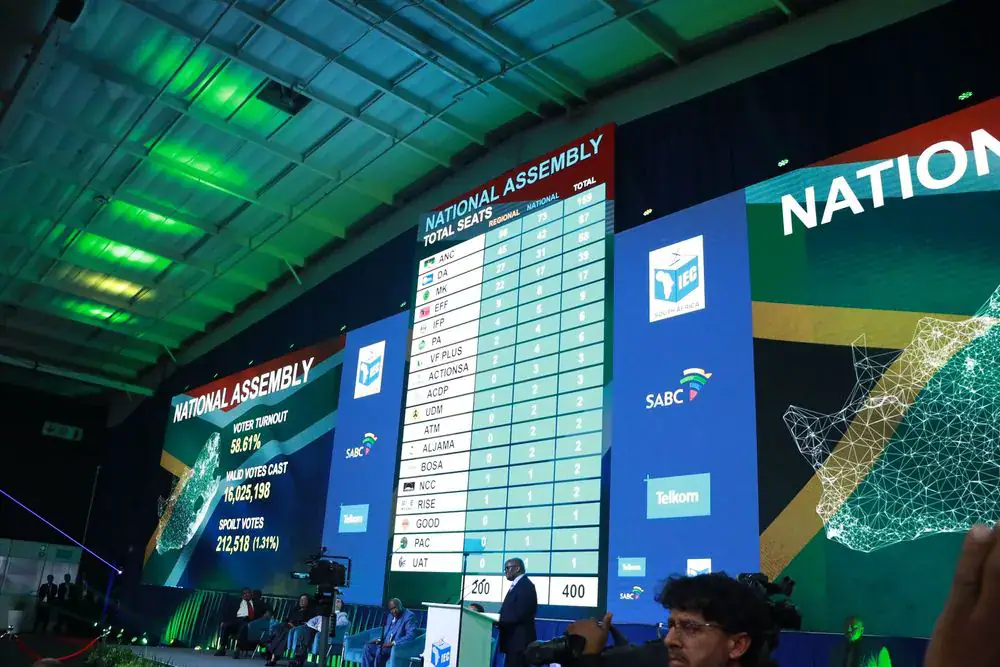
The Independent Electoral Commission (IEC) of South Africa has reported a significant increase in the number of candidates vying for municipal council seats in the upcoming local government elections. A total of 136,790 candidates have thrown their hats into the ring, with 10,526 seats up for grabs. This represents a 43% increase in candidates compared to the 2021 elections, when 95,427 candidates contested 10,478 seats. The IEC attributes this surge in interest to the growing recognition of the importance of local government in addressing the country's socio-economic challenges.
The high number of candidates has raised concerns about the length of ballot papers, with the IEC noting that some wards have an unusually large number of contestants. For example, one ward in the province of Goli has 63 candidates vying for a single seat. The IEC has assured voters that it is prepared to handle the logistical challenges posed by the large number of candidates. The commission has also highlighted the significance of local government elections in shaping the country's future, with many voters seeing municipal councils as a key platform for addressing issues such as service delivery and job creation.
Analysts have attributed the high level of interest in the elections to the country's high unemployment rate and the perception that municipal council seats offer a means of escaping poverty. Many candidates see a municipal council seat as a way to gain experience and build a career in politics, while others are motivated by the financial rewards that come with the position. According to the IEC, councillors in metropolitan municipalities can earn up to R156,000 per month, while those in smaller municipalities can earn up to R56,000 per month.
The IEC has reported that 621 candidates are contesting the elections as independents, without the support of a political party. This represents a small but significant proportion of the total number of candidates. The commission has also noted that the elections will be closely contested, with 69 parties fielding candidates in the municipality of Thekwini, 75 in Goli, and 70 in Tshwane.
The local government elections are seen as a critical test of the country's democratic institutions and its ability to deliver services to citizens. The IEC has emphasized the importance of voter participation, with many South Africans seeing the elections as an opportunity to hold their local governments accountable for their performance. The commission has also highlighted the need for voters to be aware of the issues at stake and to make informed decisions about the candidates vying for their votes.
The elections are also significant because of the role that municipal councils play in delivering basic services such as water, sanitation, and electricity to citizens. The IEC has noted that the elections will have a major impact on the country's development trajectory, with the outcome likely to shape the course of South Africa's economic and social development for years to come.
In terms of the distribution of candidates, the IEC has reported that 43,098 candidates are contesting seats in metropolitan municipalities, 6,443 in district municipalities, and 87,249 in local municipalities. The commission has also noted that the elections will be a major test of its capacity to manage a complex and high-stakes electoral process.
Key points
- A total of 136,790 candidates are vying for 10,526 municipal council seats in South Africa's local government elections.
- The number of candidates has increased by 43% compared to the 2021 elections.
- The elections are seen as a critical test of the country's democratic institutions and its ability to deliver services to citizens.