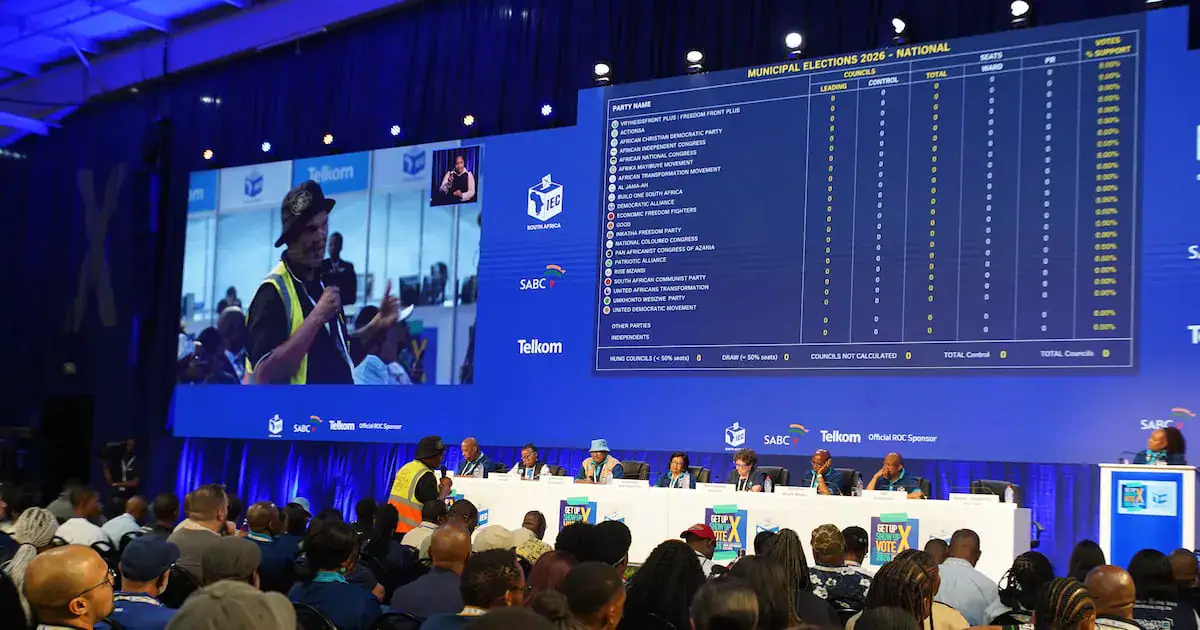
The 2026 South African local government elections took place on November 4, 2026, with millions of citizens casting their votes. The elections aimed to determine the municipalities that will govern various parts of the country for the next five years. Voter turnout was a significant concern, with some areas experiencing low participation, particularly among young people. In contrast, suburbs had long queues at polling stations, highlighting a disparity in voter engagement across different communities.
By November 5, 2026, some early results had started to emerge. In KwaZulu-Natal, the provincial electoral officer, Ntombifuthi Masinga, reported a preliminary voter turnout of 48.7%. This figure was above the national average of 45.8% at the time. However, Masinga cautioned that the figures were provisional and subject to change as more results were captured and audited. The outcome of the elections will be crucial in determining the future of local governance in South Africa.
In Gauteng, with 10% of the votes captured, the Democratic Alliance (DA) was leading with 39.26%, followed by the African National Congress (ANC) with 18.55%, and ActionSA at 15.17%. The DA's Helen Zille, who is the party's mayoral candidate for Johannesburg, expressed optimism about the results, stating that she was feeling positive about the outcome so far. The DA was also leading in Ekurhuleni, with 9% of the votes counted.
The ANC national chairperson, Gwede Mantashe, visited the results center in Midrand, Johannesburg, and expressed satisfaction that the ANC was leading in some wards. However, the MK Party, led by Jacob Zuma, was taking an early lead in KwaZulu-Natal, with 32.6% of the vote, followed by the ANC with 23.99%, and the Inkatha Freedom Party (IFP) with 21.95%. Only 11% of the votes had been captured in the province at that point.
The Independent Electoral Commission (IEC) had implemented various safeguards to ensure the accuracy and transparency of the election results. These measures included double-blind capturing of results slips, scanning, and independent auditing of the entire population of results slips. The IEC provided updates on the vote-counting process, reassuring the public of the integrity of the elections.
As the vote counting continued, concerns about youth unemployment emerged as a significant issue. In areas such as Atteridgeville and Saulsville, residents who voted expressed hope that their preferred candidates would address unemployment and create more job opportunities for young people. Many young people in these communities felt that they lacked opportunities, with some turning to drugs as a coping mechanism.
The elections were seen as a critical moment for South African democracy. Millions of citizens had turned out to vote, exercising their right to shape the future of their municipalities. The outcome would have significant implications for the delivery of basic services such as water, electricity, and sanitation. The elections also highlighted the maturity of South African democracy, with voter registration trending upward despite inconsistent turnout in some previous elections.
Key points
- The DA was leading in Johannesburg, while the ANC was leading in some wards.
- Voter turnout was a significant concern, with disparities in participation across different communities.
- The elections had significant implications for the future of local governance and service delivery in South Africa.