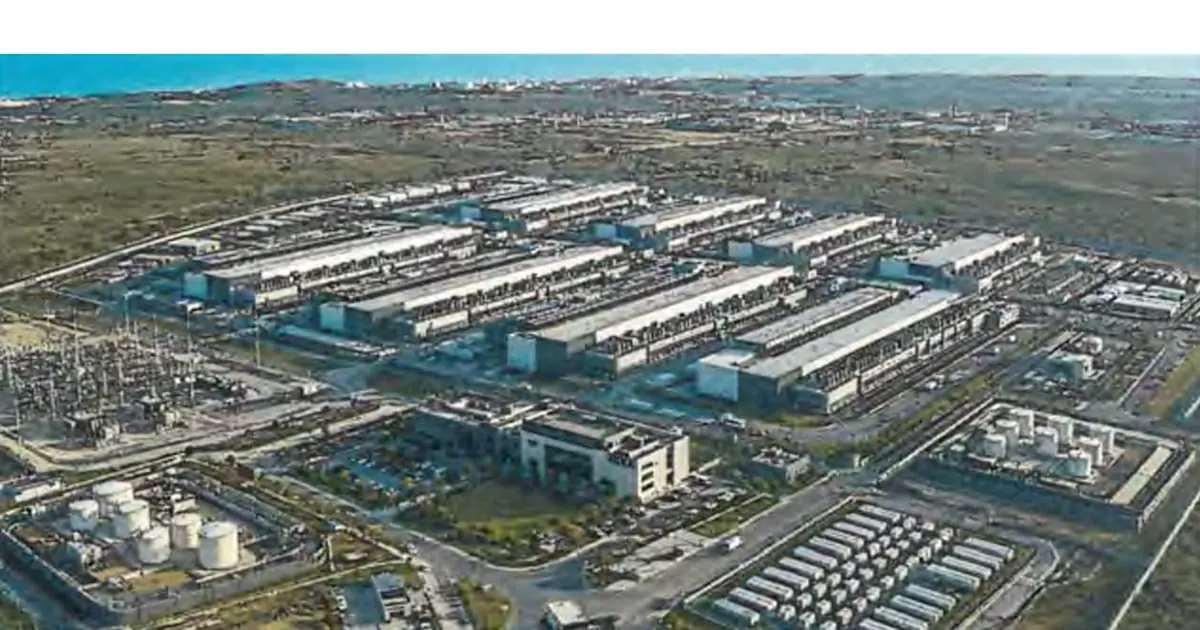
The growing demand for data centre capacity in Africa is driving investment in the sector, with McKinsey expecting demand to increase four- to sixfold by 2030, to 1.5GW-2.2GW, requiring an estimated £7.5bn-£15bn in investment. South Africa is well-positioned to capitalize on this trend, with 60 data centres, the largest concentration on the continent. The country added four new facilities between July 2025 and January 2026, solidifying its lead.
However, having a head start does not guarantee South Africa will maintain its lead. The next phase of data-centre investment will test the country's infrastructure, including access to reliable power, transmission and grid capacity, and regulatory frameworks. Data centres require significant power, sophisticated cooling systems, and fibre connectivity, making them particularly vulnerable to infrastructure weaknesses. Delays in grid connections or insufficient local capacity can derail construction schedules and alter project economics.
The AI revolution is also raising the stakes for data centres, with AI-focused facilities requiring more power and sophisticated cooling infrastructure than conventional colocation facilities. This places additional pressure on electricity systems and potentially on water resources, particularly where cooling technologies depend on significant water consumption. As a result, South Africa's data-centre opportunity is closely tied to the success of the country's broader energy and infrastructure reforms.
Improving generation capacity is only part of the equation; investors also need confidence that electricity can be transmitted and connected to new facilities. The same applies to supply chains, with much of the specialist equipment required for African data centres being imported. Global demand for infrastructure developments means projects are competing for generators, cooling equipment, and other components, driving up construction costs. Data centre construction costs increased by 7.6% in Cape Town and 7% in Johannesburg from 2024.
Long lead times and unclear responsibilities for delays can create further pressure on data centre projects. Developers need to establish early whether land, power, grid connectivity, water, and fibre can support the facility they intend to build. Construction contracts need to make responsibility clear where multiple contractors are involved, and power and grid agreements must deal realistically with connection delays and interruptions.
Regulation will also become increasingly important as Africa's data economy matures. Data centres sit at the intersection of infrastructure, technology, and national strategic interests, making data sovereignty and data residency rules a growing concern. Competition authorities may also pay closer attention as the sector consolidates, with South Africa potentially facing additional scrutiny under existing foreign direct investment screening mechanisms.
Despite these challenges, South Africa is well-positioned to capture a meaningful share of the growing investment in Africa's data centre sector. Private capital is already demonstrating its appetite for the sector across the continent. To turn its early lead into a durable one, South Africa must ensure that the physical, regulatory, and contractual infrastructure supports the growth of the sector, and that investors have confidence in the country's ability to deliver.
Key points
- South Africa has 60 data centres, the largest concentration in Africa.
- The country faces challenges such as power and regulatory uncertainty that may hinder its lead.
- South Africa's data-centre opportunity is closely tied to the success of the country's broader energy and infrastructure reforms.