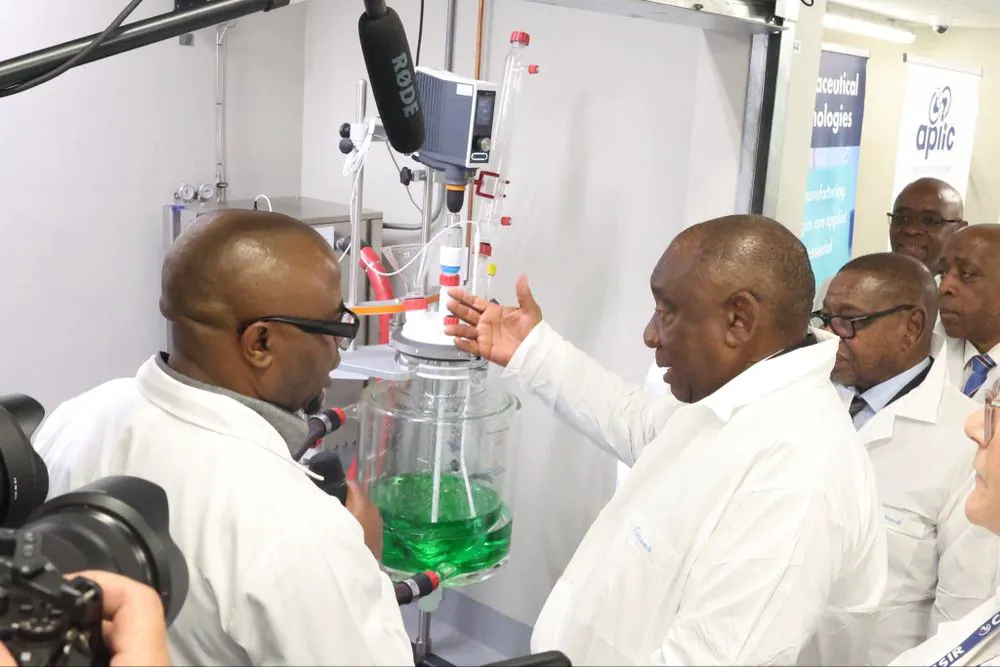
The South African government has taken a significant step towards improving its healthcare system by launching a vaccine production facility at the Council for Scientific and Industrial Research's (CSIR) headquarters in Tshwane. The facility, named iFuturePharma, aims to enable the country to produce its own vaccines and medicines, reducing reliance on foreign suppliers. This move comes after the country faced significant challenges during the COVID-19 pandemic, including delayed vaccine deliveries and shortages.
President Cyril Ramaphosa, who attended the launch, emphasized the importance of self-sufficiency in vaccine production. He stated that the country should not have to rely on other nations for essential medicines and vaccines. During the pandemic, South Africa, like many other countries, faced difficulties in securing vaccine supplies, leading to a significant loss of life. Ramaphosa noted that the country spent billions of rand importing vaccines and medicines, highlighting the need for a more sustainable solution.
The launch of iFuturePharma is seen as a crucial step towards addressing the issue of medicine shortages in South Africa. The country's Health Products Authority reported that many people still lack access to essential medicines, and the new facility is expected to help alleviate this problem. Dr. Boitumelo Semete-Makokotlela, the authority's chief executive, expressed concerns about the shortage of medicines and vaccines, emphasizing the need for increased local production.
The iFuturePharma facility will bring together scientists and researchers from various disciplines to develop and produce vaccines and medicines. President Ramaphosa expressed his hope that the facility would not only produce essential medicines but also serve as a hub for research and development, creating opportunities for skills development and knowledge sharing. The facility is expected to play a critical role in improving South Africa's healthcare system.
The launch of the facility has been welcomed by various stakeholders, including the CSIR's board chair, Vuyani Jarana. Jarana called for collaboration between different stakeholders to support the facility and ensure its success. He emphasized that the facility was not just a CSIR project but a national initiative aimed at improving healthcare in South Africa.
The development of iFuturePharma is seen as part of a broader effort to promote African self-sufficiency in healthcare. Stakeholders believe that the continent should move beyond simply purchasing medicines and vaccines and instead become a producer and leader in healthcare innovation. The launch of the facility marks an important step towards achieving this goal.
The South African government has committed to supporting the facility and ensuring its success. With the launch of iFuturePharma, the country is poised to take a significant step towards improving its healthcare system and reducing its reliance on foreign suppliers. The facility is expected to have a positive impact on the lives of millions of South Africans, providing them with greater access to essential medicines and vaccines.
Key points
- The facility aims to enable South Africa to produce its own vaccines and medicines, reducing reliance on foreign suppliers.
- The launch of iFuturePharma is seen as a crucial step towards addressing the issue of medicine shortages in South Africa.
- The facility is expected to play a critical role in improving South Africa's healthcare system, promoting research and development, and creating opportunities for skills development and knowledge sharing.