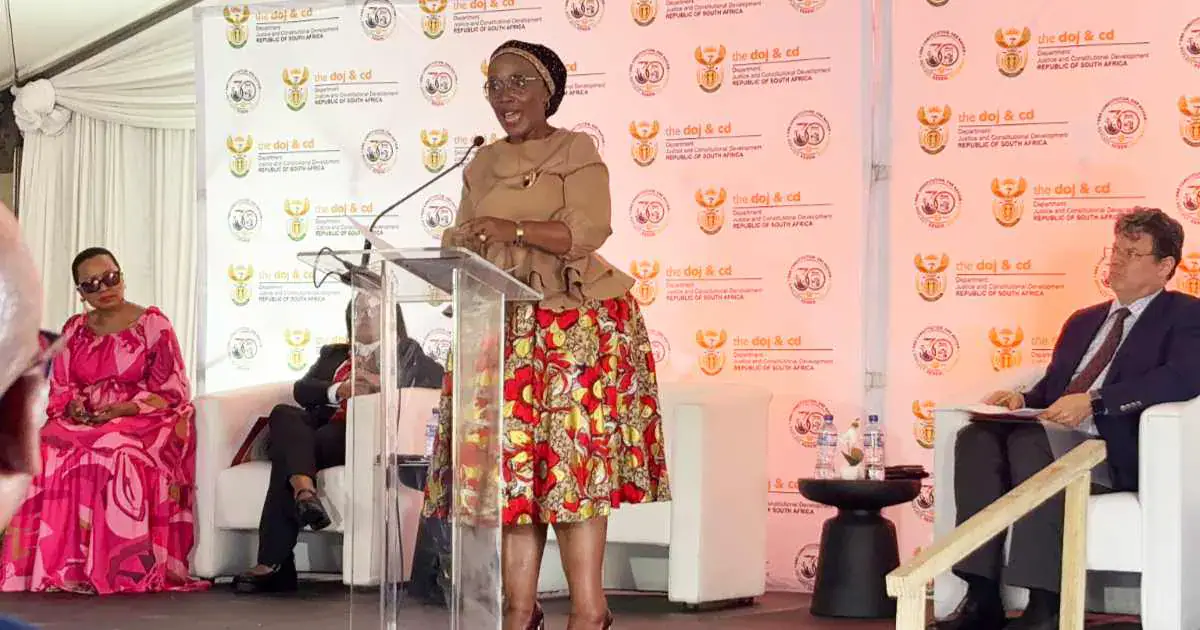
The Khayelitsha Sexual Offences Court was launched on November 25, 2026, in Cape Town, South Africa, marking a significant step towards providing survivor-centred justice. The launch coincided with the beginning of the annual 16 Days of Activism for No Violence Against Women and Children campaign. This court aims to provide survivors with private waiting areas and specialised support, signalling the government's commitment to strengthening the criminal justice system's response to gender-based violence and femicide.
The 16 Days of Activism campaign, held under the South African theme "Letsema", calls for collective action to end gender-based violence and femicide. The campaign emphasises collective responsibility and urges communities, government institutions, and civil society to play an active role in creating safer environments. Minister for Women, Youth and Persons with Disabilities Sindisiwe Chikunga stressed the importance of cooperation across the criminal justice system, highlighting that all stakeholders must work together to combat Gender-Based Violence and Femicide.
Minister Chikunga also highlighted the devastating impact of violence on children, emphasising that childhood should be characterised by safety, freedom, and play, rather than trauma and court proceedings. Her remarks reinforced the importance of creating a justice system that does not further traumatise survivors, particularly children who have experienced sexual violence. Deputy Minister of Justice and Constitutional Development, Andries Nel, outlined the important roles played by court preparation officers and intermediaries in supporting survivors and witnesses throughout the legal process.
Court preparation officers help victims and witnesses understand what to expect when entering the justice system, familiarising them with court processes, procedures, and available support services. Intermediaries play a critical role in protecting vulnerable witnesses, particularly children and people with mental disabilities, by facilitating communication in a sensitive and appropriate manner. These services are essential in ensuring that vulnerable witnesses can give evidence without being subjected to unnecessary intimidation or additional trauma.
The launch of the Khayelitsha Sexual Offences Court also presents an opportunity to consider whether specialised courts and survivor-support services are accessible and responsive to everyone, regardless of sexual orientation, gender identity, or gender expression. For LGBTIQ+ communities, particularly transgender and gender-diverse people, access to justice remains an important concern, with queer survivors of sexual and gender-based violence facing additional barriers, including discrimination, stigma, misgendering, and victim-blaming.
The case of 16-year-old queer teen Kwakhanya Mhlanganisi, who was murdered, drew attention to the ongoing struggle for justice in the community. The next court appearance in the murder case is scheduled for November 30, 2026. The launch of the Khayelitsha Sexual Offences Court offers an opportunity to reflect on what meaningful justice should look like: accessible support, sensitive treatment of survivors, effective investigations, and accountability for perpetrators.
While specialised courts are an important intervention, their impact will ultimately be measured by whether survivors receive justice without experiencing further harm. The government has faced criticism for failing to take meaningful action against gender-based violence and femicide, despite officially declaring it a national disaster in November 2025. The effectiveness of the Khayelitsha Sexual Offences Court in addressing these concerns remains to be seen.
Key points
- The Khayelitsha Sexual Offences Court was launched to provide survivor-centred justice and support to victims of gender-based violence and femicide.
- The court aims to provide private waiting areas and specialised support to survivors, particularly vulnerable witnesses such as children and people with mental disabilities.
- The launch of the court highlights the need for collective action to end gender-based violence and femicide, and for specialised courts to be accessible and responsive to all survivors, regardless of their background or identity.