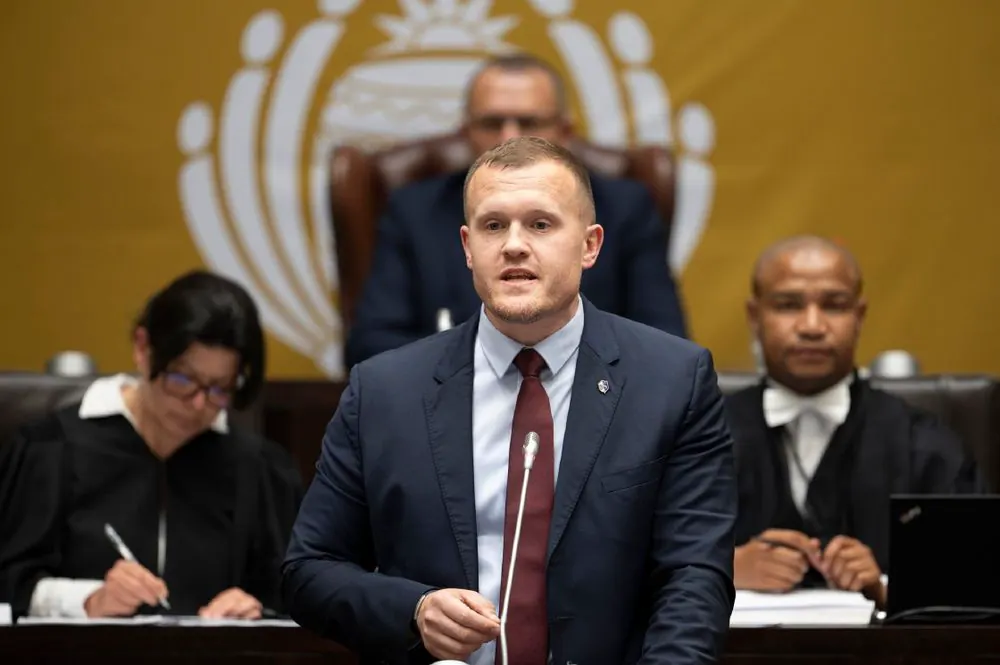
Portfolio Committee on Police chairperson Ian Cameron has initiated a 30-day campaign to publish the names, photographs, convictions, and sentences of verified adult sexual offenders from public court records. This move aims to push for greater transparency and public access to information about convicted sexual offenders. The campaign will publish at least one photograph, name, verified conviction, and sentence of an adult sexual offender each day.
The campaign comes 19 months after the government committed to making the National Register for Sex Offenders (NRSO) more accessible to the public. However, the register remains closed to the public. Cameron emphasized that the campaign is not an attempt to reproduce the confidential NRSO but rather to expose the gap between information available through courts and the public's limited access to the register.
The NRSO records people convicted of sexual offences against children and other vulnerable individuals. While employers working with vulnerable groups can conduct prescribed checks, the register is generally not open to the public. The issue has been under consideration by the Justice Department for over a year. In September 2025, Justice Minister Mmamoloko Kubayi stated that the Office of the Chief State Law Adviser had concluded that the register could not be made public under existing law.
According to Kubayi, Section 52 of the Criminal Law (Sexual Offences and Related Matters) Amendment Act prohibits the publication of information from the register, except for purposes provided for in the Act or by a competent court. A law of general application would therefore be required, and Kubayi confirmed that she had directed the department to prepare necessary legislative amendments.
However, BOSA deputy leader and Joburg mayoral candidate Nobuntu Hlazo-Webster questioned the progress of these amendments, noting that the government had indicated they had been drafted and circulated for comment. Hlazo-Webster emphasized that the public has a legitimate interest in knowing whether the system designed to protect children and vulnerable people is working.
The Kwanele Foundation supports greater public access to the register, citing the need to protect women, children, men, and boys by allowing people to know who has been convicted of sexual offences. Kwanele Foundation founder Sihle Sibisi stressed that safeguards are essential to prevent the publication of victims' names and ensure that information is limited to offenders who have been convicted in court.
The Department of Justice confirmed on September 29 that work on legislative amendments aimed at ensuring greater public access to the register is continuing. Cameron and Hlazo-Webster have both emphasized that public access should not mean publishing addresses, identity numbers, or victims' details, and that safeguards are necessary to protect victims' identities.
Key points
- The campaign aims to push for greater transparency and public access to information about convicted sexual offenders.
- The National Register for Sex Offenders (NRSO) currently records around 32,000 names, but the public has limited access to this information.
- Legislative amendments are being prepared to allow for greater public access to the register, but a timeline for implementation has not been provided.