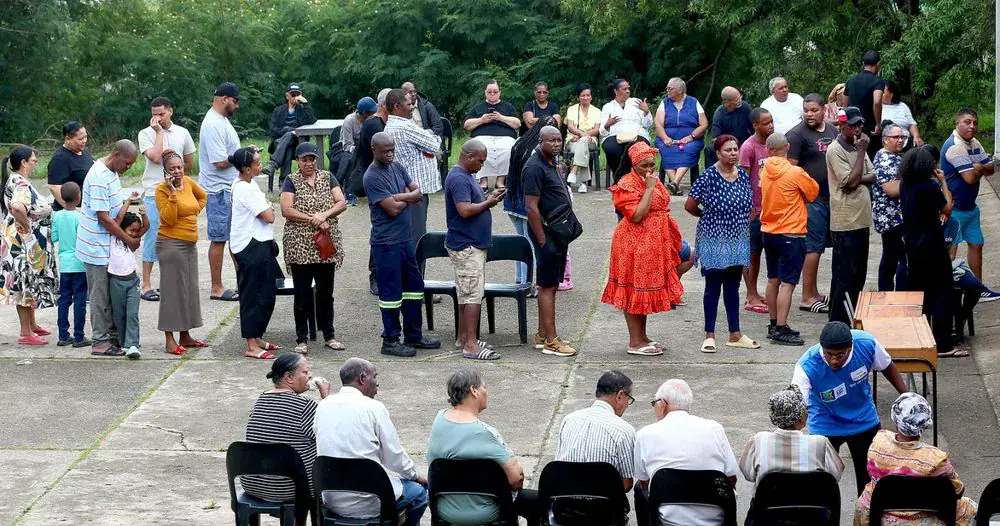
South Africa is holding its 2026 Local Government Elections today, with over 29 million registered voters expected to cast their ballots. The elections are taking place under the Government of National Unity and will be a significant test for the country's democracy. The state of municipal governance, the prospect of coalition administrations, and concerns about election security are among the key issues facing the country. Voting stations across the country opened at 7am and will close at 9pm.
The biggest challenge for incoming municipal administrations will be turning political promises into improvements in communities where service delivery, accountability, and governance remain pressing concerns. President Cyril Ramaphosa highlighted allegations of corruption, tender manipulation, and councillors being bought by business interests, warning that violence and intimidation must not undermine the elections. He emphasized that the polls offer voters an opportunity to reshape municipalities and demand better service delivery.
The political landscape in South Africa is becoming increasingly fragmented, with no party commanding majority support nationally. An Ipsos Khayabus Pulse of the People survey found that the ANC attracted 30% support among registered voters, followed by the DA on 28%, the MK Party on 12%, and the EFF on 10%. The findings point to the possibility of further coalition arrangements in municipalities, continuing a trend that has reshaped local government in recent years.
In eThekwini, the MK Party has indicated that it is preparing for the possibility of taking control of the municipality and its R75 billion budget. The final electoral outcome and any coalition negotiations remain to be seen. Meanwhile, security preparations have been stepped up ahead of voting day, with police recording 20 murders involving political representatives, party members, and supporters during the election period.
A further 139 election-related criminal dockets have been registered nationally, resulting in 48 arrests, according to NATJOINTS. The SANDF has been placed on standby to support police in identified hotspots if necessary, while intelligence-led operations have been activated across all nine provinces. In KwaZulu-Natal, thousands of officers are being deployed to help secure more than 4,300 voting stations, results centres, and other election sites.
Concerns have also emerged around misinformation and possible intimidation. The Centre for Analytics and Behavioural Change identified 79 potentially harmful social media posts over a seven-day period, including claims of election rigging and calls for people to confront foreign nationals at voting stations. The organisation cautioned that the findings did not independently establish coordinated activity or impending violence.
The special voting process has experienced some logistical difficulties, with over 780,000 special votes cast on the first day, despite delays at some voting stations. In Cape Town, more than 200 stations reportedly experienced delays linked to ballot paper shortages. As voting stations prepare to close, the focus will be on ensuring that voters can cast their ballots safely and that the results reflect their choices.
Key points
- Over 29 million registered voters are expected to cast their ballots in the 2026 Local Government Elections.
- The elections are taking place under the Government of National Unity and will test the country's democracy.
- Security concerns and allegations of corruption and intimidation have been reported ahead of the elections.