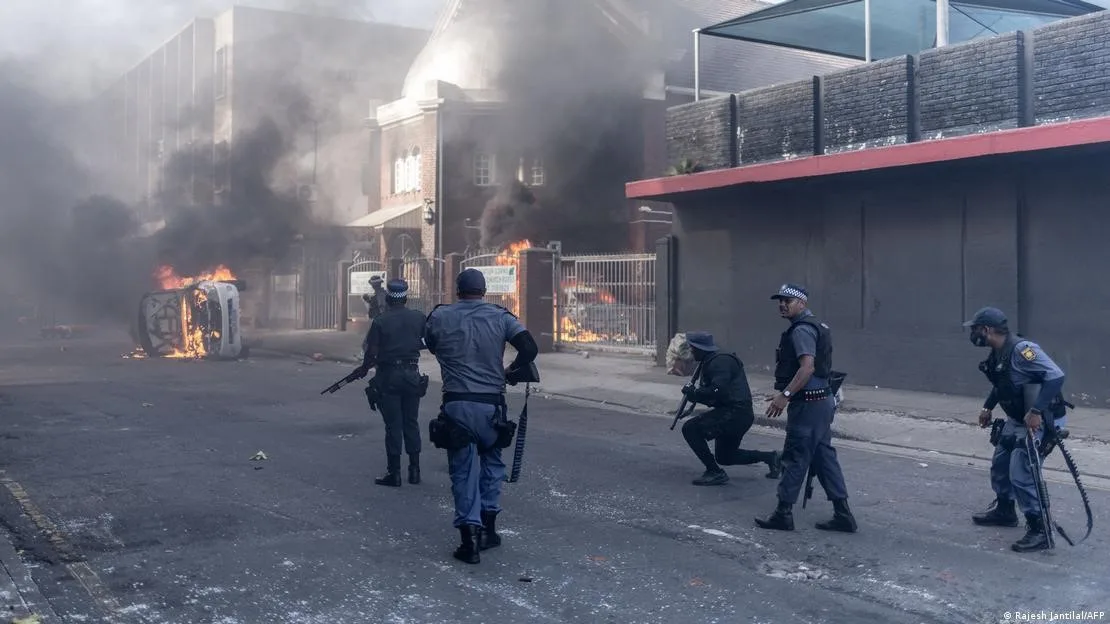
The South African government has suspended a new policy on asylum applications following violent protests in the cities of Johannesburg and Durban. The policy, introduced by the Department of Home Affairs, aimed to regulate the processing of asylum applications. However, the move was met with resistance from some groups, leading to violent protests.
The protests erupted after a court ruling that deemed certain aspects of the government's asylum policy unconstitutional. The ruling allowed asylum seekers to apply for protection in South Africa, despite entering the country illegally. The Department of Home Affairs stated that the suspension was necessary due to the large influx of applicants, which posed a significant security risk.
The protests in Durban and Soweto resulted in the destruction of property, including the burning of 14 cars in Durban and 10 in Soweto. Several shops were also looted during the unrest. The violence was sparked by a group demanding that a refugee center in Durban stop processing asylum applications.
The situation in Soweto escalated into clashes between locals and foreign nationals, with reports of gunfire. According to Superintendent Xolani Fihla, spokesperson for the Johannesburg Metropolitan Police, there were reports of clashes between foreigners and South African citizens, but no injuries were reported.
The court ruling that sparked the protests stated that certain aspects of the government's asylum policy were unconstitutional. Since the ruling, hundreds of people have flocked to government centers to apply for asylum, including those who may not meet the necessary requirements. The government has emphasized that the ruling does not automatically grant asylum or permanent residence to those who enter the country illegally.
South Africa has experienced a wave of anti-immigrant protests this year, with some groups demanding that undocumented foreigners leave the country by June 30. Despite criticism and concerns about the situation, tens of thousands of people have left the country, while others have been deported to their home countries.
The issue of immigration remains a contentious one in South Africa, with many blaming foreigners for taking jobs away from locals, increasing crime, and putting a strain on public services. However, social scientists argue that these claims are not supported by sufficient scientific evidence. The country's economy remains the largest in Africa, and it continues to attract migrants.
Key points
- The South African government has suspended a new policy on asylum applications due to violent protests.
- The protests were sparked by a court ruling that deemed certain aspects of the government's asylum policy unconstitutional.
- The issue of immigration remains a contentious one in South Africa, with many blaming foreigners for social and economic problems.