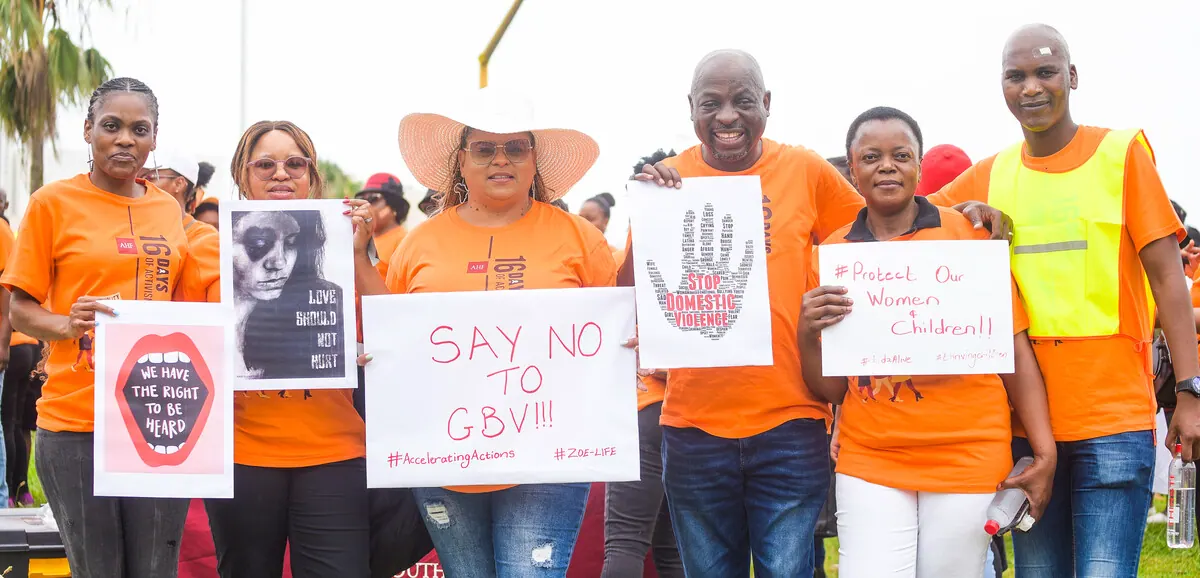
The recent discovery of eleven women's bodies in Ekurhuleni, east of Johannesburg, between mid-July and late September, has sent shockwaves throughout South Africa. The gruesome findings have sparked widespread outrage and condemnation from civil society and government officials alike. Four individuals are currently in detention for three separate murders. The incidents have reignited the debate on the prevalence of femicide and violence against women in the country.
The South African government has faced criticism for its handling of the situation, with many questioning its effectiveness in addressing the root causes of violence against women. President Cyril Ramaphosa has announced several measures to tackle the issue, but critics argue that more needs to be done. Ramaphosa acknowledged that he has been saying the same things for seven years, indicating a lack of progress in addressing the problem. The president's comments have been met with skepticism, with many calling for concrete actions to be taken.
According to the South African Ministry of Social Development, the country's emergency line for gender-based violence received over 6,800 calls in the first half of September, a 21% increase from the previous month. This surge in calls has been attributed to both an increase in violence and a growing willingness among victims to report incidents. The rising numbers have put pressure on the government to deliver on its promises to address the issue. Experts argue that a multifaceted approach is needed to tackle the complex problem of femicide and violence against women.
The upcoming municipal elections on November 4 are expected to see the issue of violence against women take center stage. President Ramaphosa has urged municipalities to take greater action against gender-based violence. However, many municipalities are facing financial difficulties, which has hindered their ability to provide essential services, including addressing violence against women. The elections may provide an opportunity for voters to hold municipalities accountable for their inaction.
Experts argue that education and prevention are key to addressing the issue of femicide and violence against women. President Ramaphosa has emphasized the importance of education, stating that prevention must start at home. However, critics argue that this approach may not address the underlying structural causes of the problem. The issue of violence against women is deeply ingrained in South African society, with 300 years of colonialism, 50 years of apartheid, and slavery having contributed to a culture of patriarchy and violence.
Various associations have pointed to a disconnect between laws, structures, and organizations on paper and the lack of resources on the ground. Many organizations have seen their funding dry up, including those that have historically received support from USAID. The associations have also highlighted the need for better training for police officers on handling cases of gender-based violence and addressing corruption within the police force. Concrete actions are needed to address these issues and ensure that victims receive the support they need.
To achieve concrete results, experts recommend a comprehensive approach that includes providing financial support to organizations working on the ground, ensuring that infrastructure is in place, and providing training for police officers. Associations such as the Centre Sarah Baartman and Black Sash have called for a universal basic income, proper functioning of public infrastructure, and adequate funding for shelters and support services. The government must work with civil society to develop effective solutions to address the scourge of femicide and violence against women in South Africa.
Key points
- The South African government faces criticism for its handling of rising feminicides and violence against women.
- Experts call for a multifaceted approach, including education, prevention, and concrete actions to address the root causes of violence against women.
- The upcoming municipal elections may provide an opportunity for voters to hold municipalities accountable for their inaction on addressing violence against women.