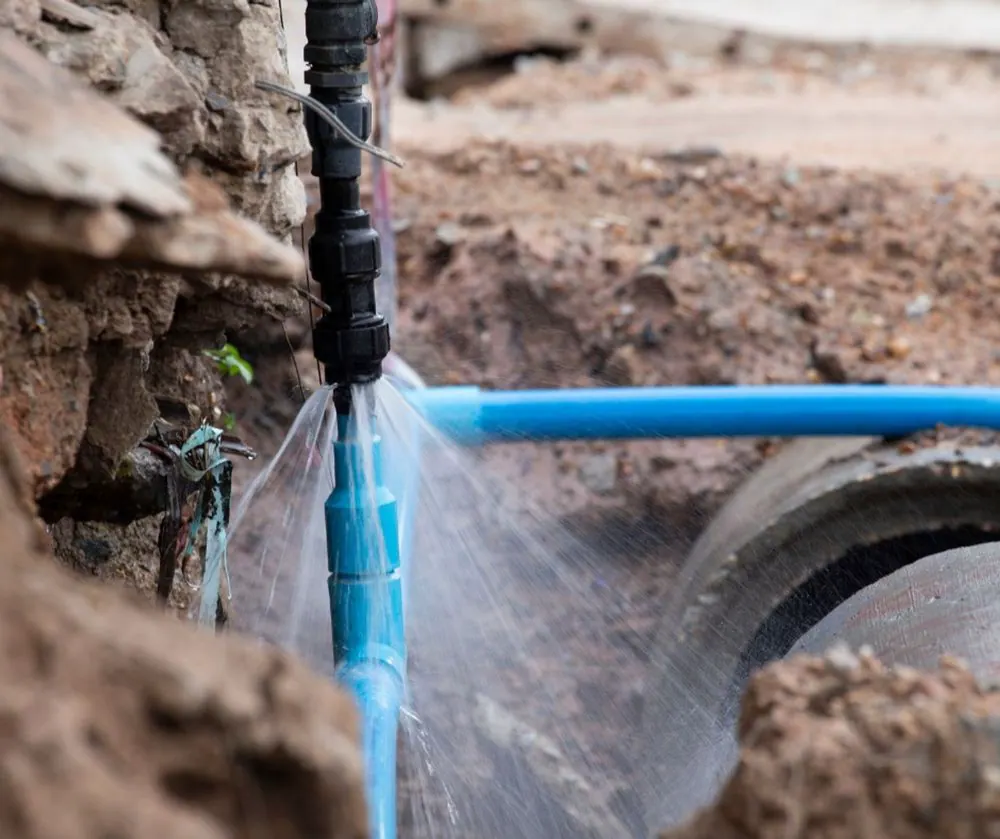
South Africa's Minister of Water and Sanitation, Pemmy Majodina, has revealed that an estimated R400 billion is needed to repair and upgrade ageing water infrastructure in 107 municipalities. According to her, 107 of the country's 144 municipalities are facing critical or recurring water supply failures. This disclosure was made in response to a parliamentary question from MK Party MP Siyabonga Mkhize.
The 107 municipalities in poor or critical condition were identified through the department's 2025 Blue Drop, No Drop and Green Drop reports. These assessments provide the best available indication of municipalities experiencing systemic water supply challenges and with an elevated risk of recurring service interruptions. The reports found that 107 of the country's 144 water services authorities were in either a poor or critical state in one or more key water services performance areas.
The National Water Action Plan provides a framework for supporting municipalities experiencing persistent water service failures through a combination of direct support and broader sector reforms. Direct interventions have been implemented in three municipalities: Emfuleni Local Municipality in Gauteng, and uMkhanyakude District Municipality, and uThukela District Municipality in KwaZulu-Natal. The interventions are being implemented alongside Section 139 interventions by the Department of Cooperative Governance and Traditional Affairs.
The department is providing direct support to municipalities through Section 63 of the Water Services Act, as well as through interventions where water boards have been deployed to provide support on the department's behalf. In Maluti-a-Phofung Local Municipality in the Free State, support is focused on restoring the functionality of bulk water supply infrastructure and improving operational performance through the involvement of implementing agents.
In Matjhabeng Local Municipality, also in the Free State, interventions are aimed at stabilising water supply systems through infrastructure refurbishment and operational support. The plan also seeks to strengthen Metro Trading Services reforms aimed at addressing systemic challenges in metropolitan municipalities, including Johannesburg and eThekwini. These reforms focus on strengthening the governance, financial management, and ring-fencing of water and sanitation services within metros.
Majodina stressed that the National Water Action Plan does not provide direct funding allocations to specific municipalities. Rather, it serves as a strategic framework to improve the effectiveness and coordination of existing funding mechanisms, while also unlocking additional financing from public, private, and commercial sources. The estimated R400 billion is the infrastructure requirement, not an allocated budget.
The department has strengthened financial and implementation controls through conditional grant frameworks, project monitoring, regulatory oversight, financial reporting, audit requirements, and consequence management. Approximately R65 billion has been transferred by the department to municipalities over the past five years, and for the current financial year, the department has been allocated R13.7 billion for infrastructure grants to municipalities, with about 80% directed towards the 107 worst-performing water services authorities.
Key points
- 107 municipalities in South Africa face critical or recurring water supply failures.
- The estimated R400 billion is needed to repair and upgrade ageing water infrastructure.
- The department has strengthened financial and implementation controls to prevent corruption and misuse of funds.