The debate over oil and gas exploration in South Africa has brought to the forefront issues of power, sovereignty, national security, and wealth distribution. The country's strategic importance in the global energy landscape has been highlighted by recent geopolitical events, such as the disruption of the Strait of Hormuz, which carries a significant portion of the world's seaborne oil trade. As South Africa explores its domestic oil and gas resources, it must navigate the complexities of energy sovereignty while avoiding the reproduction of inequalities associated with resource extraction in other African countries.
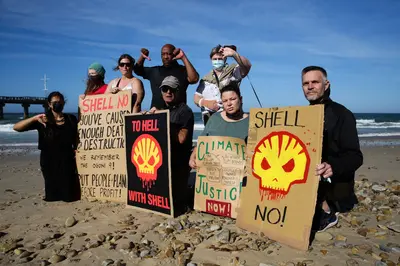
The Eastern Cape province has been identified as a potential frontier for oil and gas exploration, with various stakeholders, including communities, environmental organizations, multinational corporations, government, and traditional authorities, contesting the environmental, economic, and social consequences of exploration. The province's history of poverty, unemployment, and marginalization adds to the complexity of the issue. South Africa's relationship with oil dates back to the apartheid era, when energy security became a strategic concern due to international isolation.
The country's energy landscape remains heavily dependent on coal, while its natural-gas market is small but strategically important, accounting for only about 2.6% of the energy mix. The concentration of the gas market, with nearly 90% of existing gas demand supplied by Sasol Gas, exposes the industry to significant supply risks. Furthermore, South Africa's dependence on Mozambique for gas supplies poses a threat to various industries, including chemicals, petrochemicals, steel, glass, ceramics, and food processing.
The example of Mozambique's $20bn Mozambique LNG project, which restarted in January 2026 after a five-year suspension due to militant violence, demonstrates both the promise and danger of resource development. The project highlights the central contradiction facing South Africa, where domestic oil and gas development can potentially improve energy security, support industrialization, generate fiscal revenues, and create employment, but also poses risks of environmental degradation and social inequality.
The resource-curse debate is relevant in this context, with examples of countries such as Nigeria and the Democratic Republic of Congo, where resource wealth coexists with poverty, conflict, and weak institutions. In contrast, Botswana demonstrates that natural resources can contribute to development when supported by capable institutions, sound policies, and investment in infrastructure and human development. The lesson for South Africa is that the governance of the oil and gas sector is crucial, and that the country must develop the institutional capacity to manage its resources effectively.
The involvement of traditional authorities in resource exploration in the Eastern Cape raises questions about representation, consent, and accountability. While their support for seismic exploration can facilitate community engagement, it is essential that communities living alongside extraction sites have meaningful participation in decisions affecting their land, livelihoods, and environment. Government, traditional authorities, and corporations must be held to a standard of transparency that extends beyond consultation.
Ultimately, South Africa's pursuit of oil and gas exploration must be accompanied by a robust governance framework that prioritizes transparency, accountability, and community participation. The country's energy sovereignty should reflect the building of institutional capacity to determine how resources are developed, revenues are distributed, environmental costs are managed, and communities participate in decisions about their futures. The Eastern Cape presents a litmus test for South Africa's ability to navigate these complexities and ensure that oil and gas exploration contributes to the country's development.
Key points
- Effective governance is crucial to ensuring that oil and gas exploration contributes to South Africa's development and does not reproduce the resource-curse dynamics that have affected other countries.
- The involvement of traditional authorities in resource exploration raises questions about representation, consent, and accountability.
- South Africa's energy sovereignty should reflect the building of institutional capacity to determine how resources are developed, revenues are distributed, and environmental costs are managed.