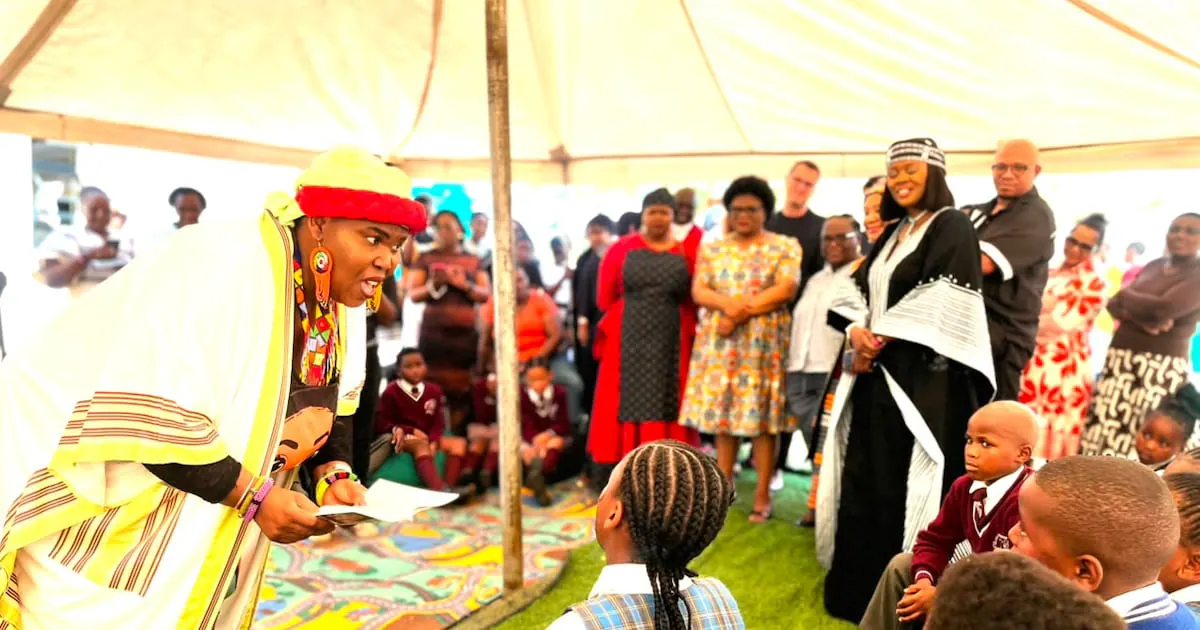
As South Africa celebrates its cultural and linguistic diversity on Heritage Day, the Department of Basic Education has announced the expansion of its mother-tongue-based bilingual education programme to include grade 5 pupils. This move aims to strengthen literacy and help children better understand what they read. According to Basic Education Minister Siviwe Gwarube, the programme allows pupils to learn selected subjects in their home languages while developing their English skills.
The expansion comes amid concerns about poor reading outcomes in South Africa. The 2021 Progress in International Reading Literacy Study found that 81% of grade 4 pupils cannot read for meaning. Minister Gwarube noted that pupils whose home language differs from the language of teaching and learning at school tend to perform worse than those taught in a language they speak at home. The department is investing R10bn to expand access to early childhood development, with the ECD child subsidy increasing by 41%, from R17 to R24 per child per day.
The mother-tongue-based bilingual education programme is being rolled out alongside efforts to strengthen the foundations of learning, with the aim of improving performance, particularly among children from poorer communities. Minister Gwarube said that implementing mother-tongue education across the system would require significant resources. The department plans to train 10,000 foundation phase teachers in literacy and numeracy interventions by 2026.
Education specialist Prof Kobus Maree said that learning to read in a child's home language could support later reading ability in English, but only if the programme is well developed and the teaching is effective. Maree noted that research shows that literacy skills developed in an African language can help predict later English reading ability. However, he warned that English vocabulary and language proficiency would not automatically develop through mother-tongue instruction.
Maree emphasized that successful mother-tongue education requires well-trained, committed, and proficient teachers; quality reading and learning materials; adequate instructional time; and systematic teaching of skills such as vocabulary and fluency. He also warned that simply translating existing lessons into African languages would not be enough. The implementation of the programme needed to be sensitive to the circumstances of different schools, particularly those in rural and under-resourced communities.
Maree also highlighted the importance of a carefully planned transition to English, with the language developed progressively alongside a strong foundation in the pupil's home language. He noted that pupils need explicit teaching of English vocabulary, oral language, idiomatic expressions, and academic language. A limited English vocabulary could affect sentence comprehension, the ability to make inferences, and the development of academic concepts.
The Department of Basic Education's efforts to improve reading outcomes and promote mother-tongue learning have been welcomed, but concerns have been raised about the challenges of implementation. Minister Gwarube acknowledged that a system-level change of this magnitude is a massive undertaking and will take significant resources to fulfil. The department must make the right investments and ensure that the mother-tongue-based bilingual education programme is supported.
Key points
- The South African Department of Basic Education is expanding its mother-tongue-based bilingual education programme to grade 5 to improve reading outcomes and promote linguistic diversity.
- Education specialist Prof Kobus Maree warns that successful implementation requires well-trained teachers, quality materials, and systematic teaching of skills.
- The programme's success will depend on careful planning, particularly in rural and under-resourced communities, and a well-planned transition to English.