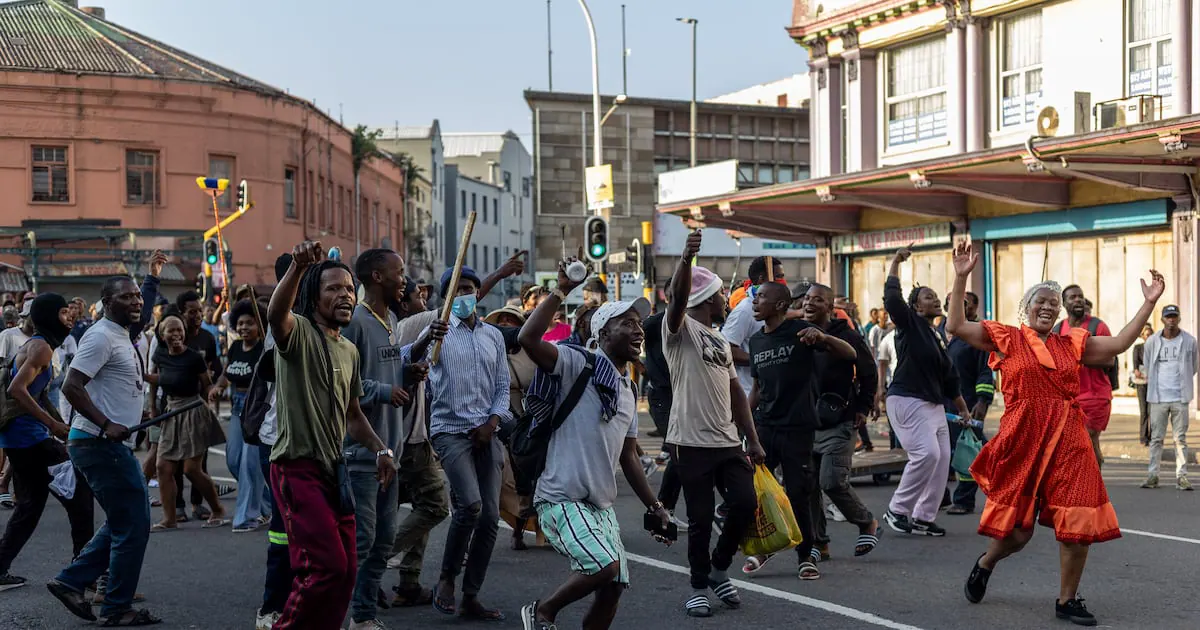
Violent protests erupted in Durban, South Africa, on Thursday, as misinformation about a Constitutional Court ruling on asylum seekers sparked xenophobic attacks and vandalism. The unrest, which included burning tyres, ransacked stalls, and torched vehicles, was centred around the department of home affairs' Refugee Reception Centre. The violence has been condemned by many, who see it as a shameful and predictable outcome of political opportunism and reckless disinformation.
The Constitutional Court recently ruled in the Scalabrini Centre matter, upholding the foundational constitutional principle of due process, which requires that asylum applications be evaluated on their legal merits. However, this ruling has been grossly misinterpreted by some, who claim that it opens the borders to illegal immigration and grants blanket amnesty to foreign nationals. The court did not suddenly tear open the borders or declare open season for illegal immigration, but rather ensured that asylum seekers are entitled to a fair hearing.
The misinformation has been spread through various channels, including social media and viral voice notes, which have been used to manufacture panic and fuel xenophobic sentiment. Some have claimed that the government is quietly engineering a mass regularisation project, while others have alleged that foreign nationals are being queued up for Sassa grants. These claims have been denied, but not before they sparked violence and intimidation.
The department of home affairs has referred these instances of political disinformation to the Electoral Commission of South Africa (IEC) under its new Code of Conduct on Countering Disinformation. The IEC's framework provides a mechanism to hold digital provocateurs and political figures accountable for spreading false narratives. However, the codes alone will not extinguish the flames on the streets, and those who command microphones must confront the lethal impact of their words.
The South African public has been urged to exercise critical vigilance and be wary of accepting sensationalised claims without verification. A WhatsApp voice note or an inflammatory post on social media is not fair comment or settled law. Consuming, reposting, and forwarding rage-bait uncritically makes every citizen an unwitting accomplice to the violence that unfolded in Durban.
The violence has been condemned by many, who see it as a predictable outcome of xenophobic vigilantism. South Africa has walked down this precarious road before, and it has led to bloodshed, the breakdown of the rule of law, and international shame. The government and civil society must work together to address the administrative and moral challenges facing the immigration system, but this must be done through robust but lawful reform, not violence and intimidation.
The incident highlights the need for calm and urgent national reflection. The Constitutional Court's ruling was intended to uphold the rights of asylum seekers, not to create chaos and violence. As the country prepares for the upcoming local government elections, it is essential that politicians and citizens alike exercise restraint and respect for the rule of law.
Key points
- The violence in Durban was sparked by misinformation about a Constitutional Court ruling on asylum seekers.
- The misinformation has been spread through various channels, including social media and viral voice notes.
- The department of home affairs has referred instances of political disinformation to the Electoral Commission of South Africa.