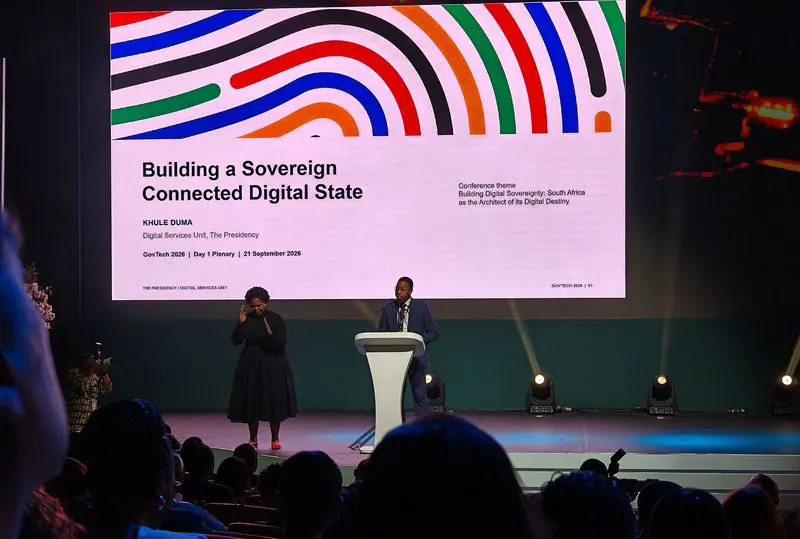
South Africa's digital landscape is undergoing a significant transformation, with the government embracing a modern e-governance model inspired by Estonia. The country's Digital Public Infrastructure (DPI) and Home Affairs digital identity framework are being developed with a distinctly Estonian flavour. Kule Duma, representing the Digital Services Unit within the Presidency, presented the national roadmap for DPI under Phase 2 of Operation Vulindlela, highlighting the adoption of global best practices.
Estonia's ambassador to Kenya and South Africa, Daniel Erik Schaer, was a guest at the GovTech 2026 conference, where he showcased his country's e-governance achievements. Minister of Communications and Digital Technologies Solly Malatsi emphasized that while South Africa is observing global best practices, it is not simply copying Estonia's model. Instead, the country is adapting these practices to its unique context, taking into account societal digital skills proficiency and other factors.
The State Information Technology Agency (Sita) is playing a crucial role in implementing South Africa's DPI, with MD Magatho Mello highlighting the importance of integrating different government departments' ICT plans. Mello noted that achieving a seamless digital service channel requires a willingness to make investments and sacrifices, including giving up some autonomy in decision-making. He also emphasized the need for a coordinated approach, citing Estonia's example.
One of the key components of Estonia's e-governance model is the "once-only" principle, where citizens provide personal information to the state once, and internal data highways handle cross-departmental verification. Duma outlined how South Africa is implementing this philosophy, along with a data exchange that operates as a digital highway, allowing information to flow rapidly between government departments.
The Digital Services Unit in the Presidency is orchestrating inter-agency alignment, leveraging Sita for platform hosting to prevent vendor lock-in and safeguard sensitive citizen data. This approach aims to ensure that the key components of DPI are owned and controlled by the public, with clear rules defined for industry support. The government has a three-phase roll-out strategy to take the concept of e-governance from plenary presentation to lived reality.
Local technology companies are watching the developments with interest, with some expressing concerns about the influence of foreign vendors. However, Mello emphasized that South Africa has great technology companies that can provide innovative solutions. The government is seeking to balance its adoption of global best practices with a desire to promote local innovation and self-reliance.
As South Africa moves forward with its e-governance ambitions, it will be interesting to see how the country balances its desire for digital sovereignty with the need for international cooperation and knowledge-sharing. With the GovTech conference showcasing the latest developments in e-governance, it is clear that South Africa is committed to creating a seamless, modern digital service channel for its citizens.
Key points
- South Africa is adopting Estonia's e-governance model to enhance digital sovereignty and provide seamless services.
- The government is adapting global best practices to its unique context, taking into account societal digital skills proficiency and other factors.
- Local technology companies are watching the developments with interest, with some expressing concerns about the influence of foreign vendors.