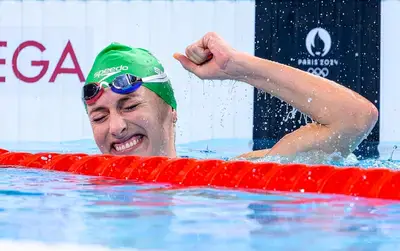
The South African sports landscape is grappling with the implications of Tatjana Smith's decision to switch her nationality to Dutch and compete for the Netherlands. Smith, the country's most decorated Olympian, cited financial and practical challenges in South Africa, including prize-money disputes with Swimming South Africa. Despite expressing gratitude for her journey in South Africa, she will now compete under the Dutch flag. Her switch has sparked debate on whether dual citizens should be eligible for national teams.
Smith's decision has drawn attention to the issue of dual citizenship in South African sports. Sports Minister Gayton McKenzie stressed that the decision was Smith's alone and should not be politicized. He acknowledged her achievements for South Africa and expressed hope that she would still contribute to the country's sports scene in the future. The Department of Sport, Arts and Culture also acknowledged ongoing problems at Swimming South Africa, which Smith cited as a reason for her switch.
Smith is not the first South African athlete to switch allegiances. Several athletes, including CJ Stander, Duhan van der Merwe, Kevin Pietersen, and Chris Froome, have represented other countries after developing their skills in South Africa. This trend has fueled arguments for tighter eligibility rules to protect the country's investment in athlete development. However, others argue that dual citizenship is a legal reality and that barring dual nationals outright could reduce the talent pool available to South Africa.
The debate highlights the challenges faced by South African sports federations, including funding, administration, and prize-money reliability issues. Smith herself pointed to the need to "thrive, not just survive" in her decision to switch. Some argue that policy responses could sit between total exclusion and open-ended dual eligibility, including clearer contracts tying development funding to minimum periods of national representation.
The issue of dual citizenship in sports is complex, with many athletes holding mixed heritage or long foreign residencies. Forcing an exclusive choice may feel artificial, and some argue that loyalty is not merely sentimental but underpins the social contract between athletes and the public that funds and cheers them. The country's sports minister and department have taken a nuanced view, acknowledging Smith's achievements and the challenges faced by Swimming South Africa.
The South African sports landscape is still reeling from the impact of Smith's switch. Her decision has sparked a national conversation about the eligibility of dual citizens in national teams. While some argue that dual citizens should be barred from national teams, others argue that this could reduce the talent pool available to South Africa and ignore the complexities of identity and loyalty.
As the debate continues, the country's sports federations and government will need to consider the implications of their policies on athlete development and national representation. The case of Tatjana Smith has highlighted the need for a nuanced approach that balances the interests of athletes, federations, and the public that supports them. Ultimately, a solution that works for all parties will require careful consideration of the complex issues at play.
Key points
- The debate on dual citizenship in South African sports has sparked a national conversation about the eligibility of dual citizens in national teams.
- The country's sports minister and department have taken a nuanced view, acknowledging Smith's achievements and the challenges faced by Swimming South Africa.
- Policy responses could sit between total exclusion and open-ended dual eligibility, including clearer contracts tying development funding to minimum periods of national representation.
Reporting sources
- Should South Africa bar dual citizens from national sports teams? · Mail & Guardian