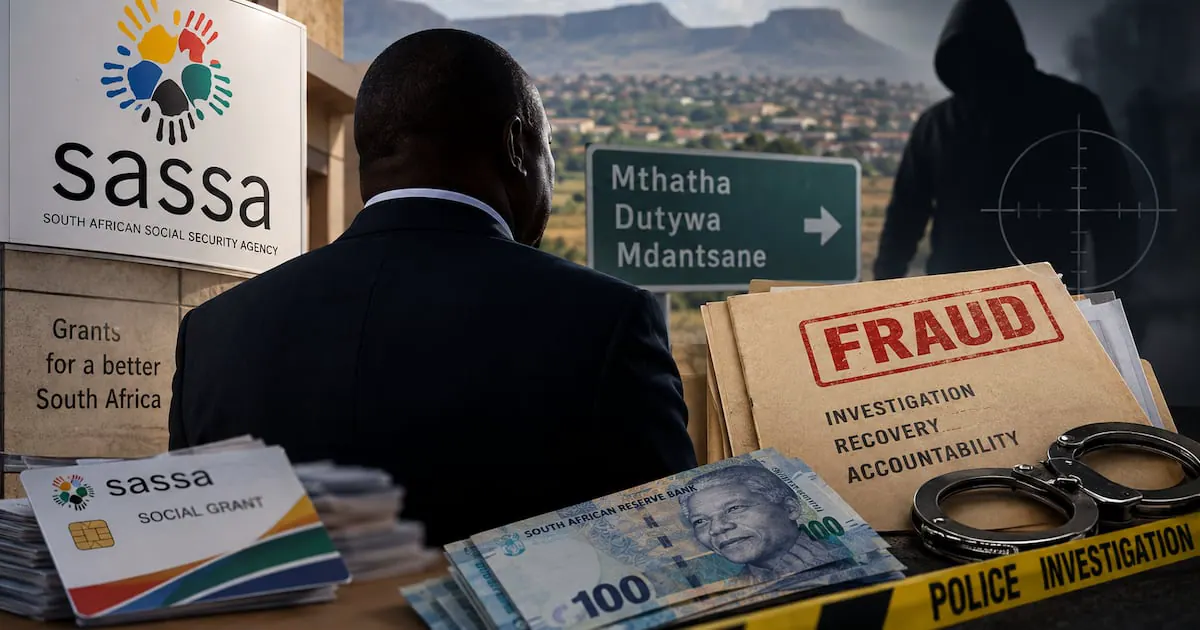
The South African Social Security Agency (Sassa) has launched a crackdown on fraud in the social grant system, with a focus on cases involving its own staff. Regional manager Bandile Maqetuka says the agency is pursuing about 1,000 cases, while investigations are underway into suspected losses of around R10m. This has raised concerns about the scale of the problem and the need for a serious response.
The issue is not limited to isolated individuals, but rather a large-scale problem that requires a robust solution. In Dutywa, five officials were dismissed after allegedly working with a syndicate that created fraudulent beneficiaries and grant applications. Another case involving five junior staff members was uncovered in Mdantsane. These cases highlight the need for greater scrutiny and oversight of the social grant system.
Sassa is also finding beneficiaries who have received grants while earning undisclosed income, working for government, or owning companies that receive government tenders. This has significant implications for the integrity of the social grant system, which is designed to support some of the most vulnerable people in South Africa. The system exists because millions of people depend on it to survive.
The alleged involvement of Sassa's own employees is particularly disturbing. Officials entrusted with administering public money occupy positions of trust, and when they use their access and knowledge to manipulate the system, they are not merely exploiting a loophole — they are helping to dismantle the safeguards they were employed to protect. This has serious implications for public trust in the social grant system.
Sassa has made progress in detecting and preventing fraud, with the introduction of biometric verification, database cross-checking, and stronger cybersecurity controls. In the first quarter alone, Sassa reviewed 8,263 Eastern Cape grants and suspended 4,979 pending its processes. However, this also raises questions about how much fraud went undetected before these controls were strengthened.
Detection is only half the job, and dismissal cannot be the end of the matter for officials found to have participated in fraud. Money must be recovered, and where the evidence supports it, criminal cases must follow. The same determination must apply whether the person involved is a beneficiary, an official, or part of an organised syndicate. Sassa's crackdown is welcome, but the scale of what it is uncovering shows why it was necessary in the first place.
The social security system depends on public money and public trust, and South Africa cannot afford to have either stolen. Sassa's efforts to crack down on fraud are a step in the right direction, but more needs to be done to prevent and detect fraud in the future. The agency must continue to strengthen its controls and work with law enforcement agencies to bring those responsible to justice.
Key points
- Sassa is pursuing 1,000 cases of social grant fraud, with suspected losses of around R10m.
- The agency has introduced biometric verification, database cross-checking, and stronger cybersecurity controls to prevent and detect fraud.
- Dismissal is not enough for officials found to have participated in fraud; money must be recovered and criminal cases must follow.