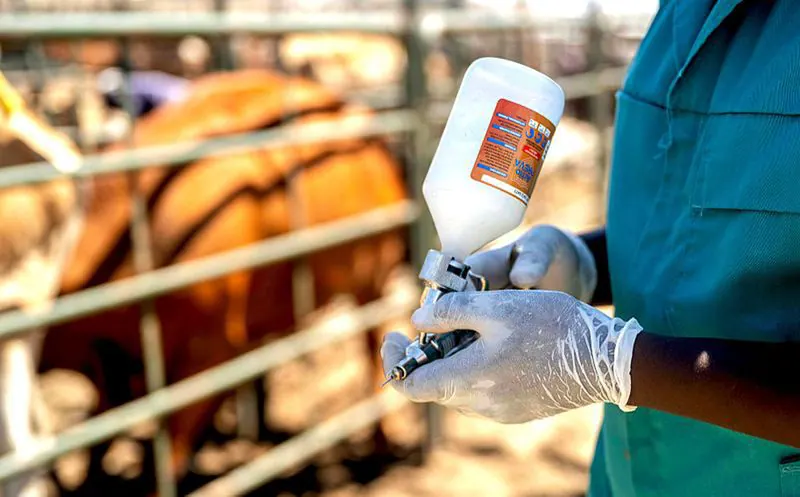
The Agricultural Research Council (ARC) of South Africa has made a significant decision to allow private companies to manufacture its foot-and-mouth disease (FMD) vaccine on a large scale. This move, proposed by Agriculture Minister Willie Aucamp and approved by the ARC's board on September 21, aims to increase production capacity and reduce reliance on imports. According to Malebo Maleka, ARC marketing coordinator, the council has successfully restored local FMD vaccine production but faces limitations in volume due to its current manufacturing infrastructure.
The decision to involve the private sector in vaccine production has been welcomed by farmers and experts, who believe it could have helped control the current outbreak sooner. Johann Kirsten, director of the Bureau for Economic Research and professor in agricultural economics at Stellenbosch University, expressed that the decision should have been made years ago to avoid reliance on state procurement and imports. Kirsten emphasized that private capacity would have enabled more efficient vaccine distribution.
The ARC's vaccine was registered in 2022, but the first batch of approximately 12,900 doses only arrived in February 2026. Andrew Morphew, spokesperson for FMD Response SA, noted that there was a 127-day period during the outbreak when no vaccine doses entered the country, allowing the disease to spread rampantly. Morphew welcomed the decision but cautioned that the effectiveness of private production can only be measured once vaccinations begin.
Small-scale livestock farmers, such as Philani Ndlovu and Linda Mthalane Nkosi, agree that private sector involvement in vaccine production could have controlled the outbreak sooner. Ndlovu believes this decision could speed up vaccination in areas not yet reached by the state-subsidized mass vaccination campaign. Nkosi expressed concern about potential price inflation by private companies and its impact on her ability to afford the vaccine.
The ARC board has also decided to submit FMD field-circulating virus isolates from South Africa to the Pirbright Institute in the UK for a second round of vaccine-matching assessments. This aims to provide an additional scientific assessment of the suitability of available local and imported vaccines against FMD viruses currently circulating in South Africa. FMD Response SA has previously called for this action, emphasizing its importance in verifying vaccine efficacy.
The World Organisation for Animal Health allocates each reference laboratory, such as the ARC, a quota of 50 samples a year. Morphew stressed that South Africa should utilize this allocation fully and publish the testing results to ensure transparency for farmers and trading partners. The involvement of the private sector and international collaborations are seen as crucial steps in managing the FMD outbreak.
As the licensing arrangements for private vaccine production are being developed, pricing considerations will form part of the contractual, regulatory, and procurement processes. Farmers like Nkosi are concerned about affordability, while experts emphasize the need for efficient and timely vaccine distribution to control the outbreak. The effectiveness of this new approach will be closely monitored as it unfolds.
Key points
- The Agricultural Research Council allows private companies to manufacture its foot-and-mouth disease vaccine to increase production capacity.
- The decision aims to reduce reliance on imports and help control the current FMD outbreak in South Africa.
- The ARC will also conduct additional vaccine-matching assessments at the Pirbright Institute in the UK to verify vaccine efficacy against circulating FMD viruses.