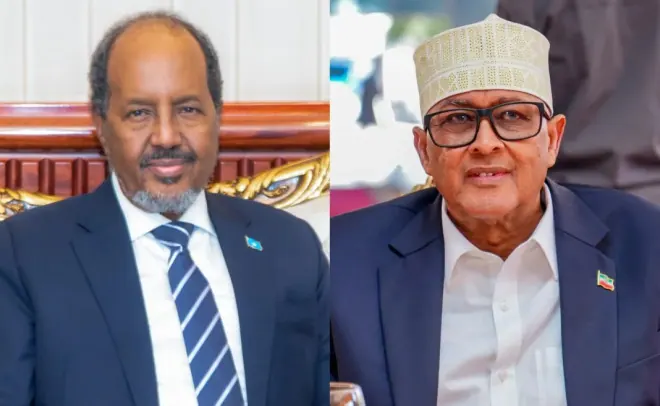
Somaliland's foreign ministry on Saturday rejected remarks by Somali President Hassan Sheikh Mohamud that Israel plans to establish a naval base in Berbera and use the city's airport. In a statement, the ministry accused Mogadishu of misrepresenting Somaliland's foreign relations and interfering in agreements it considers sovereign. The response followed an Al Jazeera interview in which Mohamud said Somalia would not accept an Israeli presence "under any circumstances".
Mohamud's comments were part of a broader discussion on Somalia's stance towards Israel and its perceived goals in the region. He argued that Israel's wider goal was to move closer to Gulf states and Iran. Somaliland, however, rejected that characterization, saying claims that Berbera could become a platform for attacks on other countries were unfounded. The ministry emphasized that Somaliland's diplomatic relations with Israel reflect the sovereign decisions of two states and advance peaceful cooperation, development, and regional stability.
The dispute between Somaliland and Somalia has gained new strategic importance because of Berbera's location on the Gulf of Aden, near the Bab al-Mandeb Strait, one of the world's busiest maritime corridors. Somaliland declared independence from Somalia in 1991 and has since maintained its own government, security forces, currency, and political institutions. Somalia considers the territory part of its sovereign territory. The two sides also differ sharply over Somaliland's relationship with Ethiopia.
Somaliland defended its January 2024 memorandum of understanding with Ethiopia and accused Mogadishu of contradicting itself by opposing that agreement while saying it supports Ethiopian access to the sea. The 2024 Ethiopia-Somaliland agreement triggered a major diplomatic dispute after Addis Ababa agreed to seek access to Somaliland's coastline in return for commitments that Somaliland officials said could advance their recognition campaign. Somalia rejected the deal as a violation of its sovereignty.
Somaliland also defended its historical claim to statehood, noting that the former British Somaliland protectorate became independent on June 26, 1960, five days before uniting with the former Italian-administered Somalia on July 1. Somaliland argues that its 1991 declaration restored that earlier sovereignty. Mogadishu rejects that interpretation and continues to regard Somaliland as part of Somalia.
The dispute has significant implications for regional stability, with Somaliland saying its foreign partnerships were intended to promote security, economic development, and regional stability. Somaliland's foreign ministry condemned threats of force and interference in its internal affairs, adding that it would continue to pursue what it described as peaceful diplomacy and sovereign partnerships.
The situation remains complex, with Somalia and Ethiopia later moving to reduce tensions through talks, but the underlying dispute over Somaliland's status and authority to sign international agreements remains unresolved. Somaliland's statement emphasized its commitment to peaceful cooperation and development, while Somalia's stance suggests a continued resistance to Israeli presence in the region.
Key points
- Somaliland rejects Somalia's claims of Israeli naval base plans in Berbera.
- The dispute between Somaliland and Somalia has significant implications for regional stability.
- Somaliland defends its sovereign foreign relations and historical claim to statehood.