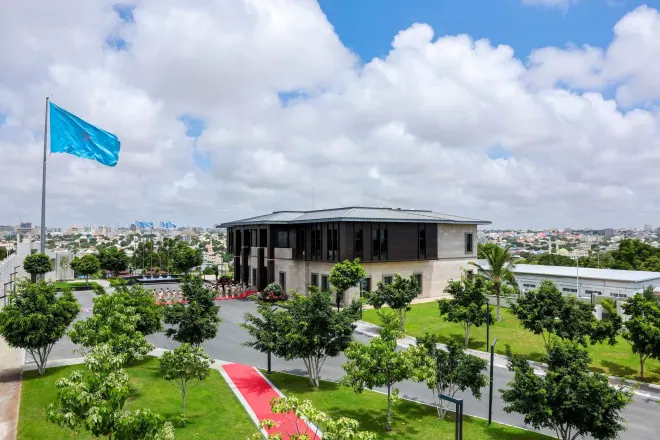
Somalia's third republic is currently facing one of its most difficult periods, 26 years after its inception. The day that was supposed to be a celebration of progress and rebuilding now seems like a day of turmoil. The Federal Government, led by President Hassan Sheikh Mohamud, whose term has expired, is in a precarious political situation. There is no comprehensive political agreement, and most regional states have not reached a full agreement with the central government.
The country's political landscape is further complicated by the absence of an electoral commission that satisfies all political parties and a widely accepted electoral process. The situation is exacerbated by changes related to the role of the international community. The United Nations Office is expected to close by the end of October, and the funding for the African Union's peacekeeping mission, which supports the security of the Federal Government, is set to undergo significant changes in December.
The ongoing conflicts and tensions in the region, particularly those affecting the Red Sea and Bab-el-Mandeb, have a direct and indirect impact on Somalia and the lives of its citizens. Somalia's strategic location makes it impossible to ignore the threats posed by regional instability. The question remains whether Somalia's politicians, who are currently vying for power, are aware of the converging dangers facing the country and whether they will present a political solution to extricate the nation from this difficult situation.
The current situation demands that Somalia's politicians prioritize the country's safety, political agreement, and the future of its people over personal interests and short-term gains. To achieve this, the parties must return to the negotiating table to reach a comprehensive political agreement, a mutually acceptable electoral process, and an inclusive government. Failure to do so may lead to the weakening or collapse of the third republic.
The issue is not about assigning blame to one side but rather about the collective responsibility of Somalia's politicians. The current challenges require a shift from petty squabbles and short-term interests to a focus on national salvation and the well-being of future generations. The third republic's survival depends on a political agreement, a national vision, and leadership capable of uniting the parties.
The international community is also playing a role in Somalia's current situation. The United Nations and other international partners have been involved in efforts to stabilize the country and support its development. However, the ultimate responsibility for Somalia's future lies with its leaders and citizens.
As Somalia navigates this critical juncture, its politicians must prioritize the nation's interests and work towards a comprehensive solution. The country's future depends on the ability of its leaders to put aside their differences and work towards a common goal. The third republic's survival is at stake, and the consequences of failure will be severe.
Key points
- Somalia's third republic faces significant challenges 26 years after its establishment
- The country's politicians must prioritize national interests over personal gains to ensure the third republic's survival
- The international community is playing a role in Somalia's situation, but the ultimate responsibility lies with its leaders and citizens